Facebook Ads
Lower Meta Ads CPL - 15 Ways to Get More Leads for Less

Category: Facebook Ads
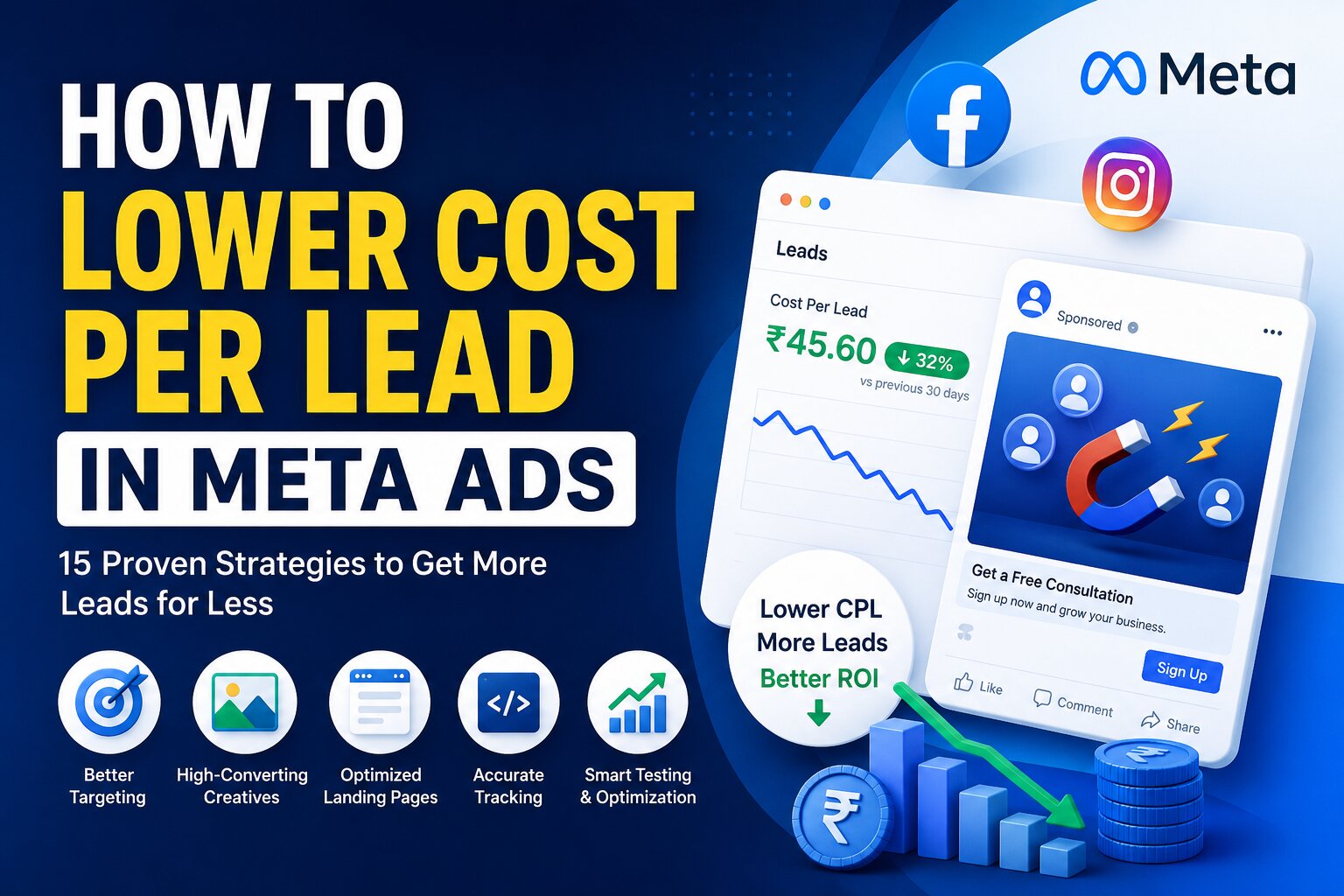
How to Lower Cost Per Lead in Meta Ads: 15 Proven Strategies to Generate More Leads Without Increasing Your Budget
Running Facebook and Instagram campaigns can be one of the fastest ways to generate high-quality leads. However, many businesses face the same challenge after launching their campaigns — the cost per lead keeps increasing while the number of conversions remains stagnant.
Whether you are a startup looking for affordable customer acquisition or an established company trying to improve advertising efficiency, reducing your Meta Ads cost per lead (CPL) should be one of your biggest performance marketing goals.
The good news is that lowering CPL is not always about increasing your ad budget. In most cases, better audience targeting, stronger creatives, improved landing pages, and proper campaign optimization can significantly reduce your acquisition costs.
At Scale With Clicks, we have managed campaigns across different industries and found that successful Meta advertising comes down to continuous testing, data analysis, and optimization. If your campaigns are spending money but not delivering enough qualified leads, the strategies below can help improve your results.
What is Cost Per Lead (CPL) in Meta Ads?
Cost Per Lead (CPL) is the amount you spend on advertising to acquire a single lead.
For example, if your Meta campaign spends ₹10,000 and generates 100 leads:
CPL = Total Ad Spend ÷ Total Number of Leads
Your CPL would be ₹100.
A lower CPL generally means your campaigns are generating leads more efficiently. However, the cheapest lead is not always the best lead. A campaign producing low-quality leads that never convert into customers can actually harm your overall return on investment.
This is why businesses should focus on reducing CPL while maintaining or improving lead quality.
For a complete approach to improving your paid campaigns, explore our Performance Marketing Services designed to maximize ROI across Meta, Google, and other advertising platforms.
1. Optimize Your Campaign Objective for Lead Generation
One of the biggest reasons behind a high Meta Ads cost per lead is choosing the wrong campaign objective.
Many advertisers still run Traffic campaigns expecting them to generate leads at a low cost. While traffic campaigns may deliver cheaper clicks, Meta’s algorithm is optimized to find people who are likely to click, not necessarily people who are likely to submit your lead form.
For better results, choose:
- Lead Generation campaigns for instant forms inside Facebook and Instagram.
- Sales or Conversion campaigns when sending users to a website with proper tracking.
- Messages campaigns if your sales process works better through WhatsApp or Messenger conversations.
Choosing the right objective allows Meta's machine learning system to find users who are more likely to complete your desired action.
If you are unsure which campaign structure suits your business, our Meta Ads Management Services can help create a strategy focused on profitable lead acquisition.
2. Improve Your Audience Targeting Strategy
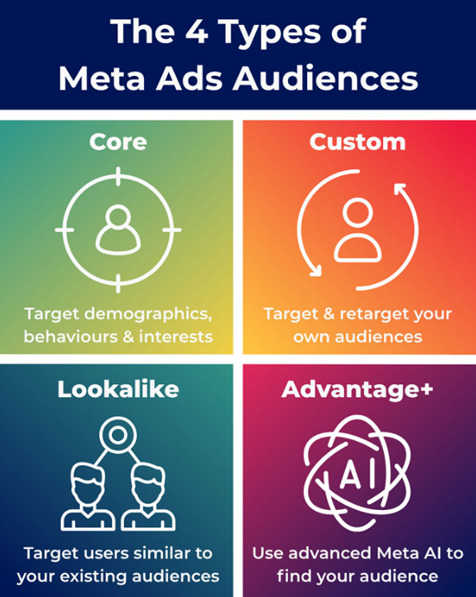
Audience targeting has a direct impact on your Meta Ads CPL. Showing your advertisements to people who have little interest in your product will increase your costs and reduce conversion rates.
A strong targeting strategy usually combines multiple audience segments.
Use Broad Targeting
Meta’s AI has become significantly better at finding potential customers. Instead of adding dozens of interests and restrictions, test broader audiences and allow the algorithm to optimize delivery.
Create Lookalike Audiences
Lookalike audiences allow you to reach users similar to your existing customers, website visitors, or previous leads.
You can create lookalikes based on:
- Previous purchasers
- Qualified leads
- Website visitors
- Email subscribers
- High-value customers
These audiences often produce better conversion rates and lower cost per lead because Meta already understands the characteristics of your best customers.
Exclude Unqualified Users
Do not waste budget showing ads to people who have already converted or are unlikely to become customers.
Consider excluding:
- Existing customers
- Previous leads
- Employees
- Irrelevant audience groups
Regular audience refinement helps improve ad relevance, increase conversion rates, and reduce your overall CPL.
3. Create High-Converting Ad Creatives
Your ad creative is often the biggest factor determining whether someone becomes a lead.
Even with the perfect audience, poor visuals and weak messaging can result in low engagement and high advertising costs.
High-performing Meta ad creatives usually include:
- A clear value proposition within the first few seconds.
- A strong headline that addresses a pain point.
- Real customer benefits instead of only product features.
- Social proof such as testimonials, reviews, or case studies.
- A compelling call-to-action.
For example, instead of saying:
“We offer digital marketing services.”
A stronger message would be:
“Struggling to generate quality leads? Discover how our data-driven marketing strategies help businesses reduce acquisition costs and increase conversions.”
Creative fatigue can also increase your CPL over time. If your frequency rises and performance starts dropping, introduce new images, videos, hooks, and ad formats.
4. Test Multiple Creatives Continuously
One common mistake advertisers make is launching a single ad and expecting consistent results for months.
The most successful Meta advertisers continuously test:
- Different headlines
- New offers
- Various images and videos
- Different calls-to-action
- Short-form and long-form copy
- Different creative angles
Even a small improvement in click-through rate (CTR) or conversion rate can significantly reduce your cost per lead.
A good testing framework involves changing one major variable at a time so you can understand what actually impacts performance.

5. Improve Your Landing Page Conversion Rate
Your Meta Ads campaign does not end when someone clicks your advertisement.
If users reach a slow, confusing, or untrustworthy landing page, your CPL will increase because you are paying for clicks that never convert.
A high-converting landing page should have:
- A clear headline matching your ad message.
- A simple and visible lead form.
- Fast loading speed.
- Mobile-friendly design.
- Customer reviews and trust indicators.
- A strong call-to-action.
Businesses that combine paid advertising with a well-optimized website usually see better results. Learn more about improving your website visibility and conversion performance through our SEO Services and website optimization strategies.
6. Set Up Meta Pixel and Conversion API Correctly
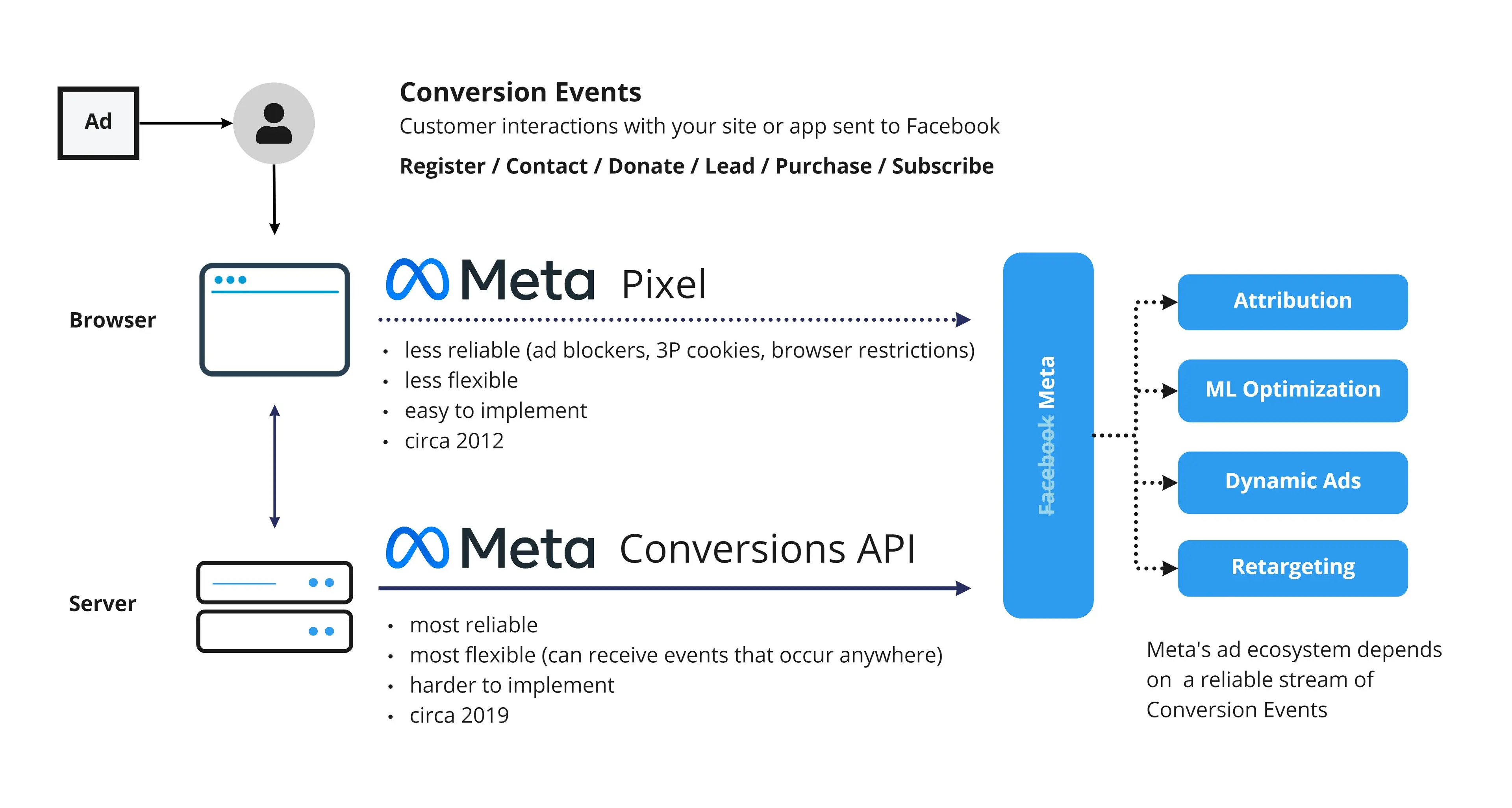
One of the most overlooked reasons behind a high cost per lead in Meta Ads is poor tracking.
Meta’s algorithm relies on conversion data to understand which users are most likely to become leads. If your Meta Pixel is incorrectly installed or important events are missing, the platform receives less data, making it harder to optimize your campaigns.
Make sure your tracking setup includes:
- Meta Pixel installed on all important website pages.
- Lead or conversion events configured correctly.
- Conversion API (CAPI) implemented to improve data accuracy.
- Proper event prioritization in Events Manager.
- Regular testing to ensure conversions are recorded accurately.
A strong tracking foundation gives Meta better signals, helping it deliver your ads to users who are more likely to convert.
If your business relies heavily on paid campaigns, having accurate tracking should be a priority before increasing your ad spend.
7. Use Retargeting Campaigns to Capture Lost Leads
Most users will not convert the first time they see your advertisement.
People often need multiple touchpoints before they trust a brand enough to submit their details or make a purchase.
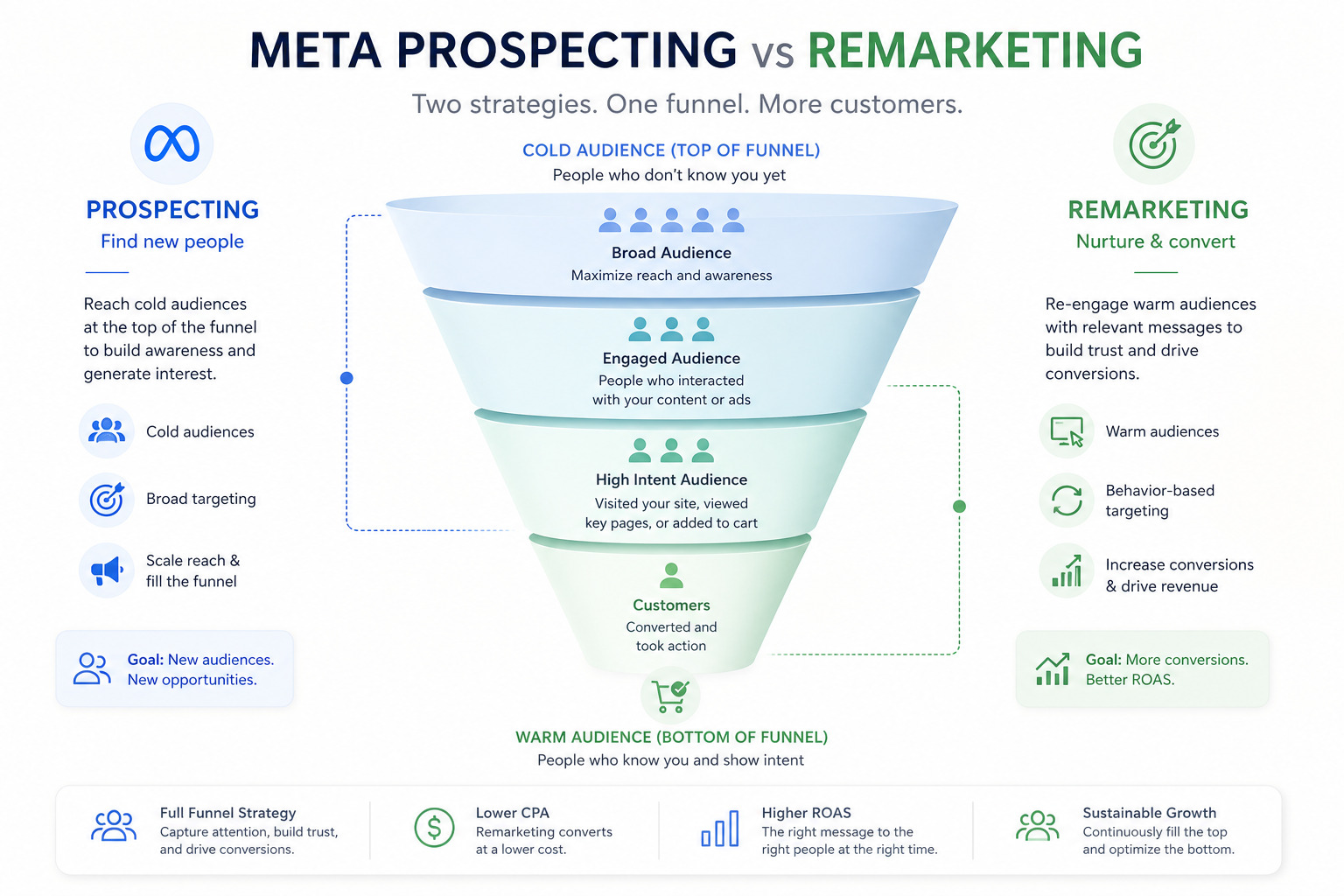
Retargeting allows you to reconnect with users who have already shown interest in your business, such as:
- Website visitors.
- Users who engaged with your Facebook or Instagram page.
- People who watched your videos.
- Users who opened but did not submit your lead forms.
- Previous website visitors who did not complete a conversion.
Since these audiences already know your brand, retargeting campaigns usually have a lower cost per lead compared to cold audiences.
A well-structured Meta Ads strategy should always include separate campaigns for awareness, consideration, and conversion stages.
8. Improve Your Offer and Lead Magnet
Sometimes your targeting and creatives are excellent, but your offer simply does not convince users to take action.
Ask yourself:
- Why should someone provide their contact information?
- What problem are you solving immediately?
- What makes your offer better than competitors?
Effective lead magnets include:
- Free consultations.
- Industry reports.
- Free audits.
- Discount offers.
- Product demos.
- Free trials.
- Exclusive resources.
For example, a digital marketing agency offering a “Free Website & Ads Performance Audit” may generate better quality leads than simply saying “Contact us for marketing services.”
Your offer is often the biggest lever for reducing your CPL because it directly impacts your conversion rate.
9. Optimize Your Lead Forms
If you are using Meta Instant Forms, your form structure can significantly affect both lead quantity and quality.
A shorter form generally produces more leads at a lower cost, but adding too many questions can increase CPL.
The best approach is to balance volume and quality.
Include only essential fields such as:
- Name.
- Email address.
- Phone number.
- Business details (if required).
You can also use higher-intent forms that include review steps to reduce low-quality submissions.
Continuously analyze your CRM data to understand which lead sources produce actual customers, not just cheap leads.
10. Analyze Your Ad Frequency and Prevent Creative Fatigue
Showing the same advertisement to the same audience repeatedly can reduce engagement and increase your cost per lead.
Common signs of ad fatigue include:
- Increasing CPL.
- Lower click-through rates.
- Higher frequency.
- Declining conversion rates.
To avoid this:
- Launch fresh creatives regularly.
- Test different messaging angles.
- Experiment with new video styles.
- Rotate testimonials and case studies.
- Change offers and headlines.
Many successful advertisers refresh their creatives every two to four weeks depending on audience size and budget.
11. Use Smart Budget Scaling Strategies
Many advertisers make the mistake of increasing their budget too quickly after seeing good results.
A sudden budget increase can disrupt Meta's learning phase and cause CPL to rise.
Instead:
- Increase budgets gradually (around 15–25% every few days).
- Duplicate successful campaigns for larger scaling.
- Allocate more budget to high-performing ad sets.
- Pause underperforming audiences and creatives.
Scaling should always be based on data, not assumptions.
If you need a complete paid advertising strategy across Meta and Google, explore our Performance Marketing Services to build campaigns focused on long-term growth.
12. Run A/B Tests Regularly
The best-performing Meta advertisers rely on data rather than opinions.
A/B testing helps identify what actually improves performance.
Elements you should test include:
- Audience segments.
- Ad creatives.
- Headlines.
- Primary text.
- Offers.
- Landing pages.
- Call-to-action buttons.
- Lead forms.
Keep your tests structured by changing only one major element at a time.
Over months of continuous optimization, these small improvements can significantly reduce your average CPL.
13. Optimize Your Campaign Placements
Meta automatically displays ads across Facebook, Instagram, Messenger, and Audience Network.
While Advantage+ placements often work well, you should still monitor placement-level performance.
Analyze:
- Cost per lead by placement.
- Conversion rates.
- Click-through rates.
- Engagement metrics.
If a particular placement consistently delivers expensive or low-quality leads, consider adjusting your strategy.
However, avoid restricting placements too early because Meta's algorithm requires enough data to optimize effectively.
14. Improve Lead Quality Instead of Only Chasing Cheap CPL
A common mistake among advertisers is focusing only on lowering CPL.
A ₹50 lead that never converts is more expensive than a ₹500 lead that becomes a paying customer.
Measure deeper business metrics such as:
- Lead-to-sale conversion rate.
- Cost per qualified lead.
- Customer acquisition cost (CAC).
- Return on ad spend (ROAS).
- Customer lifetime value (LTV).
Successful performance marketing is about profitability, not just generating a high volume of leads.
For businesses looking to build a complete growth strategy beyond paid advertising, combining Meta Ads with organic channels like SEO and content marketing can improve long-term customer acquisition.
15. Monitor Your Data and Optimize Weekly
Meta Ads are not a set-and-forget marketing channel.
Regular optimization is necessary to maintain low CPL and consistent results.
Review your campaigns every week and analyze:
- Cost per lead.
- Conversion rate.
- Click-through rate.
- Cost per click.
- Frequency.
- Audience performance.
- Creative performance.
- Lead quality.
Small adjustments made consistently often outperform major campaign changes.
Common Reasons Why Your Meta Ads CPL Is High
If your campaigns are struggling, these issues are usually responsible:
- Wrong campaign objective.
- Poor audience targeting.
- Weak ad creatives.
- Low-converting landing pages.
- Incorrect Pixel setup.
- Lack of retargeting.
- Ad fatigue.
- Poor offers.
- Rapid budget changes.
- Focusing on cheap leads instead of qualified leads.
Identifying and fixing these problems can dramatically improve campaign efficiency.
Conclusion
Lowering your Meta Ads cost per lead is a combination of strategy, testing, and continuous optimization.
There is no single setting that instantly reduces CPL. The most successful advertisers focus on the complete customer journey—from the audience they target, the creatives they show, the landing page experience they provide, and the way they nurture leads after conversion.
By implementing the strategies above, businesses can generate more qualified leads without continuously increasing their advertising budgets.
At Scale With Clicks, we help businesses create data-driven Meta advertising strategies that focus on lower acquisition costs, better lead quality, and higher return on investment.
If you want to improve your advertising performance, explore our Meta Ads Management Services or contact our team for a personalized growth strategy.
Frequently Asked Questions (FAQs)
How can I reduce my Meta Ads cost per lead quickly?
Start by analyzing your targeting, ad creatives, landing pages, and tracking setup. Testing better offers and improving retargeting campaigns can often reduce CPL within a few weeks.
What is a good cost per lead for Meta Ads?
A good CPL varies by industry, competition, audience, and product price. Instead of comparing with industry averages, focus on whether your leads convert into profitable customers.
Does a higher budget reduce Meta Ads CPL?
Not necessarily. Increasing budget without proper optimization can increase CPL. It is better to scale gradually while maintaining strong campaign performance.
Should I use Meta Instant Forms or a landing page?
Both can work well. Instant Forms usually generate cheaper leads, while landing pages often provide higher-quality leads because users show greater intent.
How often should I optimize my Meta Ads campaigns?
Review performance at least weekly. Monitor CPL, conversion rates, audience performance, and creative fatigue to keep campaigns profitable.