Landing Page Optimization
Landing Page vs Website - Which Is Better for Conversions?

Category: Landing Page Optimization
Landing Page vs Website: Which Is Better for Conversions?
When you're spending money on advertising, getting people to your website is only half the job.
The real question is what happens after they arrive.
Do they fill out a form? Book a call? Make a purchase? Call your business? Or do they browse a few pages and leave?
This is where the landing page vs website debate becomes important.
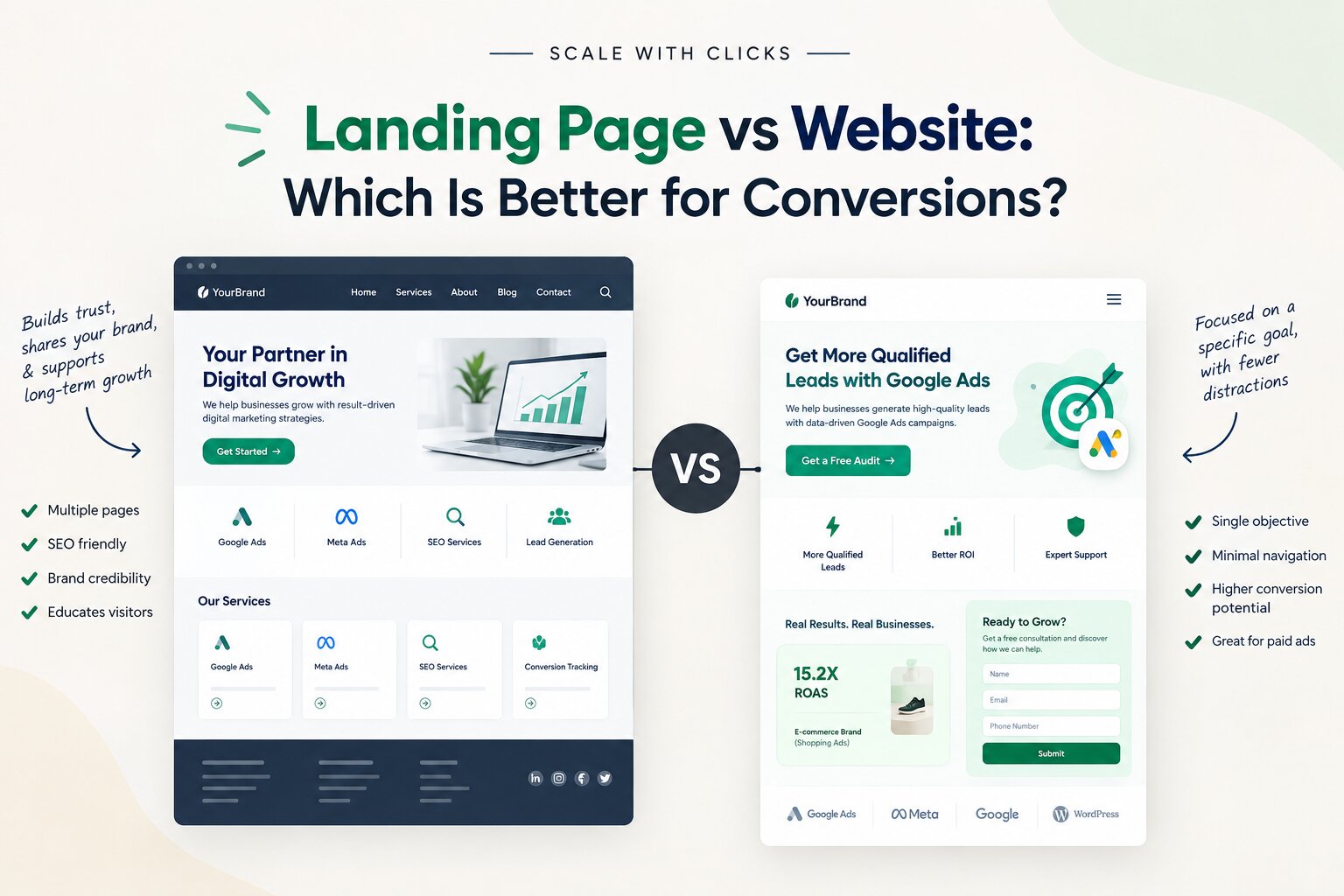
A business website is designed to explain your company, services, products, brand, and credibility. A landing page is usually designed around a much narrower objective, such as generating a lead, getting a booking, selling a product, or encouraging someone to take a specific action.
Neither is automatically better.
The right choice depends on your traffic source, campaign objective, customer journey, and what you want visitors to do.
In this guide, we'll look at the difference between a landing page and a website, when each works better, and how you can use both to improve your conversion rate.
What Is a Landing Page?
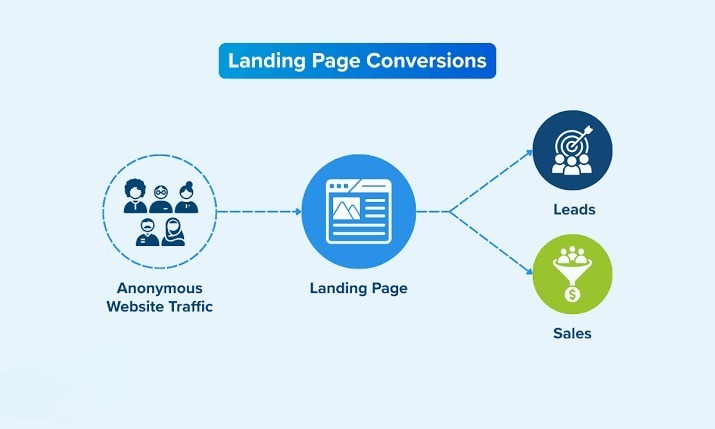
A landing page is a dedicated webpage created around a specific marketing objective.
For example, imagine you're running Google Ads for "Google Ads agency for ecommerce."
Instead of sending every visitor to your homepage, you could send them to a dedicated page explaining your Google Ads management service, showing relevant results, answering common questions, and giving them one clear next step.
That page becomes the destination for the campaign.
This is particularly useful for paid advertising because visitors have already shown some level of intent. If someone searches for a specific service and your ad promises that service, the landing page should make it immediately obvious that they are in the right place.
Google also recommends keeping the connection between keywords, ads, landing pages, and calls to action closely aligned. This helps create a more relevant experience for people clicking the ad.
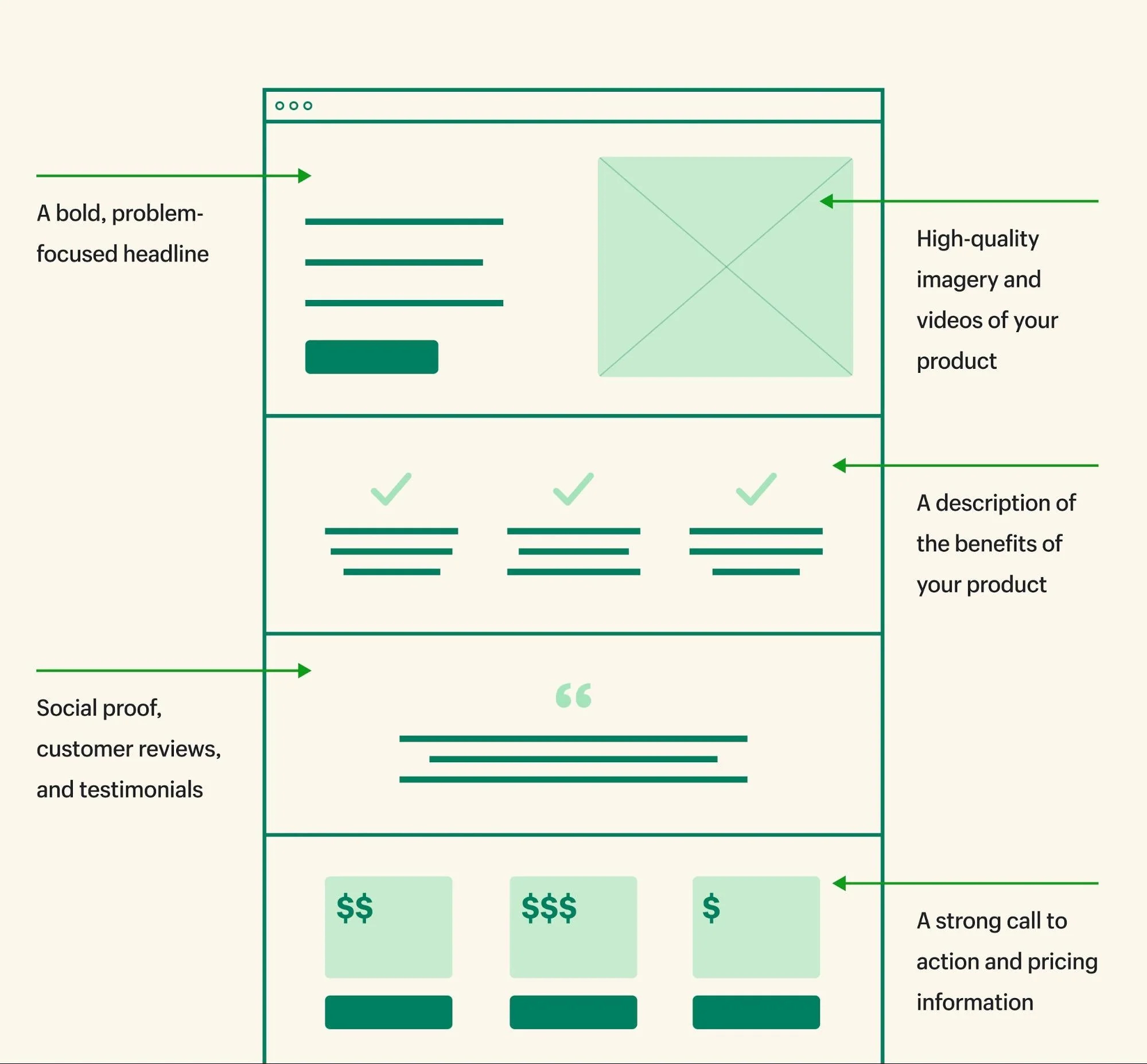
A landing page may include:
- A clear headline
- A specific offer
- Benefits and features
- Testimonials or case studies
- Supporting proof
- A short form
- Phone or WhatsApp contact options
- A strong call to action
- FAQs
- Minimal distractions
The important part is focus.
What Is a Website?
A website is a broader digital presence for a business.
Instead of being built around one conversion action, a website usually contains multiple sections and pages designed to serve different purposes.
For example, a business website may include:
- Homepage
- About page
- Service pages
- Product pages
- Case studies
- Blog
- Contact page
- FAQs
- Privacy policy
- Terms and conditions
Someone visiting your website may not be ready to buy immediately. They might want to understand who you are, compare services, read your content, look at previous work, or simply research your company.
That makes a website extremely useful for brand building, SEO, credibility, education, and long-term customer acquisition.
You can see this approach on the Scale With Clicks website, where visitors can explore the company, services, case studies, and other information before deciding whether to get in touch.
Landing Page vs Website: What's the Difference?
The easiest way to understand the difference is to look at the purpose.
A website gives visitors options.
A landing page gives visitors direction.
For example, your homepage might have links to Google Ads, Meta Ads, SEO services, case studies, your About page, your blog, and your contact page.
That's useful for someone researching your business.
But if someone clicks a Google Ad for "Google Ads management," giving them ten different things to explore may not always be ideal.
A dedicated landing page can keep the experience focused on Google Ads management and the action you want that visitor to take.
This doesn't mean websites have poor conversion rates. It means they are designed for a broader journey.
Website
Primary purpose: Build trust, educate visitors, rank organically, and support multiple customer journeys.
Typical navigation: Multiple pages and options.
Best for: SEO, brand searches, organic traffic, research, long-term growth, and credibility.
Landing Page
Primary purpose: Drive a specific conversion.
Typical navigation: Limited navigation and fewer distractions.
Best for: Google Ads, Meta Ads, lead generation, promotions, webinars, product launches, and specific offers.
Why Landing Pages Can Work Well for Paid Advertising
Paid traffic is different from organic traffic.
You are paying for every click.
That means you don't want to make visitors work unnecessarily hard to figure out what to do next.
Suppose someone searches:
"B2B lead generation agency"
They click your advertisement and arrive on your homepage.
The homepage says:
"Welcome to our digital marketing agency."
Then they have to find the services section, understand what you offer, locate lead generation, read about it, and eventually find your contact form.
That's a lot of steps.
Now imagine the same person arrives on a dedicated page with a headline such as:
"Generate More Qualified B2B Leads With Performance Marketing"
The page immediately explains the service, shows relevant results, answers objections, and provides a form.
The visitor doesn't need to figure out where to go.
That's the fundamental advantage of a conversion-focused landing page.
Google describes landing pages as an important part of turning ad clicks into conversions and recommends making the page relevant to the ad and keywords.
If you're building campaigns around Google Ads, this is also why your landing page strategy should be considered alongside your Google Ads campaign structure.
When Should You Use a Landing Page?
A landing page is particularly useful when you have a specific campaign or offer.
1. Google Ads campaigns
If you're running Google Search Ads for a particular service, a dedicated landing page can closely match the user's search intent.
For example:
Keyword: Google Ads agency
Ad: Google Ads Management for Growing Businesses
Landing page: Google Ads Management Service
The closer these elements are aligned, the easier it is for visitors to understand that they've reached the right place.
If you're actively running paid search campaigns, your Google Ads services should ideally have dedicated pages that match the services you're advertising.
2. Meta Ads campaigns
Meta traffic can behave differently from search traffic because users may not be actively searching for your service.
Your landing page therefore needs to do more work.
It needs to quickly communicate:
- What you're offering
- Who it's for
- Why it matters
- Why they should trust you
- What they should do next
A dedicated landing page can make it easier to build this story around a specific audience or offer.
For example, a Meta campaign targeting ecommerce businesses could send traffic to a page focused specifically on ecommerce growth rather than the general homepage.
You can learn more about building targeted campaigns through your Meta Ads services.
When Is a Website Better?
There are situations where sending traffic to your main website makes more sense.
Organic search
People arriving through Google Search may be researching your company or looking for information rather than responding to a specific advertisement.
A website gives them room to explore.
Someone may discover a blog article, read another article, visit a service page, look at a case study, and eventually contact you.
That journey can happen over several sessions.
This is one reason why SEO and content marketing work best as part of a broader website strategy.
For example, publishing useful content around Landing Page Optimization can attract visitors who are still researching their problem.
Brand searches
If someone searches for your company name, they may want to learn more about your business.
Sending them to a highly restricted landing page may actually remove useful information.
Your homepage can give them access to your services, case studies, about page, contact information, and other trust signals.
Complex services
Some services require more explanation before a visitor is ready to enquire.
For example, an enterprise marketing service might involve several capabilities, industries, technologies, and processes.
In this situation, a full website can help visitors build confidence before contacting you.
What About Conversion Rates?
This is where things get interesting.
It is tempting to say:
"Landing pages always convert better than websites."
That's too simplistic.
Conversion performance depends on the audience, traffic source, offer, page quality, message, device experience, price, trust, CTA, and many other factors.
A badly designed landing page can perform worse than a well-designed website page.
Likewise, a generic homepage can struggle when used as the destination for a highly specific paid campaign.
Instead of asking:
"Which converts better?"
Ask:
"Which page gives this particular visitor the clearest path to the action I want them to take?"
That's a much more useful question.
Landing Page vs Website for SEO
For SEO, a full website generally gives you more room to build topical authority.
You can create:
- Service pages
- Blog articles
- Case studies
- Industry pages
- FAQs
- Supporting resources
These pages can target different search intents and naturally link to each other.
For example, someone might discover a blog article about Google Ads, move to a related article about campaign structure, then visit your Google Ads service page.
This creates a larger content ecosystem.
A landing page can still rank organically, but it shouldn't be created solely because you want another URL. It needs a genuine purpose and useful content.
This is where a strong SEO strategy and thoughtful internal linking can support both rankings and conversions.
The Best Approach: Use Both
For many businesses, the landing page vs website question doesn't need to be an either/or decision.
Use your website as the foundation.
Then create dedicated landing pages for campaigns and high-intent offers.
Think of it this way:
Website = your digital headquarters
Landing pages = focused campaign destinations
Your website establishes the overall brand.
Your landing pages give specific campaigns a focused destination.
This combination can work particularly well when you're running multiple acquisition channels.
For example:
Google Ads → Service landing page → Lead form
Meta Ads → Offer landing page → Lead form
SEO blog → Service page → Contact page
Brand search → Homepage → Services / Case Studies → Contact
Each visitor gets a journey that matches their intent.
What Should a High-Converting Landing Page Include?
If you're creating a landing page specifically for lead generation, start with the basics.
1. A clear headline
Visitors should understand what you offer almost immediately.
Avoid vague headlines that sound impressive but don't explain anything.
2. A relevant offer
Explain what the visitor gets.
"Book a consultation" is more useful when the visitor understands what the consultation is actually about.
3. Proof
Add real case studies, results, testimonials, reviews, certifications, client logos, or other legitimate trust signals.
Don't manufacture proof.
4. Strong CTA
Tell people exactly what to do.
Examples include:
Get a Free Audit
Book a Strategy Call
Request a Quote
Get Started
5. Simple forms
Don't ask for 15 pieces of information if you only need a name, email, and phone number to start a conversation.
6. Mobile-friendly design
A significant portion of your traffic may come from mobile devices, especially from paid and social campaigns.
Google recommends keeping pages quick, easy to navigate, and easy to contact from mobile devices.
7. Clear tracking
You need to know what happens after someone clicks.
Track important actions such as:
- Form submissions
- Phone clicks
- WhatsApp clicks
- Book-a-call clicks
- Email clicks
- Purchases
- Key button clicks
Good conversion tracking allows you to understand which campaigns and pages are actually generating business results.
Common Mistakes to Avoid
Whether you're using a landing page or website, several mistakes can reduce conversions.
Sending every ad to the homepage
This is one of the most common problems.
If the ad promotes a specific service, don't automatically assume the homepage is the best destination.
Too many CTAs
If every button says something different, visitors may not know what to do.
Choose a primary action and make it obvious.
Weak mobile experience
A page that looks great on a desktop monitor can be frustrating on a phone.
Check spacing, forms, buttons, page speed, text size, and navigation.
Talking only about your company
Visitors care about their problem.
Instead of spending the first half of the page explaining how great your company is, explain how you can help solve their problem.
No testing
Don't assume your first version is the best version.
Test different headlines, offers, CTA wording, form lengths, layouts, and supporting proof.
Even small changes can reveal useful differences in visitor behavior.
Landing Page or Website: Which One Should You Choose?
There isn't one universal answer.
If your primary goal is paid advertising and direct response, a dedicated landing page can give visitors a more focused experience.
If your goal is SEO, brand building, education, credibility, and long-term organic growth, a full website is essential.
And if you're serious about digital marketing, you will often need both.
Build a website that explains your business and supports organic growth.
Then build focused landing pages around your advertising campaigns, offers, audiences, and conversion goals.
The important thing isn't simply choosing between a landing page and a website.
It's making sure the page you're sending traffic to matches why the visitor arrived in the first place.
When the ad, keyword, message, landing page, offer, and CTA all work together, you remove unnecessary friction from the customer journey.
That's ultimately what conversion optimization is about.
Final Thoughts
A website and a landing page aren't competitors.
They are different tools designed for different jobs.
Your website helps people understand your business.
Your landing pages help specific campaigns turn interested visitors into leads or customers.
If you're investing in Google Ads, Meta Ads, or other paid traffic, don't look only at the number of clicks you're generating. Look at what happens after those clicks.
A better landing page can make your existing traffic more valuable.
And when your website, landing pages, advertising, analytics, and conversion tracking all work together, you have a much stronger foundation for sustainable digital growth.
FAQs
Is a landing page the same as a website?
No. A landing page is a specific webpage usually designed around one marketing objective. A website is a broader collection of pages that serves multiple purposes, including branding, SEO, information, and customer acquisition.
Is a landing page better for Google Ads?
A dedicated landing page can be useful for Google Ads because it allows you to closely match the page to the user's search, ad message, and intended action. Google specifically recommends making landing pages relevant to the keywords and ads driving traffic to them.
Can a landing page rank on Google?
Yes. A landing page can rank organically if it provides useful, relevant content and meets normal SEO requirements. However, landing pages created exclusively for paid campaigns are often designed around conversion rather than broad organic search visibility.
Should I send Meta Ads to my website or a landing page?
It depends on the campaign. If the campaign promotes a specific offer, audience, or product, a dedicated landing page can provide a more focused experience. If users need to research your brand or explore multiple products and services, your website may be more appropriate.
How many landing pages should a business have?
There is no fixed number. Create landing pages when there is a meaningful difference in search intent, audience, offer, product, service, or campaign objective. Avoid creating multiple pages that are essentially identical.
Does landing page speed affect conversions?
Page speed can influence the user experience, particularly on mobile. Google recommends monitoring landing-page performance and mobile experience, and its documentation highlights the importance of page speed for advertising landing pages.
Can I use my homepage as a landing page?
Yes, but it isn't always the best choice. A homepage can work for brand-focused traffic or broad campaigns, while a dedicated landing page may be more appropriate when the visitor has a specific intent.