Google Ads
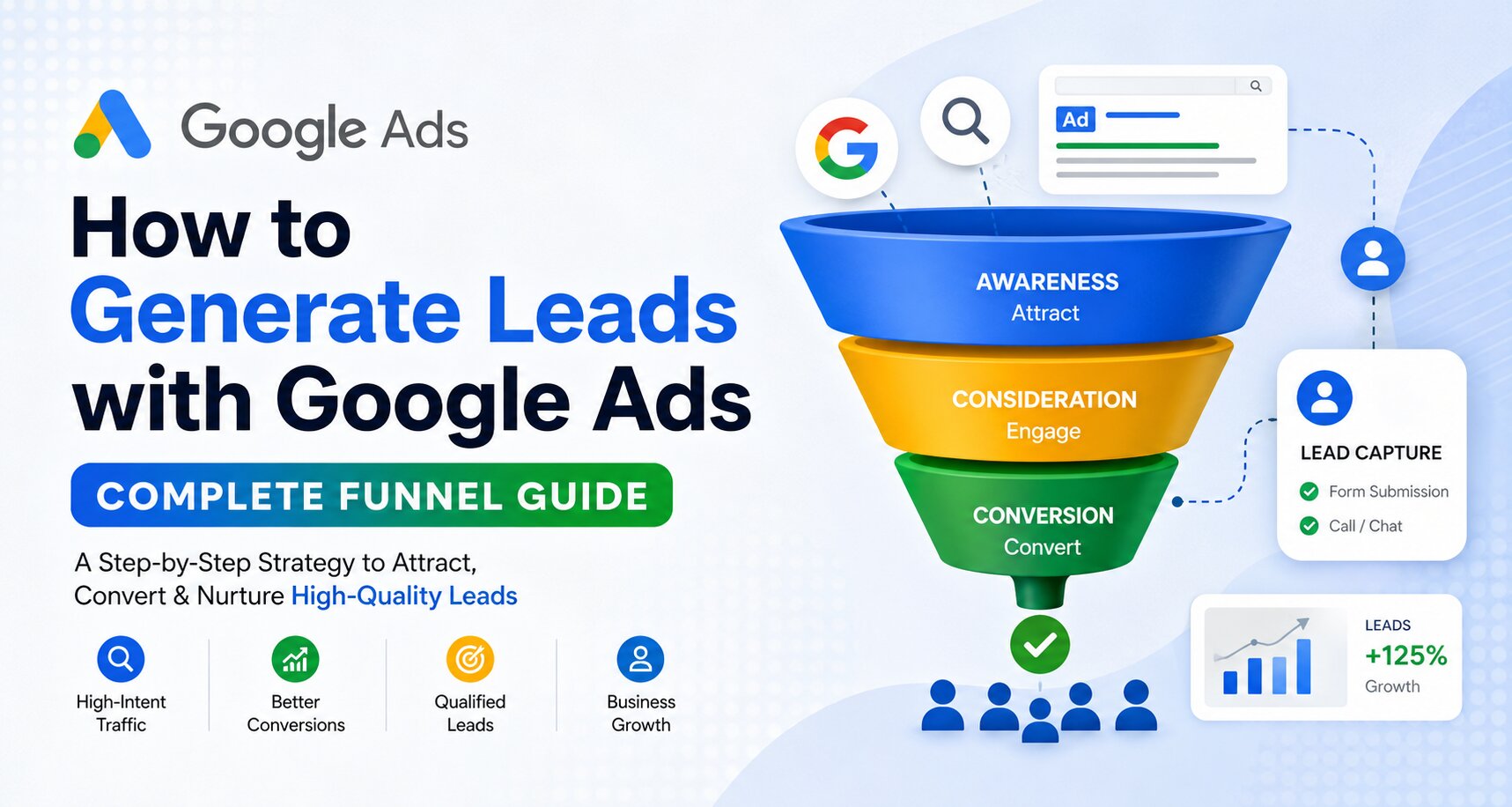
How to Generate Leads with Google Ads (Complete Funnel Guide)

Category: Google Ads
How to Generate Leads with Google Ads (Complete Funnel Guide)
Generating leads through Google Ads is no longer about simply bidding on a few keywords and hoping prospects fill out a form. Competition is increasing, cost-per-clicks are rising, and buyers are taking longer to make decisions.
Businesses that consistently generate qualified leads understand one thing: Google Ads works best when it is treated as a complete funnel rather than a standalone advertising platform.
Whether you're a local service provider, B2B company, SaaS business, healthcare provider, educational institute, or eCommerce brand offering consultations, this guide will show you exactly how to build a lead generation funnel using Google Ads that attracts, nurtures, and converts prospects into customers.
If you're looking for professional campaign management, explore our Google Ads Services or learn more about our approach on the Scale With Clicks Home Page.
Why Google Ads Is One of the Best Lead Generation Channels
Google Ads allows businesses to reach people at the exact moment they are searching for solutions.
Unlike social media advertising, where users are interrupted while browsing content, Google Ads targets users with existing intent.
For example:
- Someone searching "best digital marketing agency near me"
- Someone searching "industrial pump manufacturers"
- Someone searching "Google Ads management services"
- Someone searching "CRM software demo"
These users are already interested in a solution. Your job is to guide them through the funnel efficiently.
Benefits of Google Ads for Lead Generation
- High-intent traffic
- Measurable ROI
- Scalable campaigns
- Advanced audience targeting
- Fast results compared to SEO
- Strong conversion tracking capabilities
For businesses comparing paid and organic strategies, read our guide on SEO vs Google Ads: Which One Should Your Business Invest In?.
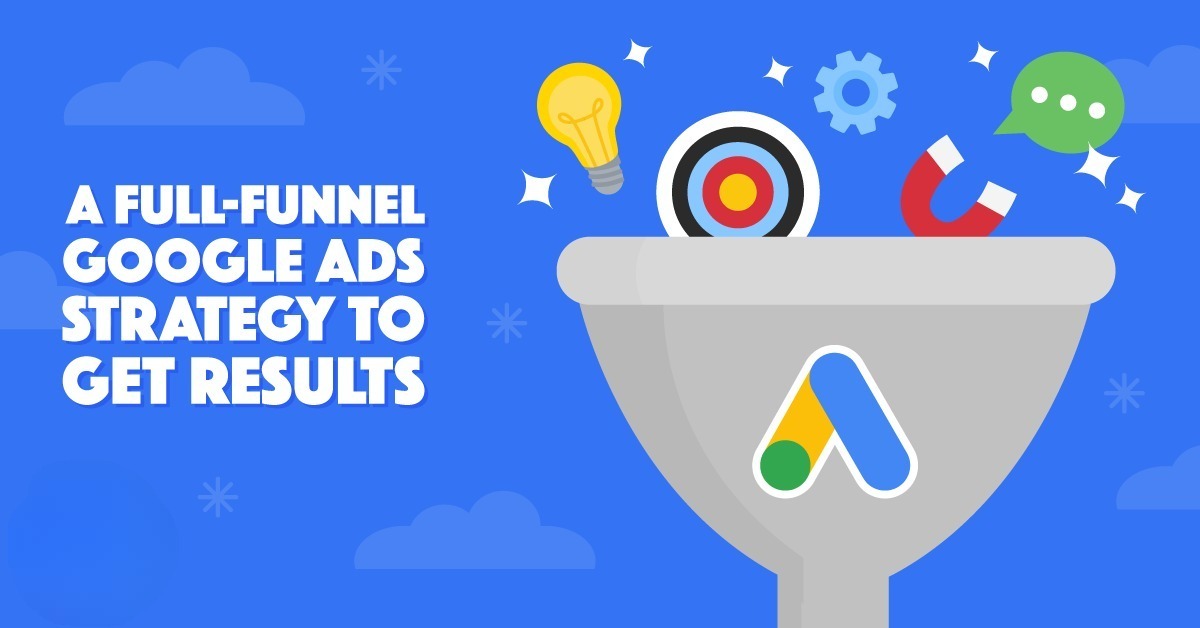
Understanding the Google Ads Lead Generation Funnel
Many advertisers focus only on bottom-funnel keywords and miss opportunities to influence buyers earlier in their journey.
A successful lead generation strategy includes:
Top of Funnel (TOFU)
Goal: Awareness
Users are researching problems.
Examples:
- What is PPC advertising?
- How to increase website leads
- Digital marketing strategies
Campaign Types:
- Demand Gen Campaigns
- YouTube Ads
- Display Campaigns
Middle of Funnel (MOFU)
Goal: Consideration
Users are evaluating solutions.
Examples:
- Best Google Ads agency
- PPC management company
- Google Ads consultant
Campaign Types:
- Search Campaigns
- Remarketing Campaigns
- Video Remarketing
Bottom of Funnel (BOFU)
Goal: Conversion
Users are ready to take action.
Examples:
- Hire Google Ads expert
- Google Ads agency pricing
- Book PPC consultation
Campaign Types:
- High-intent Search Campaigns
- Performance Max Campaigns
- Remarketing Campaigns
Businesses that align campaigns with funnel stages generally achieve higher conversion rates and lower acquisition costs.
Step 1: Define Your Ideal Lead
Before launching campaigns, determine:
- Industry
- Location
- Company size
- Budget range
- Service requirements
- Buying intent
A common mistake is generating large volumes of unqualified leads.
Instead, focus on lead quality.
Ask:
- Who is most likely to become a paying customer?
- What search terms would they use?
- What problems are they trying to solve?
Step 2: Conduct Intent-Based Keyword Research
Keywords drive the entire funnel.
Instead of targeting only broad keywords, categorize them by intent.
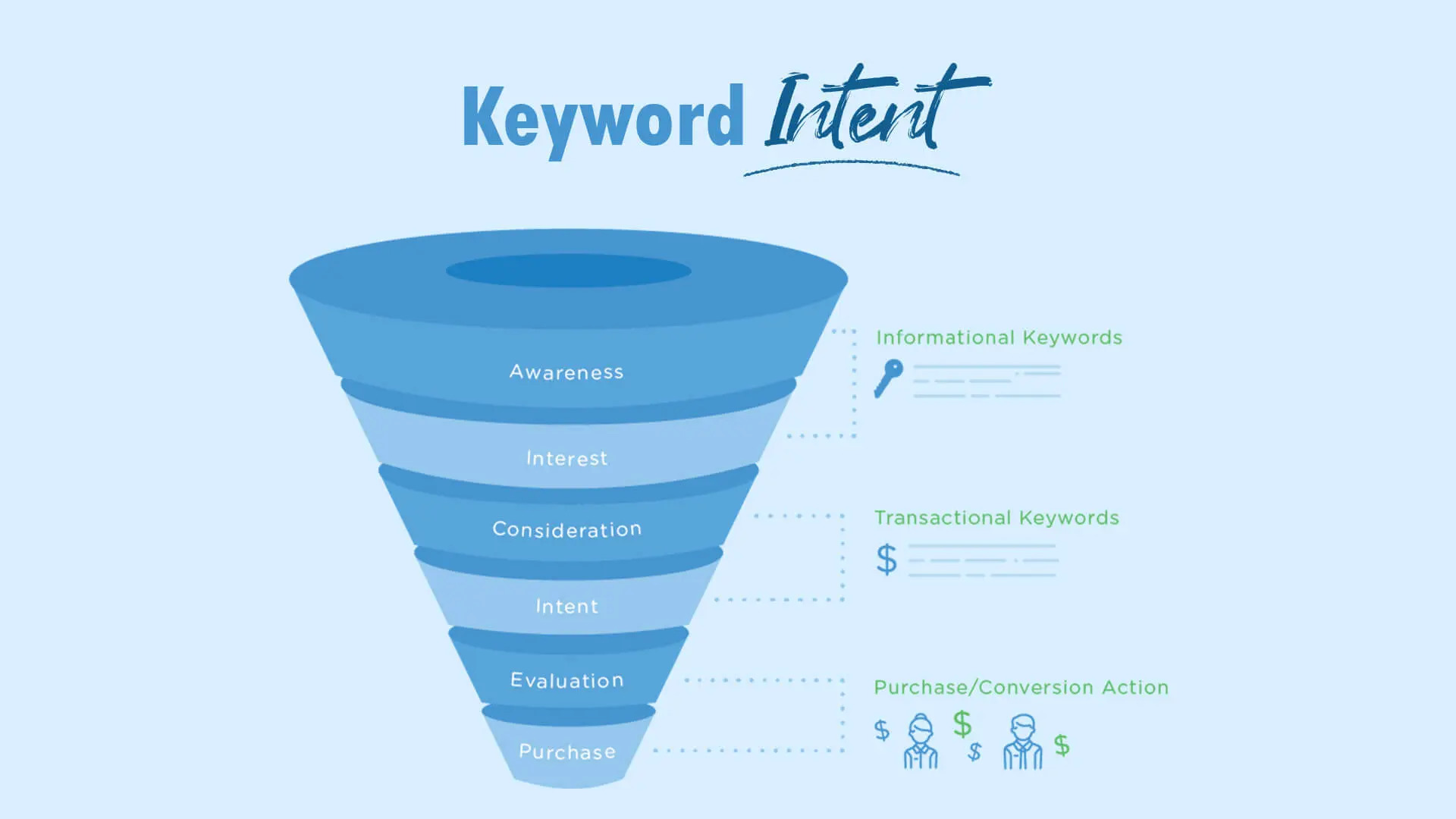
Informational Keywords
Examples:
- How Google Ads works
- PPC marketing guide
- Lead generation strategies
These keywords build awareness.
Commercial Investigation Keywords
Examples:
- Best PPC agency
- Google Ads management company
- PPC services pricing
These users are comparing options.
Transactional Keywords
Examples:
- Hire Google Ads expert
- Google Ads consultant near me
- PPC agency consultation
These keywords typically generate the highest-quality leads.
For additional keyword strategies, check out our article on How Much Should You Spend on Google Ads in 2026?.
Step 3: Structure Campaigns Properly
Campaign structure significantly impacts performance.
Recommended setup:
Brand Campaign
Protect searches related to your business.
Examples:
- Scale With Clicks
- ScaleWithClicks
- Vinay Yadav Google Ads
Service Campaigns
Create separate campaigns for each service.
Examples:
- Google Ads Management
- Meta Ads Management
- SEO Services
- Landing Page Optimization
Location Campaigns
Examples:
- Google Ads Agency Delhi
- PPC Services Noida
- Digital Marketing Agency Ghaziabad
Competitor Campaigns
Target competitor searches carefully while maintaining compliance with Google policies.
Step 4: Build High-Converting Landing Pages
Sending paid traffic to a generic homepage is one of the biggest lead generation mistakes.
Every campaign should have a dedicated landing page.
Essential Landing Page Elements
Clear Headline
Immediately explain your value proposition.
Example:
"Generate More Qualified Leads With Google Ads Management"
Strong Offer
Examples:
- Free Consultation
- Free Audit
- Free Strategy Session
Social Proof
Include:
- Testimonials
- Case Studies
- Client Logos
- Reviews
Simple Forms
Request only essential information.
Recommended fields:
- Name
- Phone
- Business Name
Strong CTA
Examples:
- Book a Call
- Get a Free Audit
- Request Pricing
You may also want to review our article on Google Ads Landing Page Optimization Checklist.
Step 5: Set Up Conversion Tracking Correctly
Without accurate tracking, optimization becomes impossible.
Every lead generation campaign should track:
- Form submissions
- Phone calls
- WhatsApp clicks
- Appointment bookings
- Lead form extensions
- CRM-qualified leads
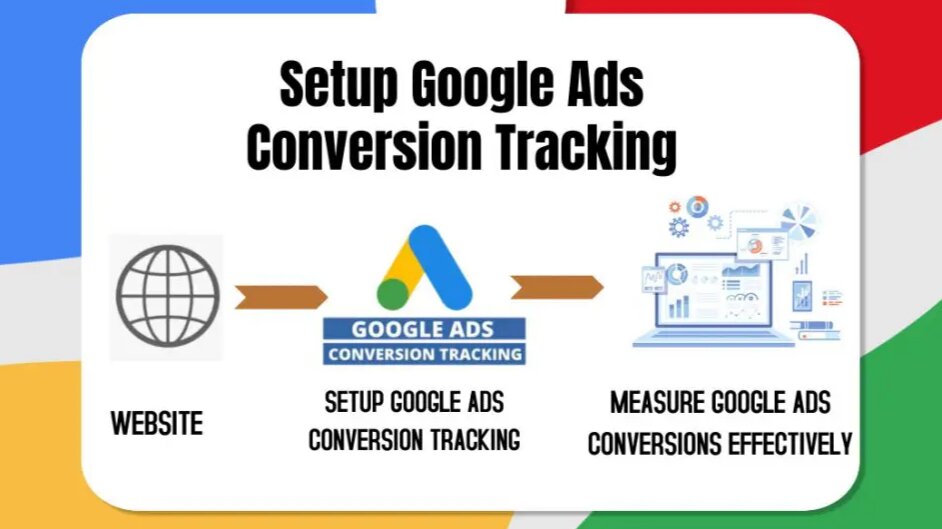
Recommended tools:
- Google Tag Manager
- Google Analytics 4
- Google Ads Conversion Tracking
- Enhanced Conversions
- Offline Conversion Import
Many advertisers optimize for form fills while ignoring actual sales outcomes.
The best-performing accounts optimize for qualified leads rather than raw lead volume.
You can also learn more about Meta Pixel + CAPI Setup if you're running multi-channel campaigns.
Step 6: Use Remarketing to Recover Lost Leads
Most visitors won't convert on their first visit.
Remarketing helps bring them back.
Create audience segments such as:
Website Visitors
Users who visited service pages but didn't convert.
Landing Page Visitors
Users who viewed key pages but abandoned.
Video Viewers
People who watched your YouTube content.
Existing Leads
Users who haven't yet become customers.
Remarketing often produces some of the highest ROI within Google Ads accounts.
Step 7: Optimize Based on Lead Quality
Many businesses focus solely on:
- Cost Per Click
- Cost Per Lead
- Click Through Rate
While important, these metrics don't tell the whole story.
Track:
- Qualified Leads
- Sales Opportunities
- Revenue Generated
- Customer Acquisition Cost
- Return on Ad Spend
The goal isn't cheaper leads.
The goal is profitable leads.
Step 8: Align Sales and Marketing
A common reason campaigns fail is poor lead handling.
Best practices:
- Respond within 5 minutes
- Use CRM automation
- Implement lead scoring
- Create follow-up sequences
- Track lead sources
Even excellent Google Ads campaigns can underperform if sales processes are weak.
Common Lead Generation Mistakes
Many advertisers unknowingly waste budget due to avoidable issues.
Broad Match Overuse
Without proper controls, irrelevant traffic increases.
Weak Landing Pages
High-quality traffic cannot compensate for poor user experience.
Missing Conversion Tracking
Optimization becomes guesswork.
No Negative Keywords
Irrelevant clicks consume budget.
Ignoring Remarketing
Potential customers leave and never return.
For a deeper breakdown, read our guide on 7 Costly Google Ads Mistakes That Are Wasting Your Budget (And How to Fix Them).
Sample Google Ads Lead Generation Funnel
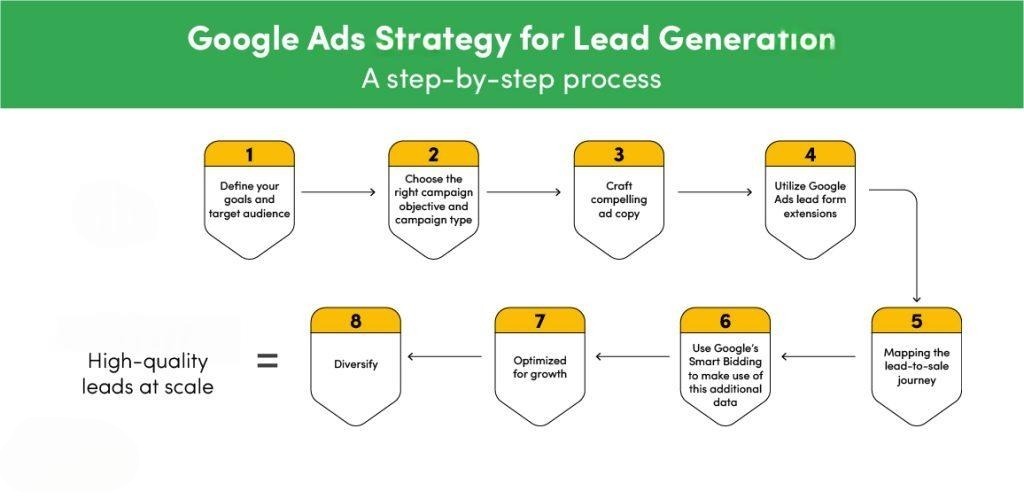
- User searches a relevant keyword.
- Google Search Ad appears.
- User visits dedicated landing page.
- User submits form.
- Lead enters CRM.
- Automated email and call sequence begins.
- Sales consultation is scheduled.
- Lead converts into customer.
- Customer data is sent back to Google Ads for optimization.
This closed-loop approach consistently improves lead quality over time.
Final Thoughts
Google Ads remains one of the most effective lead generation platforms when implemented strategically.
Success comes from understanding the entire buyer journey rather than focusing only on clicks and impressions.
Businesses that combine intent-based keyword targeting, optimized landing pages, accurate conversion tracking, remarketing, and sales alignment consistently generate better leads and higher ROI.
If you're looking to improve your lead generation campaigns, explore our Performance Marketing Services, Google Ads Management Services, or contact us through the Scale With Clicks Home Page for a customized growth strategy.
Frequently Asked Questions (FAQs)
How much budget do I need to generate leads with Google Ads?
The ideal budget depends on your industry, competition, and target geography. Most service-based businesses should start with enough budget to generate at least 20–30 conversions per month for meaningful optimization.
Which Google Ads campaign type is best for lead generation?
Search campaigns usually generate the highest-quality leads because they target users actively searching for solutions.
How long does it take to generate leads from Google Ads?
Most campaigns begin generating leads within days, but optimization and scaling typically require 30–90 days of data.
Is Google Ads better than Facebook Ads for lead generation?
Google Ads generally captures existing demand, while Meta Ads creates demand. Many businesses achieve the best results by using both channels together.
What is a good conversion rate for Google Ads lead generation?
Conversion rates vary by industry, but many successful lead generation campaigns achieve between 5% and 15%.
Should I send traffic to my homepage?
No. Dedicated landing pages typically outperform homepages because they focus on a single conversion goal.
Why am I getting leads but no sales?
The issue may be related to lead quality, sales follow-up speed, qualification processes, or inaccurate targeting.
How important is remarketing for lead generation?
Remarketing is extremely important because many users need multiple interactions before converting.