Facebook Ads
Facebook Retargeting - Turn Visitors Into Customers (2026)

Category: Facebook Ads
Retargeting Strategy for Facebook & Instagram Ads: Turn More Visitors Into Paying Customers
Most visitors won't become customers the first time they discover your business.
Some browse your services, compare competitors, read reviews, or simply get distracted before taking action. If you don't reconnect with these potential customers, you're likely losing valuable sales opportunities.
That's where a well-planned Facebook and Instagram retargeting strategy makes all the difference.
Instead of continuously spending your advertising budget on acquiring new visitors, retargeting allows you to bring back people who have already shown interest in your business. Since these users are already familiar with your brand, they're much more likely to convert than a completely cold audience.
Whether you're running an eCommerce store, generating leads for a service business, or promoting SaaS products, retargeting consistently delivers one of the highest returns on advertising spend (ROAS) across Meta Ads.
At Scale With Clicks, retargeting forms a core part of almost every Meta Ads strategy we build because it helps businesses convert missed opportunities into measurable revenue while reducing overall acquisition costs.
In this guide, you'll learn how to build a profitable Facebook and Instagram retargeting funnel, segment audiences effectively, choose the right creatives, and avoid common mistakes that increase your cost per conversion.
Why Retargeting Should Be Part of Every Meta Ads Strategy
Businesses often invest heavily in prospecting campaigns but overlook the audiences that already know their brand.
That's a costly mistake.
Someone who has visited your pricing page, watched 75% of your product video, or added an item to their cart is significantly closer to making a purchase than someone seeing your business for the first time.
Retargeting focuses your budget on these high-intent users, helping you increase conversions without constantly increasing your ad spend.
If you're already investing in paid advertising across multiple platforms, you may also find our guide on Why Your Google Ads Are Not Converting useful, as many conversion optimization principles apply across both Google Ads and Meta Ads.
What is Facebook & Instagram Retargeting?
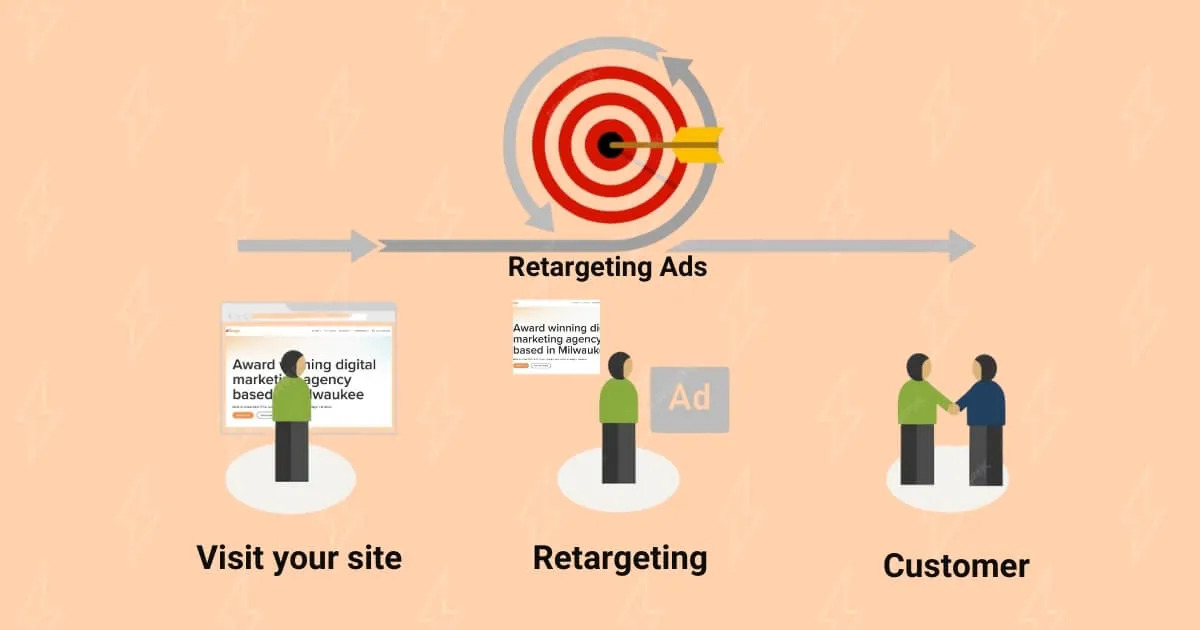
Facebook and Instagram retargeting (also called remarketing) is the process of showing advertisements to people who have already interacted with your business.
These interactions can include:
- Visiting your website
- Viewing a product or service page
- Reading your blog
- Adding a product to the cart
- Initiating checkout
- Watching your Facebook or Instagram videos
- Engaging with your Instagram profile
- Opening a Lead Form
- Messaging your business
- Saving one of your posts
- Clicking on a previous advertisement
Because these audiences are already familiar with your business, they typically convert at a much higher rate than completely new users.
How Facebook & Instagram Retargeting Works
Meta collects audience data using:
- Meta Pixel
- Conversions API (CAPI)
- Customer Lists
- Website Events
- App Events
- Video Engagement
- Instagram Engagement
- Facebook Engagement
- Lead Forms
- Messenger Conversations
Whenever someone interacts with your business, Meta stores this activity (based on your audience duration settings), allowing you to serve highly relevant ads later.
For businesses looking to improve event tracking accuracy, implementing Meta Pixel + Conversions API together is considered the current best practice.
If you're planning to improve your campaign tracking, our Performance Marketing Services can help implement advanced tracking and conversion measurement across Meta and Google Ads.
Why Retargeting Usually Delivers Better ROAS
There are several reasons why retargeting campaigns consistently outperform cold audience campaigns.
Higher Purchase Intent
Your audience already knows who you are.
They've visited your website, interacted with your content, or explored your products.
You're no longer introducing your brand—you are simply encouraging them to complete an action they were already considering.
Lower Cost Per Acquisition
Since these audiences are warmer, Meta's algorithm often finds conversions more efficiently, resulting in lower CPAs.
Businesses frequently notice:
- Higher Click Through Rate (CTR)
- Lower CPC
- Better Conversion Rate
- Higher ROAS
- Lower Cost Per Lead
Better Personalization
Retargeting allows you to match the message to the user's journey.
Instead of showing everyone the same advertisement, you can create personalized campaigns for:
- Product viewers
- Pricing page visitors
- Cart abandoners
- Existing customers
- Blog readers
- Video viewers
This personalized approach significantly improves campaign performance.
Setting Up Meta Pixel & Conversions API
Before launching any retargeting campaign, ensure your tracking setup is accurate.
Without reliable tracking, Meta cannot build high-quality audiences or optimize your campaigns effectively.
Your implementation should include:
- Page View
- View Content
- Add to Cart
- Initiate Checkout
- Purchase
- Lead
- Complete Registration
- Contact
- Schedule
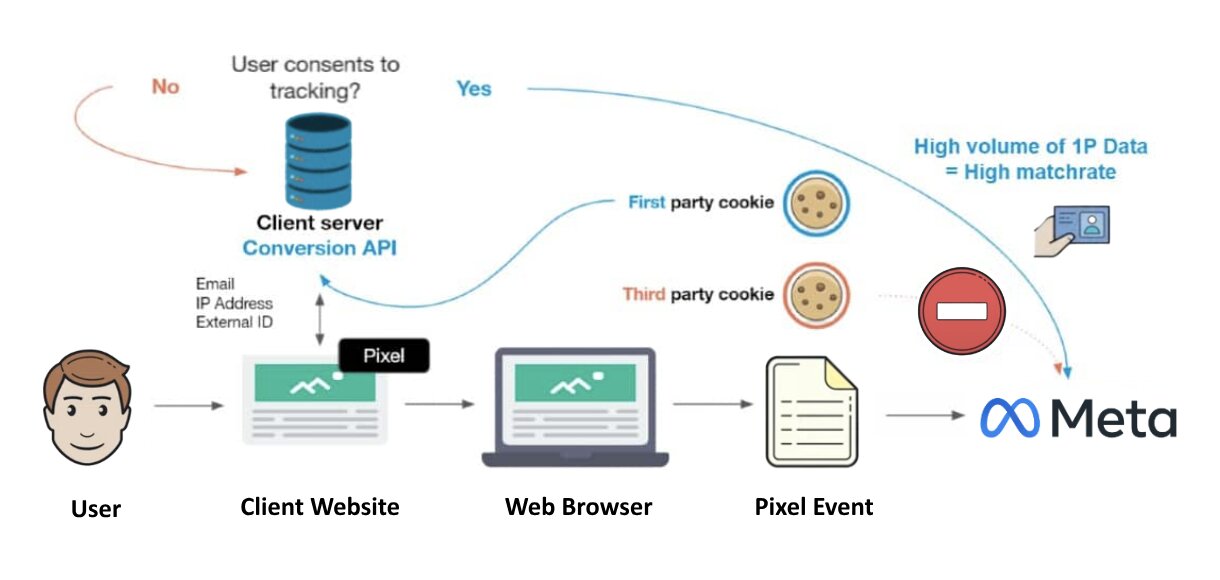
Using Meta Pixel alongside Conversions API (CAPI) helps recover conversion data that browser restrictions or ad blockers might otherwise prevent from being tracked.
If your website isn't tracking these events correctly, your retargeting audiences may be incomplete, reducing campaign performance.
Create High-Intent Custom Audiences
One of the biggest mistakes advertisers make is placing everyone into a single website visitor audience.
Not every visitor has the same buying intent.
Someone who spends five minutes on your pricing page is far more valuable than someone who leaves after five seconds.
Instead, segment your audiences according to intent.
Audience 1: Website Visitors (30–60 Days)
Start with all website visitors.
These users have already discovered your business and are ideal for educational or trust-building ads.
Recommended creatives include:
- Customer testimonials
- Brand story videos
- Case studies
- Success stories
- Educational content
Audience 2: Product or Service Page Visitors
These users have demonstrated stronger buying intent.
Rather than repeating awareness ads, focus on why they should choose your business.
Show:
- Customer reviews
- Product demonstrations
- Feature comparisons
- Industry certifications
- Frequently Asked Questions
For service businesses, linking users to optimized service pages can significantly improve conversions.
For example, businesses looking to improve campaign profitability can explore our Meta Ads Management Services to build structured retargeting funnels.
Audience 3: Blog Readers
Many businesses ignore blog readers, even though they're often researching before making a purchasing decision.
Someone reading educational content is already investing time in learning about your solutions.
For example, if someone has read our guide on Google Ads Setup for Beginners, they may later be interested in performance marketing services or campaign optimization.
These visitors respond well to:
- Free consultations
- Downloadable resources
- Case studies
- Newsletter sign-ups
- Educational webinars
Build a Complete Retargeting Funnel
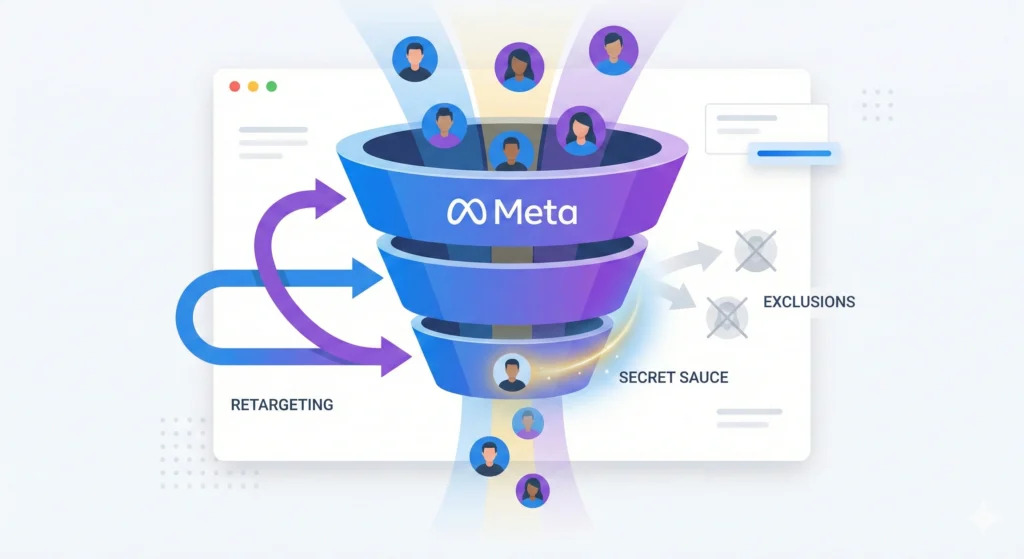
Rather than serving identical ads to everyone, create campaigns based on where users are in the buying journey.
Top of Funnel (Warm Audiences)
These audiences include:
- Video Viewers
- Instagram Engagement
- Facebook Engagement
- Website Visitors
- Blog Readers
Objective:
Build trust and familiarity.
Recommended creative formats:
- Educational videos
- Behind-the-scenes content
- Founder stories
- Customer success stories
- Industry insights
Instead of pushing an immediate sale, focus on demonstrating expertise and building credibility.
Middle of Funnel (Interested Prospects)
These users have shown stronger intent by visiting:
- Product pages
- Service pages
- Pricing pages
- Multiple blog articles
- Contact page
At this stage, address objections before asking for the conversion.
Great creative ideas include:
- Before-and-after case studies
- Customer testimonials
- Comparison ads
- Frequently asked questions
- Product walkthrough videos
Businesses that struggle with low conversion rates should also review their landing pages. Even the best retargeting campaign cannot compensate for a slow or poorly optimized page.
Bottom of Funnel (High-Intent Audiences)
This is where your highest-converting audiences exist.
These users have already shown a strong buying intent and only need a final push to complete the conversion.
Typical audiences include:
- Add to Cart
- Initiate Checkout
- Lead Form Opened
- Booking Started
- Contact Form Started
- Demo Request Started
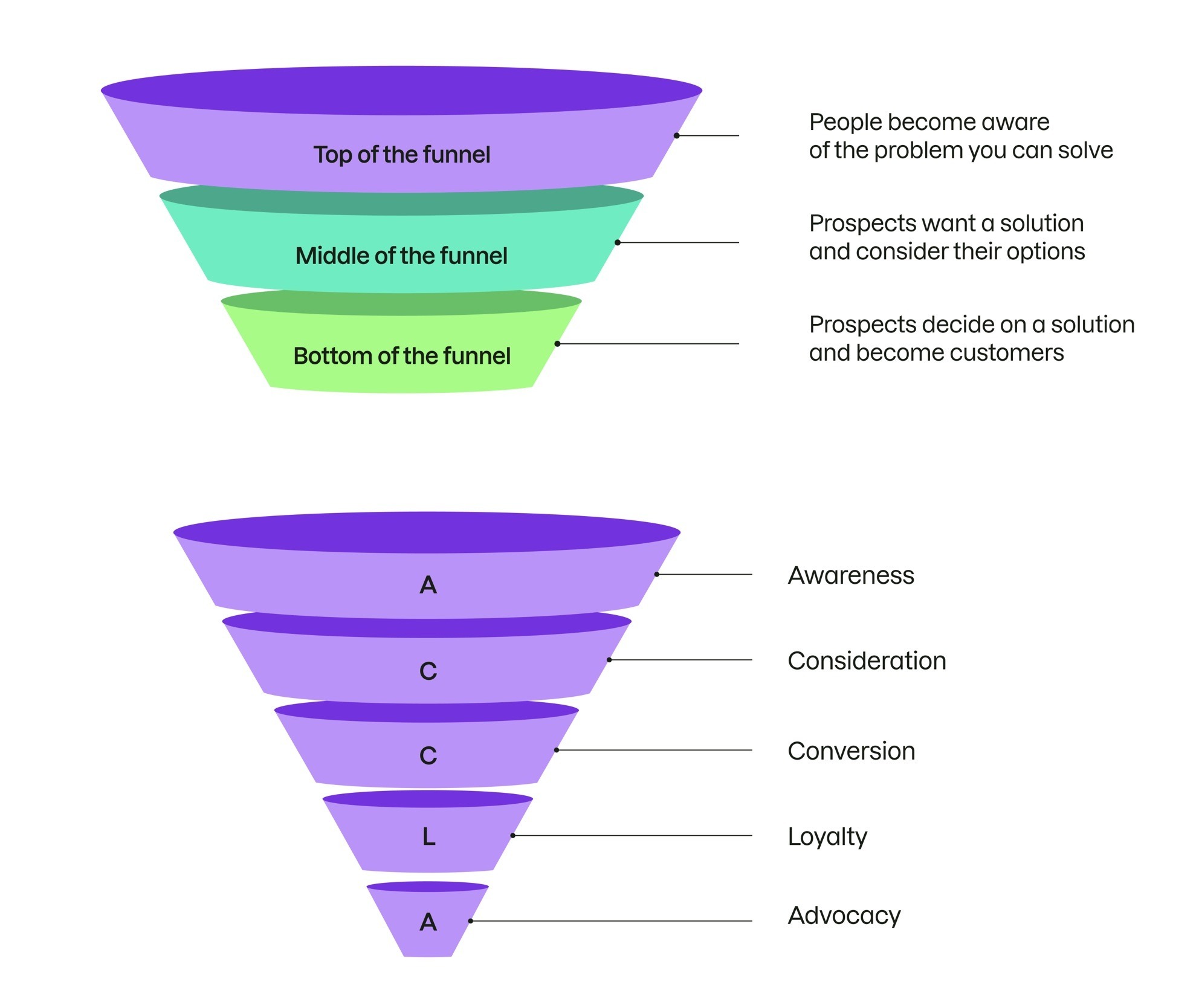
At this stage, your messaging should focus on removing hesitation rather than educating the customer.
Some proven ad angles include:
- Limited-time offers
- Free consultation
- Free shipping
- Customer testimonials
- Money-back guarantee
- "Still thinking about it?"
- "Complete your purchase today"
Avoid offering large discounts immediately. Many users simply need a reminder rather than a price reduction.
Retarget Cart Abandoners Separately
Cart abandoners deserve their own campaign.
They've already demonstrated purchase intent, making them one of your highest-value audiences.
Create a Custom Audience for users who triggered the Add to Cart event but exclude anyone who has already completed a purchase.
Your campaign could include:
- Reminder ads
- Product benefits
- Social proof
- Limited stock messaging
- Frequently asked questions
- Customer reviews
Running an eCommerce store? Pair this strategy with Dynamic Product Ads so users automatically see the exact products they viewed.
Dynamic Product Ads (DPA)
Dynamic Product Ads are one of Meta's most powerful automation features for eCommerce businesses.
Instead of manually creating an ad for every product, Meta automatically displays the products each visitor previously viewed or added to their cart.
Benefits include:
- Highly personalized ads
- Better Click-Through Rate (CTR)
- Higher ROAS
- Lower Cost Per Acquisition (CPA)
- Automatic catalog updates
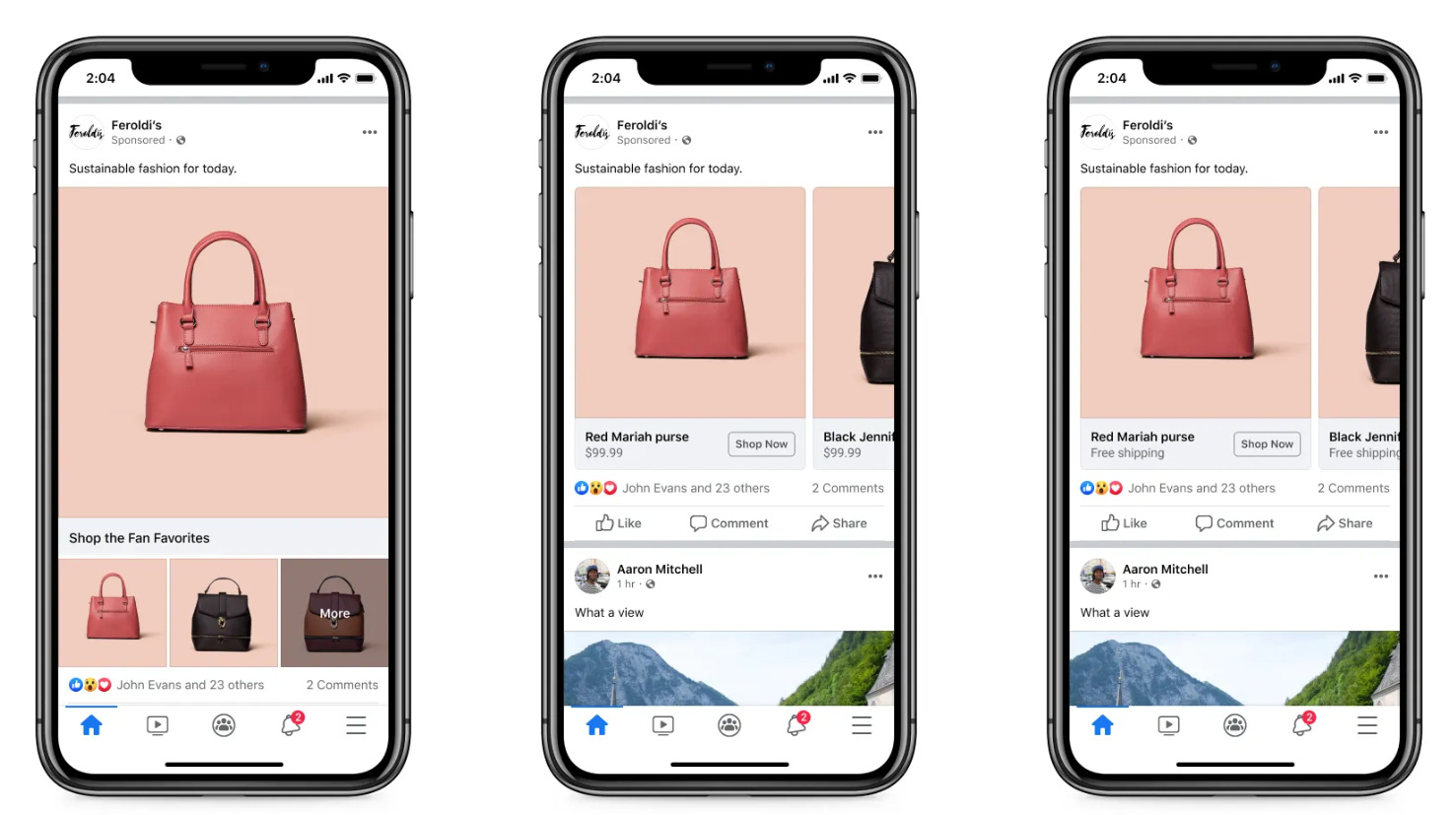
Alt Text: Example of Meta Dynamic Product Ads showing personalized product recommendations.
If you're already running Google Shopping campaigns, you'll notice that Dynamic Product Ads follow a similar principle of showing users highly relevant products based on previous interactions.
Retarget Existing Customers
Many advertisers stop advertising once someone becomes a customer.
That's a missed opportunity.
Existing customers are often your most profitable audience.
Create dedicated campaigns for:
- Cross-selling complementary products
- Upselling premium plans
- Subscription renewals
- Seasonal offers
- Product launches
- Referral campaigns
Customer retention is usually far less expensive than acquiring new customers.
Choosing the Right Retargeting Window
The duration of your audience depends on your buying cycle.
Here's a practical framework:
| Audience | Recommended Duration |
|---|---|
| Cart Abandoners | 3–14 Days |
| Checkout Visitors | 7 Days |
| Product Viewers | 30 Days |
| Website Visitors | 30–60 Days |
| Blog Readers | 60–90 Days |
| Video Viewers | 90–180 Days |
| Instagram Engagement | 180 Days |
| Facebook Engagement | 180 Days |
| Existing Customers | 180–365 Days |
For businesses with a longer sales cycle—such as B2B, SaaS, or high-ticket services—longer audience durations often perform better.
Creative Strategy for Retargeting Campaigns
One mistake advertisers frequently make is using the same creative throughout the customer journey.
Instead, your messaging should evolve based on audience intent.
Awareness Stage
Focus on:
- Educational videos
- Industry insights
- Brand story
- Helpful tips
- Behind-the-scenes content
Consideration Stage
Highlight:
- Testimonials
- Case studies
- Product demonstrations
- Frequently Asked Questions
- Comparison ads
If you're also investing in Google Ads, check out our article on How to Reduce Cost Per Click in Google Ads to improve advertising efficiency across platforms.
Decision Stage
This is where your strongest offers belong.
Examples include:
- Book a free strategy call
- Limited-time discounts
- Bonus services
- Free consultation
- Free shipping
- Money-back guarantee
Your call-to-action should be direct and action-oriented.
Budget Allocation
Many businesses assume they should spend the majority of their advertising budget on retargeting.
In reality, retargeting audiences are much smaller.
A balanced allocation often looks like this:
| Campaign Type | Budget Allocation |
|---|---|
| Prospecting | 70% |
| Retargeting | 20% |
| Customer Retention | 10% |
Your actual allocation should depend on:
- Website traffic
- Audience size
- Sales cycle
- Monthly ad budget
- Lead volume
Frequency Matters
If people repeatedly see the same advertisement, performance usually declines.
Watch your Frequency metric carefully.
If it continues increasing while your CTR decreases, it's time to refresh your creatives.
Consider updating:
- Headlines
- Images
- Videos
- Offers
- Ad copy
- Call-to-actions
Most advertisers refresh retargeting creatives every 3–6 weeks.
Important Metrics to Monitor
Success isn't measured by clicks alone.
Monitor:
- Return on Ad Spend (ROAS)
- Cost Per Lead (CPL)
- Cost Per Purchase
- Cost Per Acquisition (CPA)
- Conversion Rate
- Click-Through Rate (CTR)
- Frequency
- CPM
- Landing Page Views
- Purchase Value
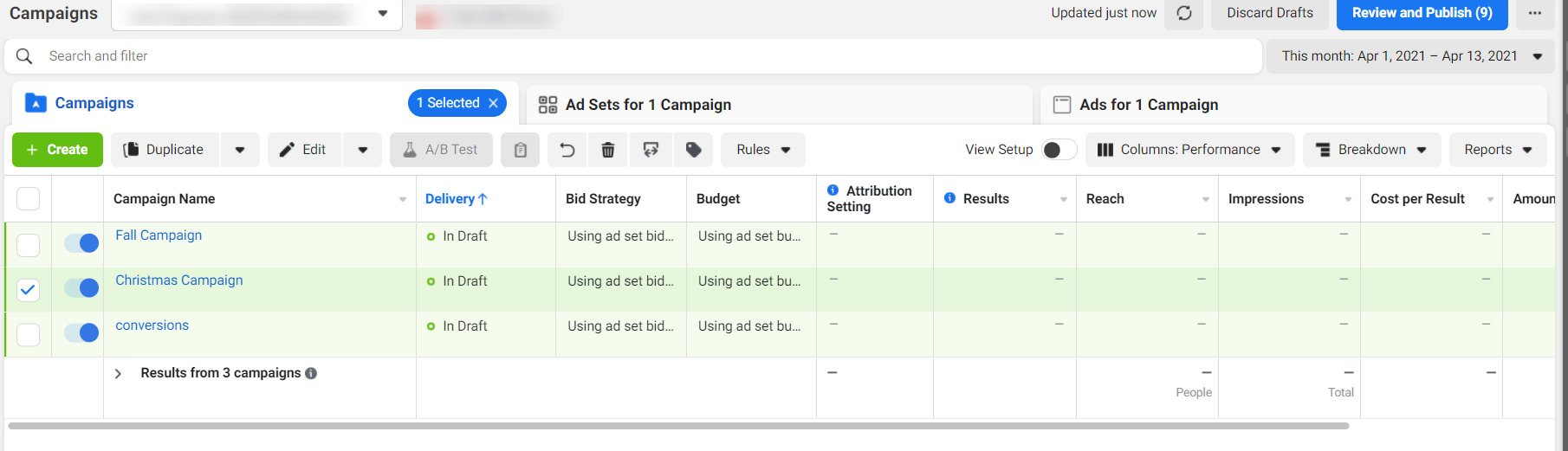
Alt Text: Dashboard showing Meta Ads KPIs including ROAS, CPA, CTR and Frequency.
Common Retargeting Mistakes
Showing Everyone the Same Advertisement
Different audiences have different motivations.
Someone visiting your homepage should not receive the same message as someone abandoning their cart.
Forgetting to Exclude Purchasers
There's no benefit in continuing to advertise the same product to someone who has already purchased it.
Always exclude:
- Purchasers
- Existing leads
- Employees
- Duplicate audiences
Weak Landing Pages
Even an excellent Meta campaign cannot compensate for a poor landing page experience.
Your landing page should:
- Load quickly
- Work flawlessly on mobile devices
- Have a clear headline
- Include trust signals
- Display customer testimonials
- Feature a prominent call-to-action
Ignoring Creative Fatigue
Showing the same image or video for months reduces engagement.
Regularly introduce:
- New creatives
- Fresh testimonials
- Updated offers
- Seasonal messaging
- New formats such as Reels and carousel ads
Not Testing Audiences
Avoid relying on a single audience.
Test:
- Website Visitors
- Video Viewers
- Instagram Engagers
- Facebook Engagers
- Customer Lists
- Lookalike Audiences built from purchasers
Advanced Retargeting Tips
Once your campaigns are consistently profitable, consider implementing advanced strategies.
These include:
- Sequential storytelling campaigns
- Video-first remarketing
- Time-on-site segmentation
- Value-based Lookalike Audiences
- Dynamic Creative Optimization
- Meta Advantage+ Shopping Campaigns
- Offline Conversion Tracking
- CRM audience syncing
- First-party customer data integration
These strategies can significantly improve campaign efficiency as your account scales.
Final Thoughts
Retargeting isn't about repeatedly showing ads to everyone who visited your website.
It's about delivering the right message to the right audience at the right stage of the customer journey.
By combining Meta Pixel, Conversions API, Custom Audiences, Dynamic Product Ads, and compelling creatives, businesses can consistently improve conversion rates while reducing customer acquisition costs.
At Scale With Clicks, we build full-funnel Meta advertising strategies that combine audience segmentation, landing page optimization, creative testing, and performance tracking to maximize return on investment.
If you're looking to generate more qualified leads or increase online sales, our Meta Ads Management Services can help you build scalable campaigns that deliver measurable business growth.
Frequently Asked Questions
Is Facebook retargeting still effective in 2026?
Yes. When implemented with Meta Pixel, Conversions API, and well-segmented Custom Audiences, retargeting continues to be one of the highest-performing campaign types on Meta.
How long should I retarget website visitors?
For most businesses, 30–60 days is a good starting point. Businesses with longer buying cycles may extend audiences to 90 or even 180 days.
Can I run retargeting ads without a website?
Yes. Meta allows you to create audiences from Instagram engagement, Facebook engagement, video views, Messenger conversations, Instant Forms, and customer lists.
How much budget should I allocate to retargeting?
A good starting point is around 15–25% of your total Meta Ads budget, although this depends on your traffic volume and audience size.
Should I create separate campaigns for prospecting and retargeting?
Absolutely. Separate campaigns provide better budget control, cleaner reporting, and allow you to tailor messaging to each stage of the customer journey.
What's the difference between retargeting and remarketing?
The terms are often used interchangeably. In Meta Ads, both refer to showing ads to users who have previously interacted with your business.
Related Articles
Continue learning with these in-depth guides:
- Why Your Google Ads Are Not Converting (Fix These Issues)
- How to Reduce Cost Per Click in Google Ads (2026 Guide)
- Google Ads Setup Guide for Beginners
- How Much Should You Spend on Google Ads in 2026?
- 7 Costly Google Ads Mistakes That Are Wasting Your Budget
Ready to Improve Your Meta Ads Performance?
Retargeting is one of the fastest ways to increase conversions without significantly increasing your advertising budget. By reaching users who have already expressed interest in your business, you can recover lost opportunities, improve ROAS, and build a more profitable marketing funnel.
If you're ready to build a high-performing Meta Ads strategy tailored to your business goals, contact Scale With Clicks and let our experts help you turn more visitors into loyal customers.