Google Ads
Search Campaign vs Display Campaign - Which Should You Choose?

Category: Google Ads
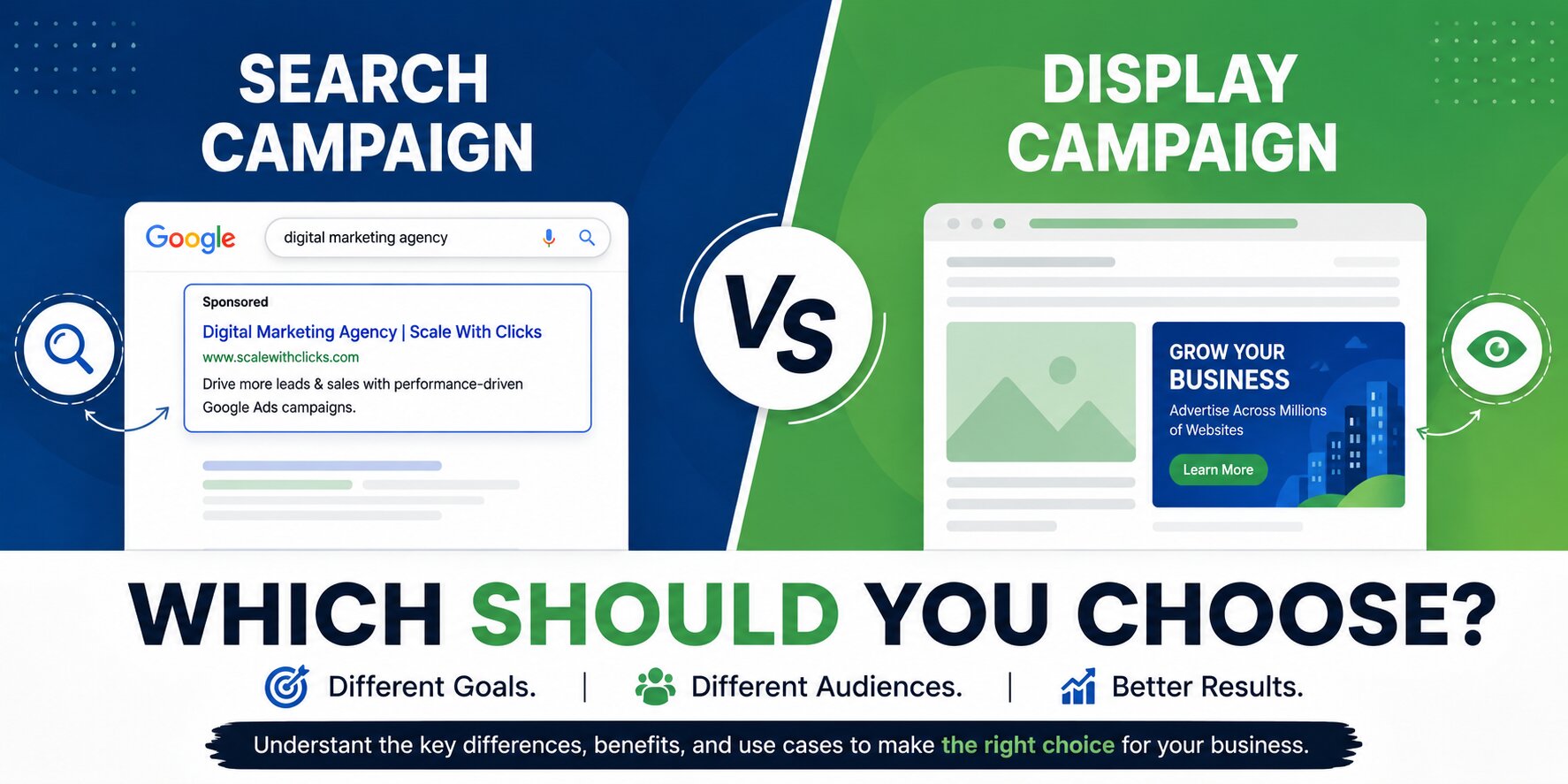
Search Campaign vs Display Campaign: Which Should You Choose?
If you're planning to advertise your business using Google Ads, one of the first decisions you'll make is choosing between a Search Campaign and a Display Campaign.
Both campaign types can generate leads and sales, but they work in completely different ways. Selecting the wrong campaign often leads to wasted budget, poor-quality traffic, and disappointing results.
We've seen businesses spend thousands of dollars on Display campaigns when they actually needed Search campaigns—or rely only on Search when Display remarketing could have significantly increased conversions.
In this guide, we'll compare Search Campaigns and Display Campaigns in detail, explain when each works best, and help you decide which option aligns with your marketing goals.
If you're new to Google Ads, consider reading our complete Google Ads Setup Guide for Beginners before launching your first campaign.
What Is a Google Search Campaign?
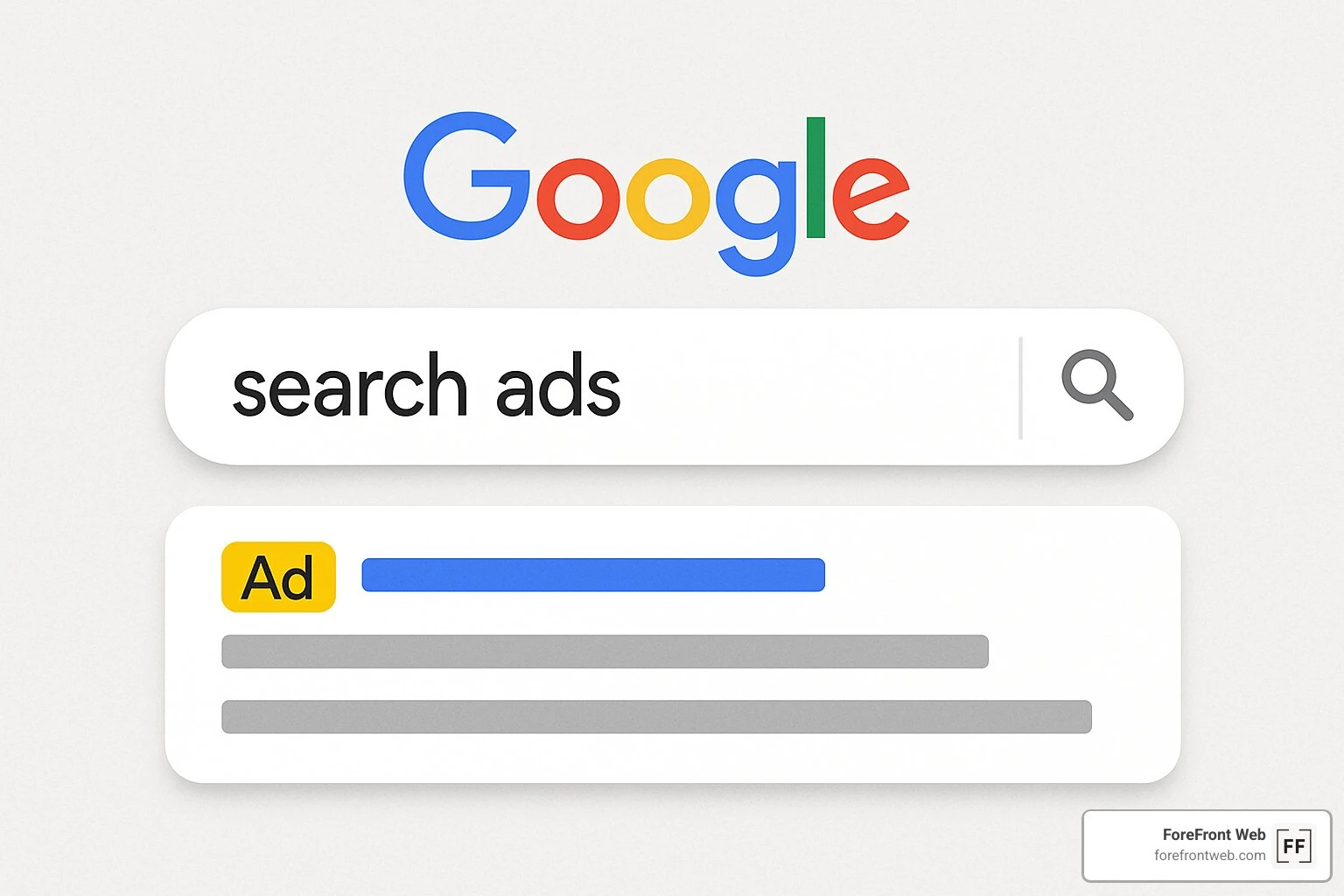
A Search Campaign displays text advertisements on Google's search results page when someone searches for keywords related to your business.
For example:
- "Google Ads agency"
- "best digital marketing company"
- "running shoes online"
- "plumber near me"
When users search these terms, Google can show your ad above the organic search results.
Unlike many other advertising platforms, Search Campaigns target users who are actively looking for a solution, making them one of the highest-intent advertising formats available.
Benefits of Search Campaigns
Search campaigns offer several advantages:
- Capture high-intent users
- Generate qualified leads
- Increase website inquiries
- Drive phone calls
- Improve online sales
- Easier conversion tracking
- Better ROI for service-based businesses
If your goal is immediate lead generation, Search campaigns are usually the best starting point.
You can further improve campaign performance by avoiding the mistakes discussed in 7 Costly Google Ads Mistakes That Are Wasting Your Budget.
What Is a Display Campaign?
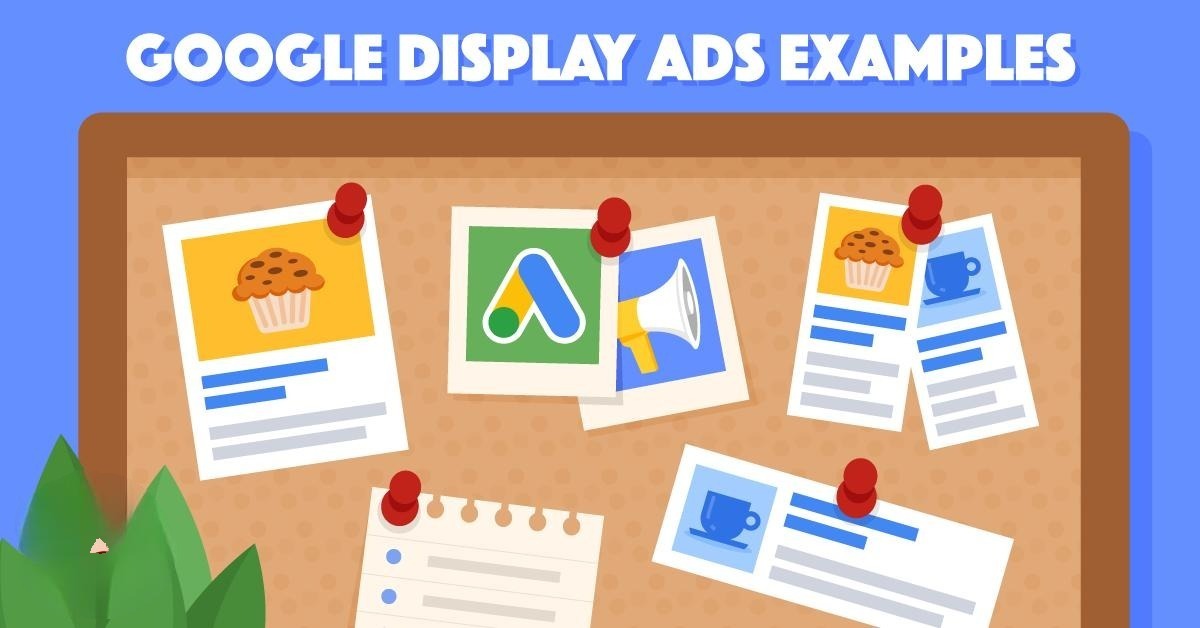
Display Campaigns show visual advertisements across millions of websites, blogs, mobile apps, Gmail, and YouTube that are part of the Google Display Network (GDN).
Instead of appearing when users perform a search, Display Ads appear while people browse content online.
These ads may include:
- Banner ads
- Responsive display ads
- Animated creatives
- Image ads
- Rich media advertisements
Display campaigns help businesses reach potential customers before they actively begin searching.
Benefits of Display Campaigns
Display campaigns are ideal for:
- Brand awareness
- Product launches
- Building trust
- Reaching large audiences
- Remarketing website visitors
- Increasing repeat purchases
- Supporting the customer journey
Businesses with visually appealing products often benefit significantly from Display advertising.
Search Campaign vs Display Campaign
| Feature | Search Campaign | Display Campaign |
|---|---|---|
| User Intent | Very High | Low to Medium |
| Ad Format | Text Ads | Image & Banner Ads |
| Where Ads Appear | Google Search Results | Websites, Apps, Gmail, YouTube |
| Best For | Leads & Sales | Brand Awareness |
| Conversion Rate | Usually Higher | Usually Lower |
| CPC | Higher | Lower |
| Audience Size | Smaller | Massive |
| Click Quality | High | Moderate |
Understanding User Intent
The biggest difference between the two campaign types is user intent.
Search Campaign
Someone searches:
"Emergency dentist near me"
This user already needs a dentist.
They're actively looking to book an appointment.
Your ad appears exactly when they're ready to take action.
Display Campaign
Someone is reading a health blog and sees an advertisement for a dental clinic.
They may not need treatment today.
Your ad simply introduces your business.
The conversion may happen weeks later.
This is why Search campaigns generally produce higher conversion rates.
When Should You Choose Search Campaigns?
Search campaigns are recommended if you want:
- More leads
- More phone calls
- Appointment bookings
- Service inquiries
- Ecommerce sales
- Local customers
- Immediate conversions
Industries where Search performs exceptionally well include:
- Healthcare
- Legal
- Home services
- Real estate
- Education
- SaaS
- Digital marketing
- B2B services
Businesses focused on generating qualified leads can also benefit from professional campaign management through our Google Ads Management Services.
When Should You Choose Display Campaigns?
Display campaigns are ideal when your objective is:
- Brand awareness
- Product visibility
- Market expansion
- New product launches
- Remarketing
- Building recognition
- Increasing repeat purchases
They're especially useful for ecommerce businesses with attractive product images.
Search Campaign Cost vs Display Campaign Cost
Generally speaking:
Search Campaign
- Higher CPC
- Better conversion rates
- Higher purchase intent
Display Campaign
- Lower CPC
- Lower conversion rate
- Larger audience reach
Although Search campaigns often cost more per click, they usually generate more valuable traffic.
A cheaper click doesn't always mean better ROI.
If reducing advertising costs is your goal, check out our guide on How to Reduce Cost Per Click in Google Ads.
Which Campaign Converts Better?
For most businesses:
Search Campaigns typically outperform Display Campaigns when the objective is direct conversions.
That's because users searching on Google already have intent.
Display campaigns, however, excel at nurturing users throughout longer buying journeys.
Businesses with long sales cycles often use both campaign types together.
The Power of Remarketing
One of the strongest use cases for Display campaigns is remarketing.
Imagine someone:
- Visits your website
- Reads your services
- Doesn't contact you
A Display Remarketing campaign allows your business to stay visible while they continue browsing the internet.
This increases:
- Brand recall
- Trust
- Conversion rates
Remarketing is particularly effective when combined with accurate Conversion Tracking Services, ensuring every meaningful action is measured correctly.
Should You Run Both Campaigns Together?
In many cases, yes.
A complete Google Ads strategy often looks like this:
Stage 1 – Search Campaign
Capture users actively searching.
↓
Stage 2 – Website Visit
Users explore your services.
↓
Stage 3 – Display Remarketing
Reconnect with visitors who didn't convert.
↓
Stage 4 – Conversion
More inquiries and sales.
This combination creates multiple touchpoints throughout the customer journey.
Common Mistakes Businesses Make
1. Starting with Display Instead of Search
New advertisers often assume more impressions mean better performance.
In reality, Search campaigns usually deliver higher-quality traffic.
2. Ignoring Remarketing
Many businesses spend money attracting visitors but never re-engage them.
Remarketing often produces some of the highest ROAS across Google Ads.
3. Poor Creative Design
Display campaigns rely heavily on strong visuals.
Low-quality banner designs usually receive fewer clicks.
4. Wrong Campaign Objective
Running Display campaigns for immediate lead generation often leads to disappointing results.
Campaign objectives should always align with business goals.
5. No Conversion Tracking
Without proper tracking, it's impossible to know which campaign is generating real business results.
If you haven't already, make sure your account includes GA4, Google Tag Manager, and conversion tracking before scaling campaigns.
Which Campaign Is Better for Different Businesses?
| Business Type | Recommended Campaign |
|---|---|
| Local Service Business | Search |
| Dentist | Search |
| Lawyer | Search |
| SaaS | Search + Display |
| Ecommerce | Search + Display |
| Fashion Brand | Display + Shopping |
| Startup | Display + Search |
| Real Estate | Search + Display |
| B2B Company | Search |
| Online Course | Search + Display |
Our Recommendation
If you're launching Google Ads for the first time, begin with a well-structured Search Campaign.
Once you're generating consistent traffic and conversions, introduce Display Remarketing to reconnect with visitors who didn't convert on their first visit.
This approach balances immediate lead generation with long-term brand visibility.
At Scale With Clicks, we help businesses build high-performing Google Ads campaigns backed by accurate conversion tracking, landing page optimization, and data-driven strategy. Explore Scale With Clicks to learn more about our approach or visit our Google Ads Services page to see how we can help improve your campaign performance.
Frequently Asked Questions (FAQs)
Is Search Campaign better than Display Campaign?
For direct lead generation and sales, Search Campaigns generally perform better because they target users actively searching for products or services.
Are Display campaigns worth running?
Yes. Display campaigns are highly effective for brand awareness, remarketing, and increasing customer recall.
Which campaign has a lower CPC?
Display campaigns typically have a lower average cost per click than Search campaigns.
Can I run Search and Display campaigns together?
Absolutely. Many successful advertisers use Search campaigns to capture demand and Display campaigns to nurture and re-engage visitors.
Which campaign is better for local businesses?
Most local businesses benefit more from Search campaigns because they target customers actively looking for nearby services.
Is remarketing available in Search campaigns?
Remarketing is primarily associated with Display campaigns, although Google also offers Remarketing Lists for Search Ads (RLSA), allowing advertisers to customize bids and ads for previous website visitors.
Final Thoughts
There isn't a single "best" campaign type for every business. The right choice depends on your goals, budget, audience, and stage of growth.
If your objective is generating immediate leads or sales, Search Campaigns are usually the strongest option. If you're looking to build awareness, stay visible, or bring previous visitors back to your website, Display Campaigns play an important supporting role.
Many of the highest-performing Google Ads accounts don't choose one over the other—they combine both strategically. By using Search to capture demand and Display to reinforce your brand through remarketing, you can create a more complete customer journey and maximize your advertising investment.
Whether you're just getting started or looking to improve an existing account, building campaigns around clear objectives and accurate conversion tracking will always produce better long-term results.