Facebook Ads
Facebook Ads Campaign Structure - Complete Guide for 2026

Category: Facebook Ads
Facebook Ads Campaign Structure for 2026 (Complete Guide)
Running Facebook Ads isn't just about creating a campaign and hoping for sales. As Meta's advertising platform continues to evolve, advertisers who follow a strategic campaign structure consistently outperform those who rely on guesswork.
Whether you're a local business, eCommerce brand, SaaS company, real estate agency, or service provider, the way you organize your campaigns directly impacts your Cost Per Lead (CPL), Return on Ad Spend (ROAS), scalability, and overall account health.
In this guide, you'll learn the best Facebook Ads campaign structure for 2026, including campaign organization, audience segmentation, budget allocation, creative testing, scaling techniques, and common mistakes to avoid.
If you're looking to generate more qualified leads or increase online sales, this framework will help you build campaigns that are easier to optimize and scale.
Why Campaign Structure Matters More Than Ever
Many advertisers focus entirely on ad creatives or audience targeting while ignoring the campaign structure itself. However, Meta's machine learning depends heavily on how campaigns are organized.
A poor campaign structure can result in:
- Audience overlap
- Budget fragmentation
- Higher Cost Per Result
- Learning phase resets
- Reduced optimization opportunities
- Lower Return on Ad Spend
On the other hand, a well-planned structure helps Meta's algorithm gather quality data faster, allowing campaigns to optimize more efficiently.
If you're just getting started with Meta advertising, you may also find our guide on Why Your Facebook Ads Are Not Converting useful before restructuring your campaigns.
Understanding the Facebook Ads Hierarchy
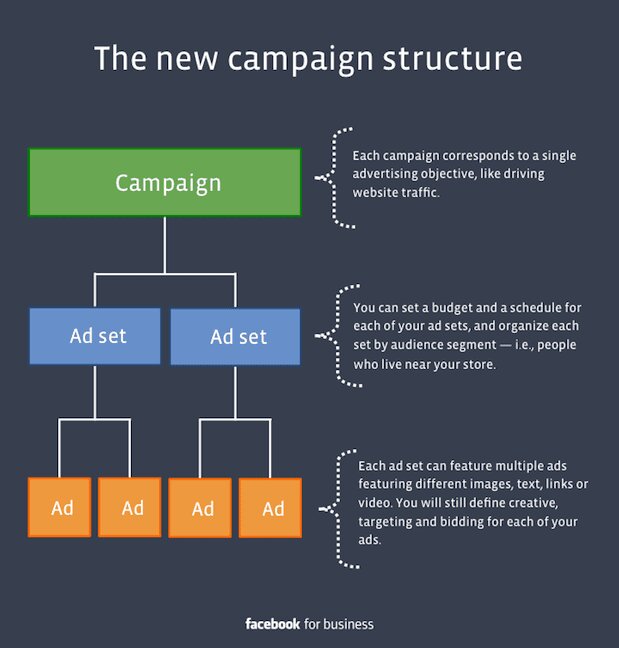
Every Meta Ads account follows a three-level hierarchy.
Campaign
The campaign level defines your primary objective.
Some of the most common objectives include:
- Sales
- Leads
- Traffic
- Engagement
- Awareness
- App Promotion
Choosing the right objective tells Meta what type of users it should optimize toward.
For example:
- Lead Generation campaigns optimize for users likely to submit forms.
- Sales campaigns prioritize users most likely to purchase.
- Traffic campaigns optimize for link clicks rather than conversions.
Choosing the wrong objective is one of the most common reasons advertisers struggle to generate quality results.
If you're unsure which objective aligns with your business goals, our Meta Ads Management Services can help create a customized strategy.
Ad Set
The Ad Set controls how your ads are delivered.
Here you'll configure:
- Audience targeting
- Location
- Language
- Age
- Gender
- Placements
- Optimization event
- Attribution settings
- Budget (if using ABO)
Think of each Ad Set as a separate testing environment.
For example:
Ad Set 1
- Broad Audience
- India
- Advantage+ Placements
Ad Set 2
- Website Visitors
- Last 180 Days
Ad Set 3
- Lookalike Audience
- 1% Purchasers
Each audience receives its own budget allocation and performance insights.
Ads
At the final level, you'll create the actual advertisements.
This includes:
- Images
- Videos
- Carousels
- Headlines
- Primary Text
- Descriptions
- Call-to-Action buttons
Instead of changing audiences constantly, experienced advertisers usually test multiple creatives within the same audience.
This allows Meta to identify winning combinations while maintaining learning stability.
Recommended Facebook Ads Campaign Structure for 2026
The ideal structure depends on your business type, but the following framework works well for most advertisers.
Campaign

│

├── Ad Set 1 – Broad Audience

│      ├── Ad 1
│      ├── Ad 2
│      ├── Ad 3

│

├── Ad Set 2 – Interest Audience

│      ├── Ad 1
│      ├── Ad 2
│      ├── Ad 3

│

├── Ad Set 3 – Lookalike Audience

│      ├── Ad 1
│      ├── Ad 2
│      ├── Ad 3

│

└── Ad Set 4 – Retargeting

       ├── Ad 1
       ├── Ad 2
       ├── Ad 3
This structure makes it easy to compare audience performance while allowing Meta enough flexibility to optimize delivery.
Campaign 1: Prospecting Campaign
Prospecting campaigns target people who haven't interacted with your business before.
This is where you'll acquire new customers.
Recommended audiences include:
- Broad Audience
- Advantage+ Audience
- Interest Targeting
- Lookalike Audiences
- Customer Lookalikes
Avoid creating dozens of small audiences.
Meta's algorithm has become significantly better at finding high-intent users, especially when provided with enough conversion data.
For most businesses, keeping your prospecting campaign simple often leads to better results than over-segmenting audiences.
If you're also running Google Ads, combining Meta's prospecting campaigns with high-intent Search campaigns can significantly improve overall acquisition costs. You can learn more in our guide on Google Ads vs Facebook Ads: Which Is Better for Your Business?.
Campaign 2: Retargeting Campaign
Retargeting remains one of the highest-ROAS campaign types because it focuses on users already familiar with your business.
You can build audiences based on:
- Website visitors
- Instagram engagement
- Facebook page engagement
- Video viewers
- Add to Cart users
- Initiate Checkout users
- Existing leads
- Previous customers
Because these audiences already know your brand, they usually convert at a much lower cost than cold audiences.
To maximize retargeting performance, ensure your Meta Pixel and Conversion API are properly configured. Accurate conversion tracking enables Meta to optimize for users most likely to complete valuable actions.
If your tracking setup isn't complete, our Conversion Tracking Services can help implement Meta Pixel, GA4, GTM, and Conversion API correctly.
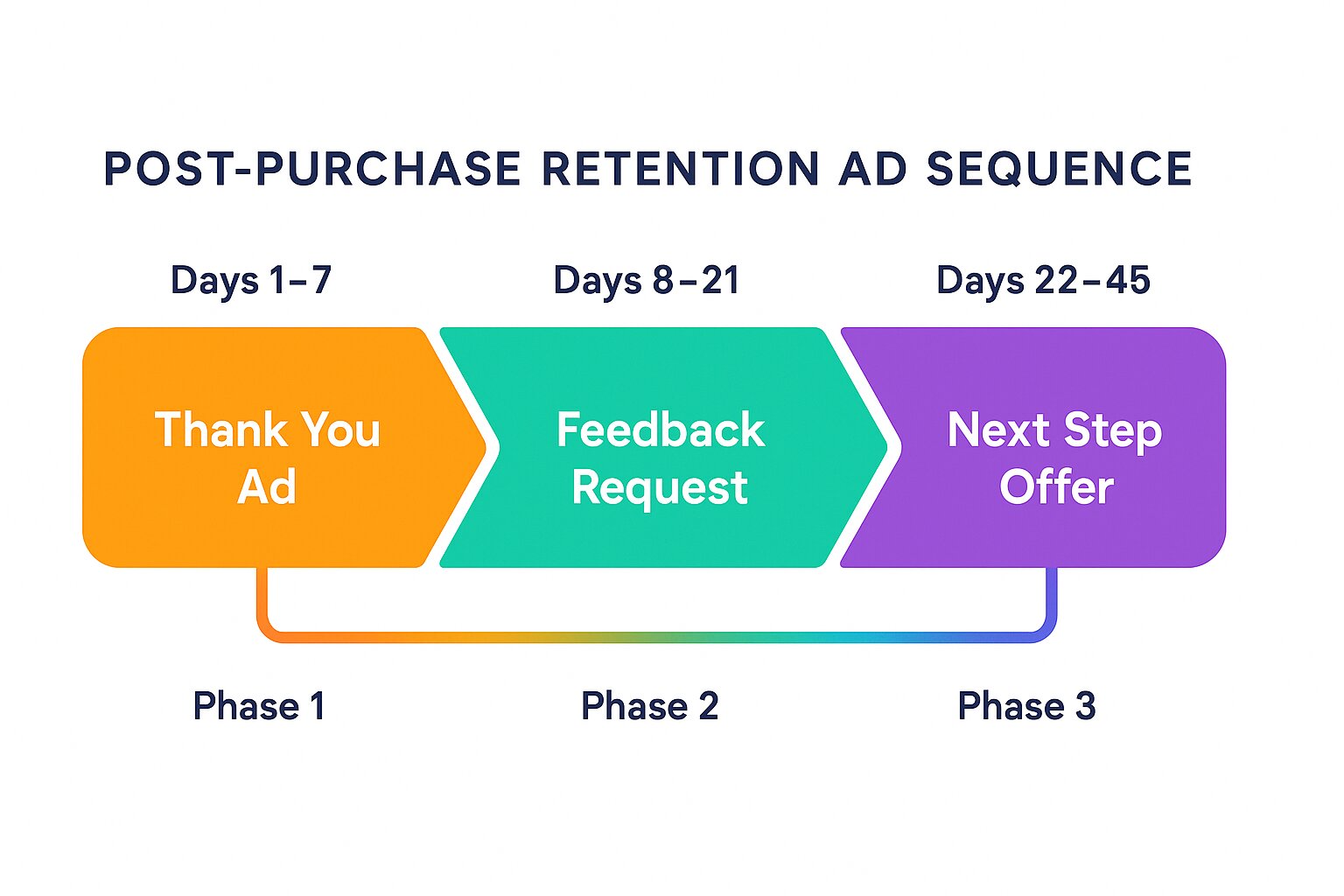
Campaign 3: Customer Retention Campaign
Many advertisers focus only on acquiring new customers, but retaining existing customers is often far more profitable. Studies consistently show that selling to an existing customer costs significantly less than acquiring a new one.
A dedicated customer retention campaign helps you:
- Encourage repeat purchases
- Cross-sell complementary products
- Upsell premium services
- Promote seasonal offers
- Increase Customer Lifetime Value (CLV)
You can create custom audiences using:
- Previous purchasers
- Existing customers
- Email subscribers
- CRM lists
- High-value customers
- Loyalty program members
For example, if you run an eCommerce store, customers who purchased shoes can later be shown ads for accessories or apparel. Likewise, a service-based business can promote advanced packages or maintenance plans to existing clients.
Building separate campaigns for retention ensures your messaging remains relevant instead of showing acquisition-focused ads to people who have already converted.
Choosing Between CBO and ABO
One of the most common questions advertisers ask is whether to use Campaign Budget Optimization (CBO) or Ad Set Budget Optimization (ABO).
The answer depends on your campaign objective and testing stage.
Campaign Budget Optimization (CBO)
With CBO, you set a single budget at the campaign level, and Meta automatically distributes it across ad sets based on performance.
Advantages
- Better budget efficiency
- Easier scaling
- Faster optimization
- Reduced manual adjustments
- Works well with larger budgets
Best for
- Mature campaigns
- Stable audiences
- Scaling winning campaigns
- High conversion volume
Ad Set Budget Optimization (ABO)
With ABO, each ad set has its own dedicated budget.
This gives advertisers more control during testing.
Advantages
- Better audience testing
- Equal budget distribution
- Easier performance comparison
- Prevents Meta from favoring one audience too early
Best for
- New campaigns
- Creative testing
- Audience testing
- Smaller budgets
Which One Should You Use in 2026?
A practical approach followed by many experienced media buyers is:
Step 1: Launch new campaigns using ABO to test audiences and creatives.
Step 2: Identify your top-performing combinations.
Step 3: Move the winners into a CBO campaign for scaling.
This approach provides the best of both worlds—controlled testing followed by algorithm-driven optimization.
For businesses looking to maximize their advertising budget across multiple platforms, our Meta Ads Agency develops structured campaign strategies designed to improve both lead quality and ROAS.
Audience Strategy for 2026
Meta's AI has become significantly smarter over the past few years.
As a result, advertisers no longer need dozens of highly segmented audiences.
Instead, focus on providing Meta with quality conversion data and strong creatives.
A simplified audience strategy often delivers better results than overly complex targeting.
Broad Audience
Broad targeting has become one of Meta's strongest options.
Instead of restricting users through multiple interests, allow Meta's algorithm to identify people most likely to convert.
Broad audiences generally perform well when:
- Meta Pixel has enough conversion history.
- Conversion API is implemented.
- Strong creatives are used.
- The campaign has sufficient budget.
- Your website has a healthy conversion rate.
Broad targeting also makes campaigns easier to scale because audience size isn't artificially limited.
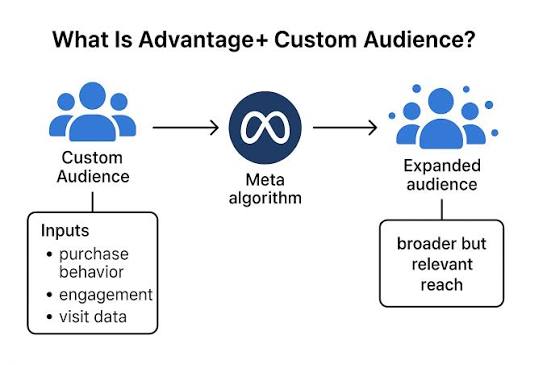
Advantage+ Audience
Advantage+ Audience is Meta's AI-powered targeting system.
Rather than relying solely on manual interests, Meta expands audience reach whenever it predicts better performance.
Benefits include:
- Increased reach
- Faster learning
- Better optimization
- Lower Cost Per Result
- Improved scalability
Many advertisers who previously relied on detailed interest targeting have reported improved results after switching to Advantage+ Audience.
However, always test it against your existing targeting before fully transitioning.
Interest-Based Targeting
Interest targeting still has value, particularly when:
- Launching a new account
- Limited conversion history exists
- Targeting niche industries
- Promoting specialized products
- Testing new markets
Examples include:
- Digital Marketing
- Fitness
- Online Education
- Interior Design
- Real Estate Investing
- SaaS
- Entrepreneurship
Avoid stacking dozens of interests together. Smaller, cleaner audience groups make performance analysis much easier.
Lookalike Audiences
Lookalike Audiences continue to be highly effective—provided they are built from high-quality source data.
Recommended source audiences include:
- Purchasers
- Qualified leads
- High-value customers
- CRM lists
- Newsletter subscribers
- Website converters
For most businesses, testing multiple percentages works well:
- 1% Lookalike
- 2% Lookalike
- 3–5% Lookalike
As audience size increases, reach expands but similarity decreases. Test different ranges to determine the best balance between scale and efficiency.
If you're unfamiliar with creating these audiences, you may find our guide on Lookalike Audiences in Meta Ads (coming soon) helpful once published.
Avoid Audience Overlap
One mistake that silently increases advertising costs is audience overlap.
This occurs when multiple ad sets target many of the same users.
Common causes include:
- Similar interests across multiple ad sets
- Multiple Lookalike Audiences
- Broad audiences competing with interest audiences
- Duplicate retargeting campaigns
When overlap occurs, your own campaigns may compete against each other in Meta's auction, driving up CPMs and reducing efficiency.
To reduce overlap:
- Keep audience segments distinct.
- Consolidate similar ad sets where possible.
- Exclude purchasers from prospecting campaigns.
- Exclude website visitors from cold audiences.
- Regularly review audience insights in Meta Ads Manager.
A simpler account structure often performs better than one with dozens of overlapping audiences.
Creative Testing Framework for 2026
No matter how well your audiences are built, your campaigns will struggle if the creatives fail to capture attention. In 2026, Meta's algorithm heavily rewards engaging, high-quality creatives that keep users interacting with your ads.
Rather than creating dozens of audiences, successful advertisers now spend more time testing different creative angles.
Some effective variables to test include:
- Different hooks in the first three seconds
- Image vs Video
- Carousel vs Single Image
- Long-form vs Short-form copy
- Customer testimonials
- Before-and-after visuals
- Product demonstrations
- User-generated content (UGC)
- Founder or team videos
- Limited-time offers
Instead of changing everything at once, test one variable at a time. This makes it much easier to identify what actually improves performance.
For example:
| Creative | Hook | Format | CTA |
|---|---|---|---|
| Ad 1 | Save Money | Video | Learn More |
| Ad 2 | Increase Sales | Image | Get Quote |
| Ad 3 | Customer Story | Carousel | Contact Us |
Keeping all other variables the same while changing just one element gives you cleaner, more reliable data.

How Many Ads Should Be in Each Ad Set?
A common mistake is adding too many ads to a single ad set.
If your budget is limited, Meta won't spend enough on each creative to determine a clear winner.
A practical recommendation is:
- Small budgets (₹1,000–₹5,000/day): 3–5 ads per ad set
- Medium budgets (₹5,000–₹20,000/day): 4–6 ads
- Large budgets: 5–8 ads
Focus on quality rather than quantity. Five strong creatives will usually outperform twenty average ones.
Winning Creative Formats in 2026
Consumer behaviour continues to shift towards authentic and engaging content. Ads that feel natural often outperform highly polished promotional creatives.
Some of the best-performing formats include:
Short-form Videos
Videos between 15–45 seconds are ideal for capturing attention and communicating your value quickly.
User-Generated Content (UGC)
People trust real customer experiences more than traditional advertisements. Encourage satisfied customers to share their feedback and repurpose it (with permission) into ad creatives.
Carousel Ads
Carousel ads work particularly well for:
- Showcasing multiple products
- Explaining services step by step
- Highlighting different benefits
- Sharing customer success stories
Testimonial Ads
Social proof remains one of the strongest conversion drivers. Include:
- Customer reviews
- Case studies
- Ratings
- Screenshots of positive feedback
- Video testimonials
If you're generating leads, pairing these creatives with a well-optimized landing page can significantly improve conversion rates. Learn more from our Google Ads Setup Guide for Beginners to understand how consistent messaging across channels improves overall performance.
Budget Scaling Strategies
Scaling too quickly is one of the fastest ways to disrupt Meta's learning phase. Instead, increase budgets gradually while monitoring key performance metrics.
There are two primary scaling methods.
Vertical Scaling
Vertical scaling means increasing the budget of an existing campaign.
Example:
- Day 1: ₹2,000/day
- Day 4: ₹2,400/day
- Day 7: ₹2,900/day
A common guideline is to increase budgets by 15–20% every 2–3 days, provided the campaign remains profitable.
Avoid doubling budgets overnight, as this can reset the learning phase and increase acquisition costs.
Horizontal Scaling
Horizontal scaling involves duplicating winning campaigns or ad sets to reach additional audiences.
Examples include:
- Testing new Lookalike percentages
- Expanding to new geographic locations
- Launching new language-specific campaigns
- Testing additional creative concepts
Horizontal scaling is often safer than aggressive budget increases because it preserves the performance of your original campaign while exploring new opportunities.
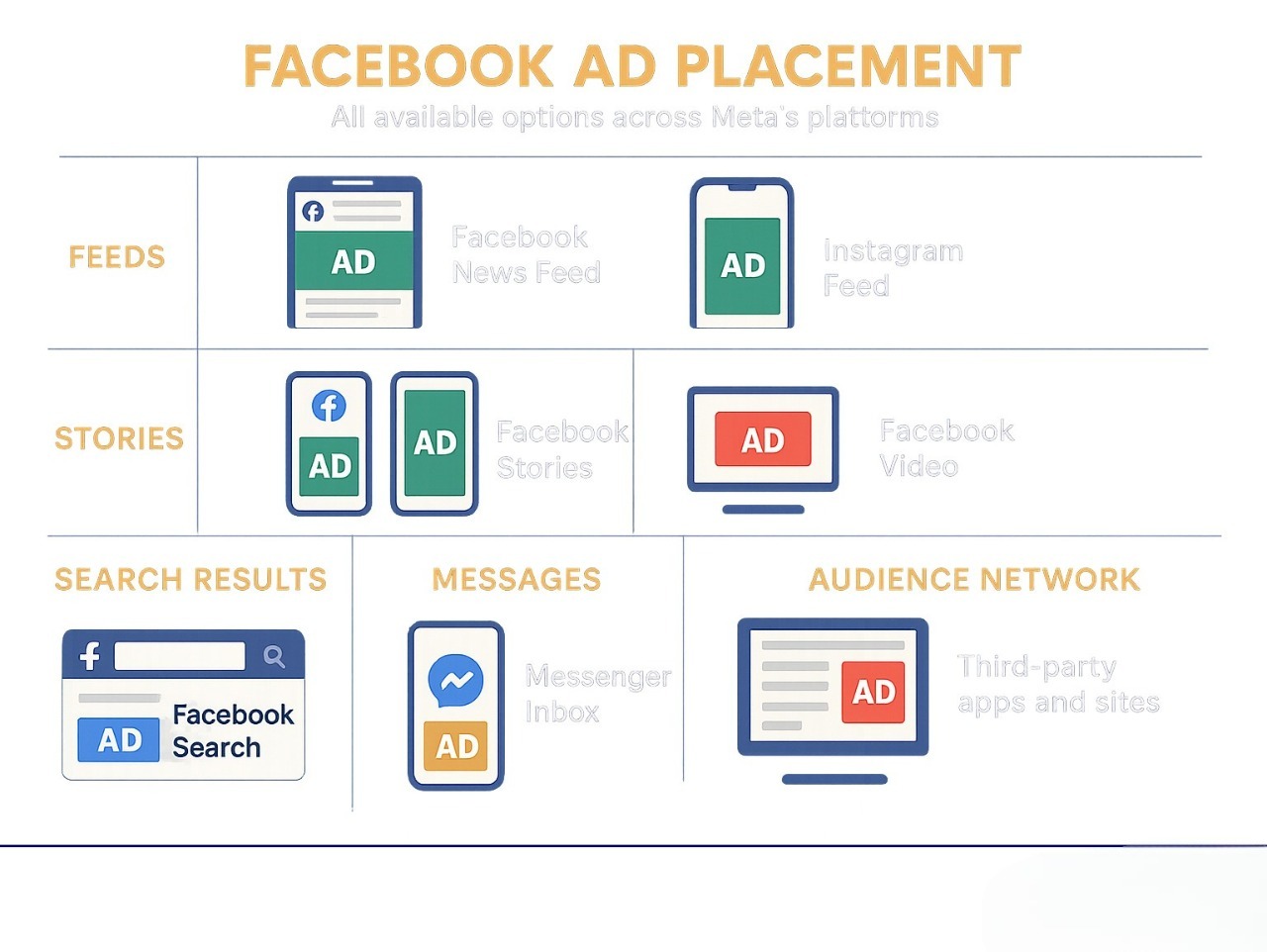
Advantage+ Placements vs Manual Placements
Meta recommends using Advantage+ Placements for most campaigns.
With this option, your ads can appear across:
- Facebook Feed
- Instagram Feed
- Facebook Stories
- Instagram Stories
- Facebook Reels
- Instagram Reels
- Marketplace
- Audience Network
- Messenger
Meta automatically allocates spend to placements that generate the best results.
When Manual Placements Make Sense
Manual placements can still be useful if:
- You only have vertical video creatives.
- You're promoting Instagram-only content.
- Historical data shows poor performance from a specific placement.
- You have platform-specific creative assets.
For most advertisers, however, starting with Advantage+ Placements provides the algorithm with greater flexibility.
Naming Conventions for Better Account Management
As your account grows, clear naming conventions become essential.
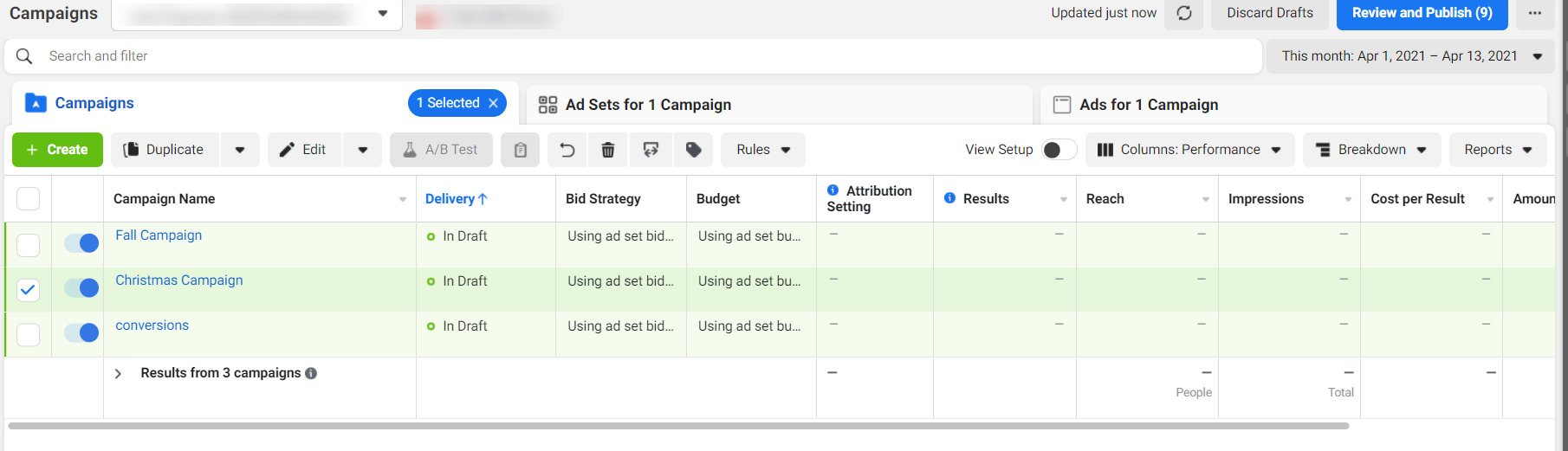
A consistent naming structure makes reporting, optimization, and collaboration much easier.
Campaign Naming Example
Sales | India | Broad | CBO
Ad Set Naming Example
Broad | 25-45 | India
Lookalike 1% | Purchasers
Retargeting | Website Visitors | 180 Days
Ad Naming Example
Video | Testimonial | CTA 1
Image | Offer | Version A
Carousel | Features | Version B
Using standardized naming conventions also simplifies performance analysis when managing multiple client accounts.
Campaign Optimization Tips
Optimizing campaigns isn't about making daily changes. Frequent edits can interrupt Meta's learning process and delay stable performance.
Instead, establish a routine for reviewing:
- Cost Per Result
- Click-Through Rate (CTR)
- Cost Per Click (CPC)
- CPM
- Frequency
- Conversion Rate
- Return on Ad Spend (ROAS)
Look for meaningful trends over several days rather than reacting to a single day's performance.
Additionally, ensure your tracking setup is accurate. Without reliable data, even the best campaign structure will struggle to deliver consistent results.
Our Conversion Tracking Services can help you implement Meta Pixel, Google Tag Manager (GTM), Google Analytics 4 (GA4), and Conversion API to improve attribution and campaign optimization.
Common Facebook Ads Campaign Structure Mistakes
Even experienced advertisers occasionally make structural mistakes that limit campaign performance.
Avoid these common issues:
- Creating too many campaigns for the same objective
- Over-segmenting audiences
- Constantly editing budgets during the learning phase
- Using too many ads in a low-budget ad set
- Ignoring audience overlap
- Not separating prospecting and retargeting campaigns
- Running campaigns without proper conversion tracking
- Failing to refresh creatives regularly
- Optimizing based on limited data
- Scaling budgets too aggressively
Keeping your account structure simple and data-driven usually produces better long-term results than unnecessary complexity.
Best Practices for Facebook Ads Campaign Structure in 2026
As Meta continues to invest in AI-driven campaign optimization, advertisers should focus less on creating complex account structures and more on providing the algorithm with high-quality inputs.
Here are some best practices to follow:
- Keep your campaign structure simple and easy to manage.
- Use clear naming conventions for campaigns, ad sets, and ads.
- Allow campaigns enough time to exit the learning phase before making major changes.
- Test new creatives regularly to prevent ad fatigue.
- Allocate budgets based on performance rather than assumptions.
- Separate prospecting, retargeting, and customer retention campaigns.
- Implement Meta Pixel and Conversion API for accurate tracking.
- Review campaign performance weekly instead of making daily adjustments.
- Exclude existing customers from acquisition campaigns where appropriate.
- Refresh audiences and creatives periodically to maintain performance.
Remember, the goal isn't to build the most complicated account—it's to build one that's scalable, measurable, and easy to optimize.
Final Thoughts
There isn't a one-size-fits-all Facebook Ads campaign structure, but the framework outlined in this guide has consistently helped businesses generate better results while simplifying account management.
A strong campaign structure allows Meta's algorithm to learn faster, distribute budgets more efficiently, and identify high-performing audiences and creatives with less manual intervention.
To recap:
- Organize campaigns by business objective.
- Separate prospecting, retargeting, and customer retention efforts.
- Start with ABO for testing and move winning combinations into CBO for scaling.
- Use Broad Audiences, Advantage+ Audience, and Lookalike Audiences strategically.
- Test creatives continuously while keeping audience changes minimal.
- Scale gradually and rely on accurate conversion tracking.
Whether you're running campaigns for a local business, an eCommerce store, a SaaS company, or a service-based business, following these principles can help improve lead quality, reduce acquisition costs, and increase return on ad spend over time.
If you'd rather focus on growing your business while experienced professionals manage your campaigns, explore our Meta Ads Management Services. We help businesses create high-performing Meta advertising strategies backed by proper tracking, landing page optimization, and ongoing performance improvements.
You can also visit the Scale With Clicks homepage to learn more about our digital marketing services, including Google Ads, SEO, and conversion tracking.
Frequently Asked Questions (FAQs)
1. What is the best Facebook Ads campaign structure for 2026?
A recommended structure is to create separate campaigns for Prospecting, Retargeting, and Customer Retention. Within each campaign, organize ad sets by audience type (Broad, Interest, Lookalike, or Custom Audience) and test multiple creatives within each ad set.
2. Should I use Campaign Budget Optimization (CBO) or Ad Set Budget Optimization (ABO)?
Use ABO when testing new audiences or creatives because it gives each ad set a dedicated budget. Once you identify winning combinations, move them into a CBO campaign to allow Meta to allocate budget automatically for better scalability.
3. How many ad sets should a Facebook campaign have?
There is no fixed number, but most businesses perform well with 3–5 well-defined ad sets. Creating too many ad sets can fragment your budget and make optimization more difficult.
4. How many ads should be included in an ad set?
For most campaigns, 3–5 high-quality ads per ad set are sufficient. This gives Meta enough creative options without spreading your budget too thin.
5. Are Broad Audiences better than Interest Targeting?
In many cases, yes. Meta's AI has improved significantly, making Broad Audiences highly effective when supported by strong creatives and accurate conversion tracking. However, Interest Targeting can still be useful for new accounts or niche industries.
6. Do Lookalike Audiences still work in 2026?
Absolutely. Lookalike Audiences built from high-quality source data—such as purchasers, qualified leads, or CRM lists—remain one of the most effective ways to reach new potential customers.
7. Should I use Advantage+ Placements?
Yes, in most cases. Advantage+ Placements allow Meta to deliver your ads across Facebook, Instagram, Reels, Stories, Messenger, and the Audience Network, automatically prioritizing the placements that perform best.
8. How often should I optimize my Facebook Ads campaigns?
Avoid making changes every day. Review campaign performance weekly, analyze trends over several days, and only make meaningful adjustments when there is enough data to support a decision.
9. Why is conversion tracking important for Facebook Ads?
Without proper tracking, Meta cannot accurately identify which users are most likely to convert. Implementing Meta Pixel, Google Tag Manager (GTM), Google Analytics 4 (GA4), and Conversion API helps improve attribution, optimization, and reporting.
10. Where can I get help managing Facebook Ads?
If you need assistance with campaign setup, optimization, conversion tracking, or scaling, our Meta Ads Agency can help you build and manage high-performing campaigns tailored to your business goals.