SEO
How to Get 1,000 Organic Visitors - SEO Guide for New Websites

Category: SEO
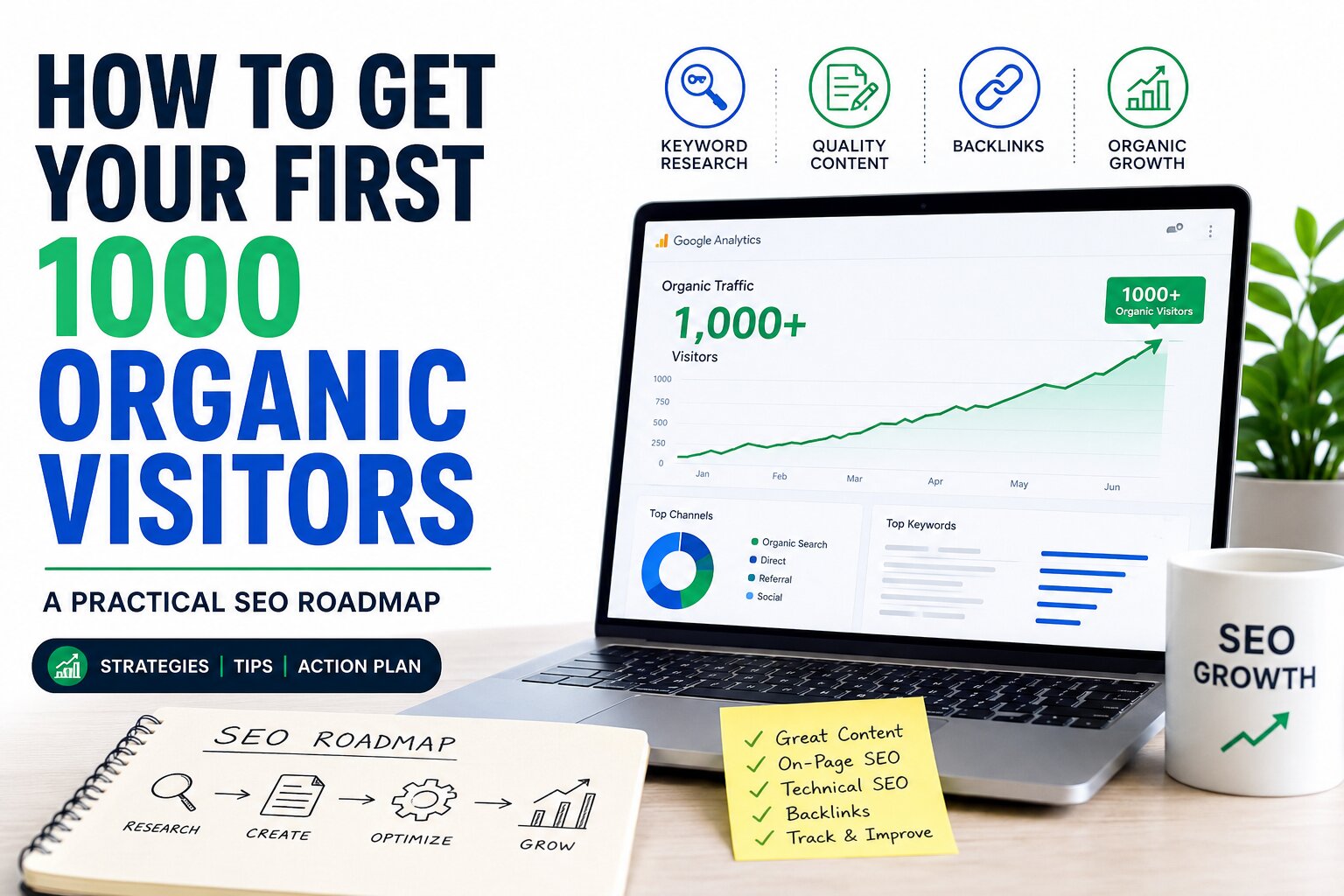
How to Get Your First 1000 Organic Visitors: A Practical SEO Roadmap for New Websites
Getting your first 1000 organic visitors is one of the biggest milestones for any website owner. Whether you run an eCommerce store, a service-based business, a startup, or a personal blog, reaching this milestone proves that your website has started gaining visibility on search engines.
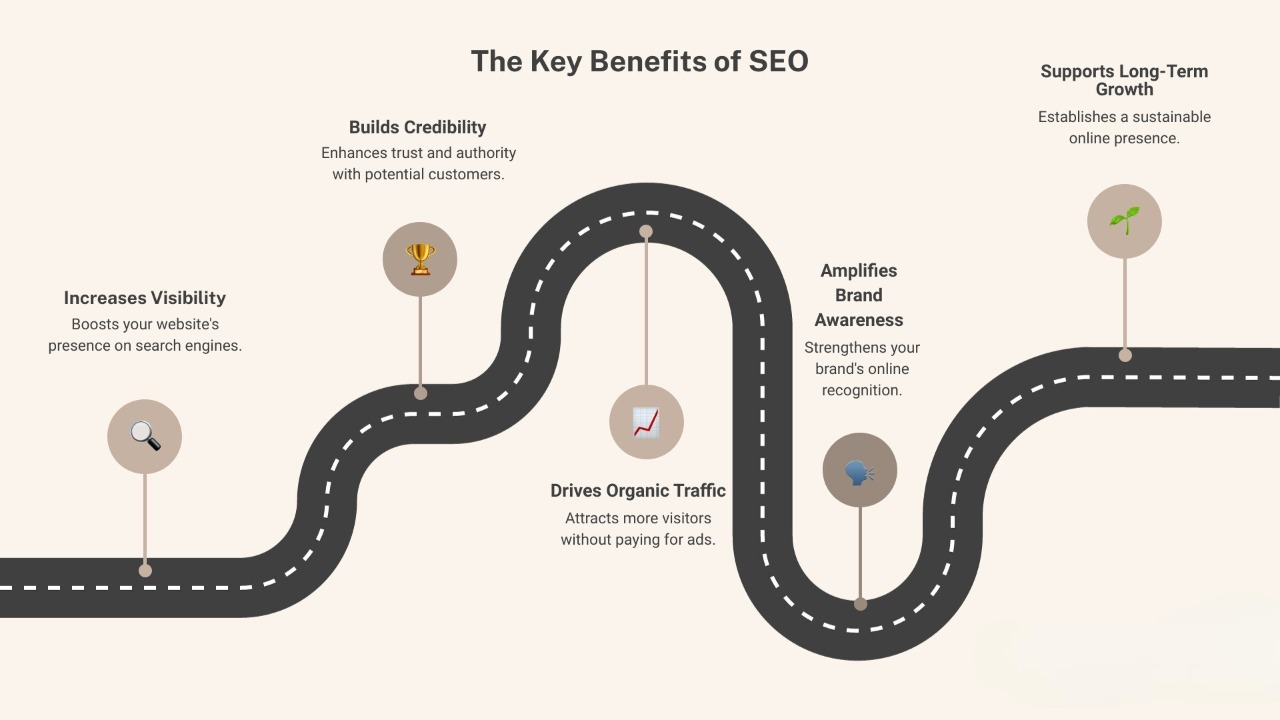
Many beginners believe that increasing website traffic requires a huge marketing budget. While paid advertising through Google Ads Services can bring immediate traffic, building a strong organic presence through SEO creates sustainable growth that continues generating visitors long after your content is published.
The challenge is that organic growth does not happen overnight. Search engines need time to understand your website, evaluate your content quality, and determine whether your pages deserve higher rankings.
The good news is that you do not need thousands of articles or hundreds of backlinks to reach your first 1000 organic visitors. You need a clear SEO strategy, consistent content creation, proper website optimization, and an understanding of what your audience is searching for.
In this guide, we will break down the exact steps you can follow to increase organic traffic and build a website that attracts qualified visitors every month.
Step 1: Start with a Strong SEO Foundation
Before writing your first blog post or trying to build backlinks, ensure your website is technically ready to rank.
A slow website, poor mobile experience, or confusing website structure can prevent your pages from performing well even if the content is excellent.
A complete SEO foundation includes:
- Fast website loading speed.
- Mobile-friendly design.
- Proper URL structure.
- Secure HTTPS connection.
- XML sitemap setup.
- Clear navigation and internal linking.
- Optimized metadata.
If you are unsure whether your website is ready for organic growth, conducting a complete SEO audit can help identify technical issues that are limiting your rankings.
For businesses that are still building their online presence, combining SEO with professional SEO Services ensures your website is optimized for both users and search engines from day one.
Step 2: Understand Your Target Audience and Search Intent
One of the biggest mistakes new websites make is creating content based on what they want to talk about instead of what users are actively searching for.
Successful content marketing begins with understanding your audience's problems, questions, and buying journey.
For example, a business selling digital marketing services should not only target competitive keywords like “digital marketing agency.” They should also create informative content around topics such as:
- How much should you spend on Google Ads?
- Common mistakes businesses make with online advertising.
- SEO strategies for small businesses.
- How to increase website conversions.
This approach allows you to capture users at different stages of the marketing funnel.
You can learn more about creating an effective online growth strategy through our guide on How to rank on Google.
Step 3: Find Low Competition Keywords That You Can Actually Rank For
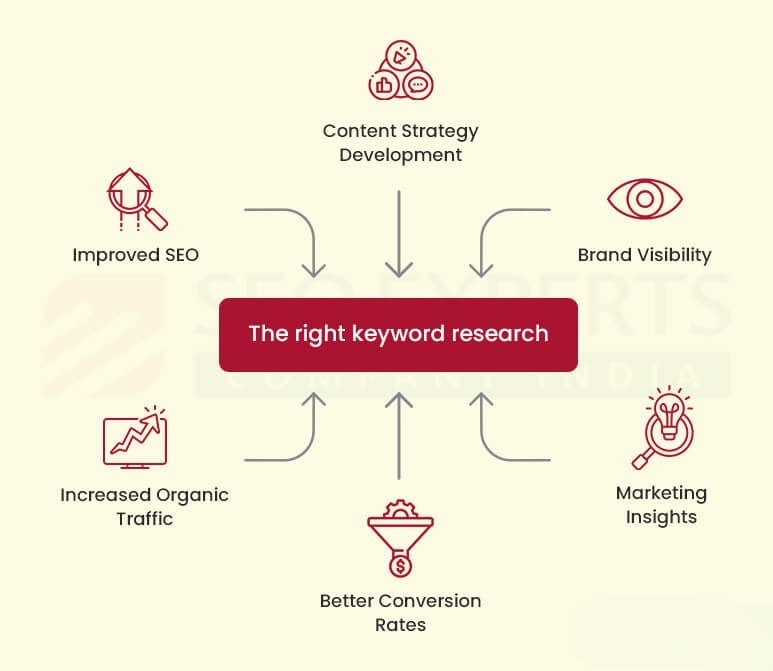
Keyword research is where your journey toward your first 1000 organic visitors truly begins.
New websites often make the mistake of targeting highly competitive keywords with thousands of established websites competing for the same rankings.
Instead, focus on long-tail keywords that have clear search intent and lower competition.
For example, rather than targeting:
“SEO services”
You can target:
- “How to improve SEO for a new website”
- “SEO checklist for small businesses”
- “How to get more organic visitors”
- “Best SEO strategies for startups”
These keywords may have lower search volume individually, but together they can drive significant traffic.
A good keyword strategy should include:
- Informational keywords for blog content.
- Commercial keywords for service pages.
- Brand-related keywords.
- Comparison and problem-solving keywords.
Creating content around multiple related topics also helps establish topical authority, making it easier for Google to trust your website.
Step 4: Create High-Quality Content Consistently
Content is the engine that drives organic traffic. However, publishing random articles without a strategy rarely produces results.
Every blog post should answer a specific question, solve a problem, or help users make a better decision. Search engines prefer content that demonstrates experience, expertise, authority, and trustworthiness.
A strong content marketing strategy should include:
- Comprehensive guides that answer user questions in depth.
- Beginner-friendly educational articles.
- Industry insights and trends.
- Case studies and practical examples.
- Comparison articles.
- How-to tutorials.
Instead of publishing 50 short articles, focus on creating 10–15 detailed, valuable pieces that genuinely help your audience.
For example, if you are trying to improve your SEO knowledge, our detailed guide on On-Page SEO Strategies That Still Work in 2026 explains how to optimize content for better search engine visibility.
Step 5: Optimize Every Page for On-Page SEO
Creating great content is only half the job. You also need to ensure search engines can understand what your page is about.
On-page SEO helps improve your chances of appearing in relevant search results.
Important on-page SEO elements include:
Optimize Your Title Tags and Meta Descriptions
Your title should include your primary keyword naturally while encouraging users to click.
For example:
Poor Title:
“SEO Tips”
Better Title:
“15 SEO Tips to Increase Organic Traffic and Improve Google Rankings”
A compelling meta description can also improve your click-through rate from search results.
Use Proper Heading Structure
Use one H1 heading per page and organize your content using H2, H3, and H4 tags where necessary.
A clear content hierarchy helps both users and search engines understand your page better.
Optimize Images for SEO
Images improve user experience, but they also need optimization.
Always:
- Use descriptive file names.
- Compress images for faster loading.
- Add relevant alt text.
- Use modern formats when possible.
For example, instead of naming an image:
IMG_00235.jpg
Use:
how-to-increase-organic-website-traffic.jpg
Image optimization is a small step that contributes to better technical SEO and overall website performance.
Step 6: Build a Strong Internal Linking Structure
Internal links help search engines discover your pages and understand the relationship between different topics on your website.
A well-planned internal linking strategy also keeps users engaged for a longer time.
For example, someone reading about increasing organic traffic may also be interested in learning how paid campaigns work. You can guide them toward our article on 7 Costly Google Ads Mistakes That Are Wasting Your Budget (And How to Fix Them) or explore our Google Ads Management Services.
Similarly, businesses looking for complete digital growth can explore our Digital Marketing Services to create a strategy combining SEO, content, and paid advertising.
Some internal linking best practices include:
- Link relevant pages naturally within the content.
- Use descriptive anchor text.
- Avoid excessive linking.
- Connect related blogs together.
- Link informational content to service pages when appropriate.
A strong internal linking strategy distributes authority across your website and improves the chances of ranking multiple pages.
Step 7: Focus on Technical SEO and Website Experience
Many websites create excellent content but struggle to rank because of technical problems.
Technical SEO ensures that search engines can crawl, understand, and index your website properly.
Areas you should regularly monitor include:
- Page loading speed.
- Mobile responsiveness.
- Broken links.
- Duplicate content issues.
- Indexing errors.
- Structured data implementation.
- Website security.
A technically optimized website provides a better user experience, which can positively influence engagement metrics.
Step 8: Publish Content That Matches the Entire Customer Journey
Not every visitor is ready to become a customer immediately.
Some users are researching a problem, while others are comparing solutions or searching for a service provider.
Your content should target all stages of the customer journey:
Top of Funnel (Awareness)
Topics such as:
- What is SEO?
- How does Google ranking work?
- How to increase website traffic?
These articles attract new visitors.
Middle of Funnel (Consideration)
Topics like:
- SEO vs Google Ads.
- Best marketing strategies for small businesses.
- How to choose a digital marketing agency.
These help users evaluate options.
Bottom of Funnel (Decision)
Pages focused on your services, pricing, results, and case studies help convert visitors into leads.
This full-funnel content approach creates a sustainable system that continuously brings qualified organic visitors.
Step 9: Build High-Quality Backlinks to Increase Authority
Even the best content can struggle to rank if no other websites are linking to it. Backlinks remain one of the strongest ranking signals because they act as a vote of confidence from other websites.
However, the goal is not to get thousands of random links. A few relevant and high-quality backlinks can provide more value than hundreds of low-quality ones.
Effective link-building strategies include:
Create Link-Worthy Content
Publish resources that other websites naturally want to reference, such as:
- Detailed industry guides.
- Original research and statistics.
- Case studies.
- Free templates and tools.
- Expert opinion articles.
For example, a comprehensive guide like our article on How Much Should You Spend on Google Ads in 2026? can attract links from businesses and marketers looking for advertising budget insights.
Guest Posting on Relevant Websites
Writing articles for reputable websites in your industry can help you:
- Reach a new audience.
- Build brand awareness.
- Gain authoritative backlinks.
- Improve your website's credibility.
When choosing websites for guest posting, prioritize relevance and quality over domain authority alone.
Turn Brand Mentions into Backlinks
Sometimes websites mention your brand but do not link back to your website.
You can monitor these mentions and politely request the website owner to add a link.
For a growing digital marketing brand like Scale With Clicks, this strategy can help strengthen online authority over time.
Step 10: Optimize for User Engagement and Conversions
Getting your first 1,000 organic visitors is an important milestone, but traffic alone does not grow a business.
You need visitors to:
- Subscribe to your newsletter.
- Fill out a contact form.
- Request a consultation.
- Purchase a product or service.
To improve conversions, focus on:
- Clear call-to-action buttons.
- Easy website navigation.
- Fast loading pages.
- Trust signals like testimonials and case studies.
- Simple contact forms.
For businesses looking to turn website visitors into paying customers, combining organic traffic with strategic campaigns such as Meta Ads Management Services can help nurture audiences and increase conversions.
Step 11: Track Your SEO Progress and Improve Continuously
SEO is not a one-time activity. The websites that consistently grow their organic traffic regularly analyze their performance and improve their strategy.
Key metrics to monitor include:
- Organic visitors.
- Keyword rankings.
- Click-through rate (CTR).
- Average time spent on page.
- Bounce rate.
- Conversion rate.
- Pages generating the most traffic.
Tools such as Google Analytics and Google Search Console provide valuable insights into how users discover and interact with your website.
Review your data every month and identify:
- Which pages are gaining impressions but need better click-through rates.
- Which keywords are moving closer to the first page.
- Which articles need updates or additional information.
Continuous optimization is what separates websites that reach 1,000 visitors from those that eventually reach 10,000, 50,000, or even 100,000 monthly organic visitors.
Common Mistakes That Prevent Websites from Getting Their First 1000 Organic Visitors
Many new websites fail to grow because they make avoidable SEO mistakes.
Avoid these common issues:
Targeting Highly Competitive Keywords
Trying to rank for broad keywords immediately can lead to frustration. Start with achievable long-tail keywords and build authority gradually.
Publishing Low-Quality Content
Google prioritizes helpful content created for users. Thin articles written only for search engines rarely achieve sustainable rankings.
Ignoring Technical Problems
Broken pages, slow loading speeds, poor mobile experience, and indexing issues can limit your organic growth.
Not Updating Old Content
SEO is an ongoing process. Refresh your existing articles with updated information, new examples, improved images, and better internal links.
Expecting Overnight Results
One of the biggest reasons people quit SEO early is unrealistic expectations.
Depending on your industry and competition, it can take several months to see meaningful growth.
The businesses that succeed with SEO are those that consistently create valuable content, improve their website, and stay committed to the process.
Conclusion: Your Roadmap to the First 1,000 Organic Visitors
Getting your first 1,000 organic visitors is not about finding a secret SEO trick or publishing hundreds of articles overnight. It is about building a strong foundation, understanding your audience, creating genuinely helpful content, and continuously improving your website.
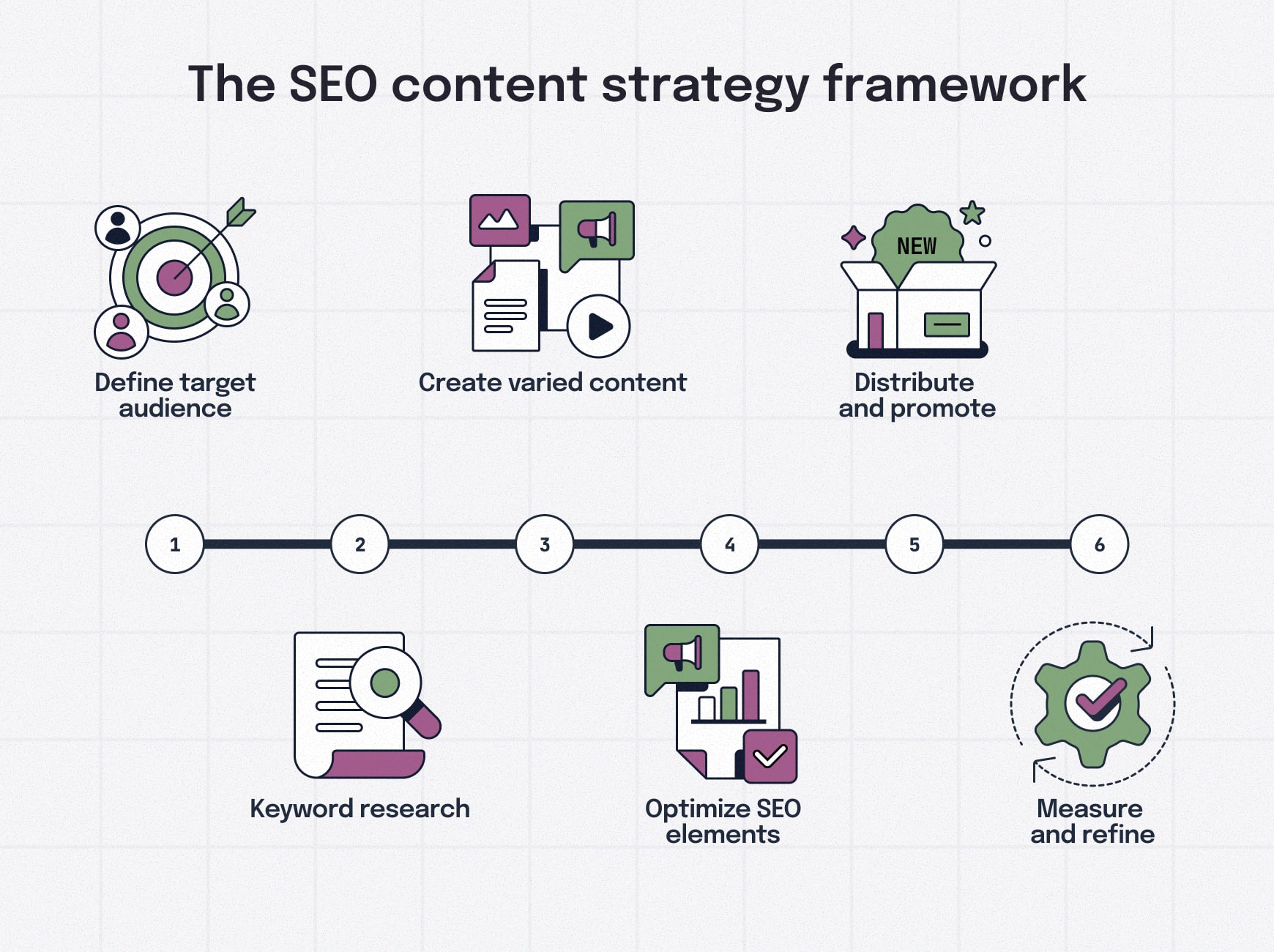
A successful organic growth strategy follows a simple process:
- Build a technically optimized website.
- Research low-competition keywords.
- Create high-quality content consistently.
- Optimize every page for search engines.
- Strengthen your internal linking structure.
- Earn relevant backlinks.
- Track performance and improve based on data.
Remember, your first 1,000 visitors are usually the hardest to achieve because search engines are still learning to trust your website. Once you establish topical authority and consistently publish valuable content, your traffic growth can accelerate significantly.
If you want to accelerate your website’s growth with a professional SEO strategy, explore our SEO Services, or learn more about our approach to online growth on the Scale With Clicks.
Combining SEO with paid acquisition channels like Google Ads Management and Meta Advertising Services can also create a complete digital marketing strategy that generates both short-term results and long-term organic growth.
Frequently Asked Questions (FAQs)
1. How long does it take to get 1,000 organic visitors?
For most new websites, reaching the first 1,000 organic visitors can take anywhere between three to twelve months depending on your industry, competition, content quality, and SEO strategy.
Websites that consistently publish helpful content, target low-competition keywords, and maintain strong technical SEO generally see faster growth.
2. How many blog posts do I need to get 1,000 organic visitors?
There is no fixed number because traffic depends on keyword difficulty and content quality. Some websites achieve this milestone with 10–20 highly optimized articles, while others may require more.
The focus should be on creating comprehensive content that solves user problems rather than publishing a large number of low-quality articles.
3. Is SEO better than paid advertising for website traffic?
SEO and paid advertising serve different purposes.
SEO provides sustainable, long-term organic traffic, while paid advertising delivers immediate visibility and leads.
The best digital marketing strategies often combine organic SEO with channels like Google Ads Services and Meta Ads Campaign Management to maximize overall growth.
4. What is the biggest mistake beginners make in SEO?
The biggest mistake is targeting highly competitive keywords too early and expecting quick results.
New websites should focus on long-tail keywords, build topical authority, optimize their website experience, and improve their content consistently.
5. Do backlinks still matter for SEO?
Yes. High-quality and relevant backlinks continue to be an important ranking factor because they help search engines understand the authority and trustworthiness of your website.
However, quality is much more important than quantity. A few authoritative backlinks are usually more valuable than hundreds of low-quality links.
6. Can I get organic traffic without hiring an SEO agency?
Yes, many businesses start their SEO journey themselves by learning keyword research, content creation, and on-page optimization.
However, working with a professional team can help you avoid mistakes, identify growth opportunities, and build a faster path toward sustainable organic growth.