Google Ads
Search vs Performance Max - Which Should You Use? (2026)


Category: Google Ads
Search vs Performance Max: Which Google Ads Campaign Should You Use in 2026?
Google Ads has evolved significantly over the last few years. Businesses now have access to multiple campaign types, each designed to achieve different marketing objectives. Among them, Search Campaigns and Performance Max Campaigns are the two most popular choices for advertisers looking to generate leads, sales, and business growth.
The challenge is that many advertisers are unsure which campaign type deserves their budget. Some businesses see incredible results with traditional Search campaigns, while others achieve exceptional growth using Google's AI-powered Performance Max campaigns.
So, which one is the right choice for your business?
The answer depends on several factors, including your business goals, target audience, budget, industry, and conversion tracking setup. In this guide, we'll compare both campaign types in detail so you can confidently decide where your advertising budget will generate the best return.
If you're just starting with Google Ads, our Google Ads Setup Guide for Beginners is a great place to begin before choosing your campaign strategy.
Need expert help? Explore our Google Ads Management Services to maximize your advertising ROI.
What Are Google Search Campaigns?
Search Campaigns are the most traditional and widely used Google Ads campaign type. These ads appear when users actively search for products or services using keywords on Google.
For example, if someone searches:
- Google Ads agency
- PPC management company
- Google Ads consultant near me
your Search Ad can appear at the top of Google's search results if your keywords, bidding strategy, and Quality Score align with the user's search intent.
Unlike many automated campaign types, Search campaigns allow advertisers to control nearly every aspect of targeting, including:
- Keywords
- Match Types
- Negative Keywords
- Ad Copy
- Landing Pages
- Bidding Strategy
- Device Targeting
- Location Targeting
- Ad Schedule
This level of control makes Search campaigns one of the best options for businesses that generate leads through high-intent searches.
Why Businesses Still Prefer Search Campaigns
Even with Google's increasing focus on automation, Search campaigns remain one of the highest-converting campaign types because they target users with existing purchase intent.

Someone searching for:
"Google Ads agency in Delhi"
is already looking for a solution.
You don't have to create demand—you simply need to present the right offer at the right time.
That's why Search campaigns often deliver:
- Higher conversion rates
- Better lead quality
- Lower cost per acquisition (CPA)
- Stronger ROI for service businesses
If you're experiencing high costs with your campaigns, check out our guide on How to Reduce Cost Per Click in Google Ads to improve campaign efficiency.
Advantages of Google Search Campaigns
1. High Purchase Intent
Search ads appear when customers actively search for your products or services.
Instead of interrupting users while they browse websites or watch videos, Search campaigns connect with people who already want what you offer.
This usually leads to:
- Better lead quality
- Faster sales cycles
- Higher conversion rates
2. Complete Keyword Control
One of the biggest advantages of Search campaigns is keyword targeting.
You decide exactly which searches should trigger your ads.
For example:
| Keyword | Intent |
|---|---|
| Google Ads Agency | High |
| PPC Management Services | High |
| Google Ads Expert | High |
| Learn Google Ads | Low |
You can also exclude irrelevant searches using negative keywords, preventing wasted spend.
If you're noticing poor-quality traffic, our article on Why Your Google Ads Are Not Converting explains how keyword selection impacts campaign performance.
3. Better Budget Control
Search campaigns provide greater control over spending because you decide:
- Daily budget
- Maximum CPC
- Bidding strategy
- Keyword prioritization
This makes Search campaigns especially suitable for small businesses and startups with limited advertising budgets.
4. Easier Performance Analysis
Search campaigns provide transparent reporting.
You can easily identify:
- Which keywords convert
- Which search terms waste budget
- Best-performing ads
- Top landing pages
- Device performance
- Geographic performance
This data helps advertisers continuously improve campaign performance.
Limitations of Search Campaigns
Although Search campaigns perform exceptionally well, they aren't perfect.
Some common limitations include:
Limited Reach
Search campaigns only show ads when users search for relevant keywords.
If customers aren't actively searching, your ads won't appear.
Manual Optimization Required
Successful Search campaigns require ongoing optimization, including:
- Adding negative keywords
- Adjusting bids
- Testing ad copy
- Improving Quality Score
- Optimizing landing pages
Ignoring these tasks often leads to rising costs and declining performance.
Our guide on 7 Costly Google Ads Mistakes That Are Wasting Your Budget explains the most common optimization mistakes advertisers make.
What Are Google Performance Max Campaigns?
Performance Max (PMax) is Google's fully automated campaign type that uses artificial intelligence to display ads across Google's entire advertising ecosystem.

Instead of targeting only Search, Performance Max can deliver ads across multiple Google properties, including:
- Google Search
- YouTube
- Google Display Network
- Gmail
- Discover Feed
- Google Maps
- Shopping (for eCommerce)
Rather than choosing keywords manually, advertisers provide Google with creative assets and audience signals. Google's machine learning then determines where, when, and to whom the ads should be shown.
This automation enables businesses to reach potential customers throughout the entire buying journey—from initial awareness to final conversion.
How Performance Max Works
Unlike Search campaigns, Performance Max does not rely primarily on keywords.
Instead, advertisers upload:
- Headlines
- Long Headlines
- Descriptions
- Images
- Logos
- Videos (recommended)
- Audience Signals
- Conversion Goals

Google automatically combines these assets into different ad formats and serves them across its networks based on predicted conversion likelihood.
The more conversion data your account has, the more effective Performance Max tends to become.
You can create this easily in Canva using a side-by-side comparison of Search vs Performance Max with Google branding colors.
Advantages of Google Performance Max Campaigns
Performance Max campaigns are designed to leverage Google's machine learning to maximize conversions across all available Google channels. Instead of managing multiple campaign types separately, advertisers can consolidate their efforts into a single campaign that reaches users throughout the customer journey.
When configured correctly with accurate conversion tracking and high-quality creative assets, Performance Max can become a powerful tool for scaling campaigns.
1. Reach Customers Across All Google Channels
One of the biggest advantages of Performance Max is its extensive reach.
Rather than limiting your ads to Google Search, Performance Max can display your ads on:
- Google Search
- YouTube
- Google Display Network
- Gmail
- Discover Feed
- Google Maps
- Google Shopping (for eCommerce businesses)
This allows businesses to engage potential customers at multiple touchpoints instead of relying solely on search intent.
2. AI-Powered Campaign Optimization
Performance Max continuously analyzes thousands of signals, including:
- User behavior
- Device type
- Location
- Time of day
- Search intent
- Audience interests
- Previous interactions
- Conversion history
Google's AI automatically adjusts bids, placements, creatives, and targeting to improve campaign performance over time.
Unlike traditional Search campaigns, much of the optimization happens automatically, reducing manual workload.
3. Discover New Customers
Search campaigns primarily target users who are actively searching for your services.
Performance Max goes a step further by identifying potential customers who may not have searched yet but are likely to convert based on Google's machine learning models.
This makes it particularly useful for businesses looking to expand their reach and generate additional demand.
4. Better Creative Flexibility
Performance Max allows advertisers to upload multiple creative assets, including:
- Images
- Logos
- Headlines
- Long headlines
- Descriptions
- Videos
- Call-to-action variations
Google dynamically combines these assets to create ads that best match each placement and audience.
This flexibility enables businesses to test numerous creative combinations without manually building separate ads for every placement.
5. Ideal for Scaling Campaigns
Once your account has accumulated enough conversion data, Performance Max often becomes an excellent option for scaling.
Businesses that already have successful Search campaigns can use Performance Max to:
- Increase conversion volume
- Reach new audiences
- Improve brand visibility
- Capture additional conversions beyond keyword targeting
Many advertisers find that combining Search and Performance Max delivers better overall account performance than relying on a single campaign type.
Limitations of Performance Max Campaigns
Although Performance Max offers impressive automation, it also comes with certain drawbacks that advertisers should understand.
Limited Visibility
One of the most common frustrations is the lack of transparency.
Compared to Search campaigns, advertisers have less insight into:
- Exact search terms
- Individual placements
- Audience performance
- Keyword-level data
This makes optimization more challenging for businesses that prefer detailed reporting.
Reduced Manual Control
Performance Max relies heavily on automation.
You cannot directly control:
- Keyword targeting
- Individual placements
- Device bid adjustments
- Channel-specific budgets
For experienced advertisers who like fine-grained campaign control, this can feel restrictive.
Requires Accurate Conversion Tracking
Performance Max depends almost entirely on conversion data.
If your tracking is inaccurate or incomplete, Google's AI will optimize toward the wrong signals, often resulting in poor-quality leads and wasted ad spend.
Before launching Performance Max, ensure that:
- Google Ads Conversion Tracking is working correctly
- Enhanced Conversions are enabled
- Offline conversions (if applicable) are imported
- Primary conversion actions reflect actual business goals
If you're unsure whether your account is properly configured, our Google Ads Management Services include a complete conversion tracking audit.
Search vs Performance Max: Feature Comparison

| Feature | Search Campaign | Performance Max |
|---|---|---|
| Keyword Targeting | ✅ Full Control | ❌ AI Driven |
| Manual Optimization | ✅ Yes | Limited |
| Automation | Moderate | Very High |
| Best for Lead Generation | ⭐⭐⭐⭐⭐ | ⭐⭐⭐⭐ |
| Best for eCommerce | ⭐⭐⭐⭐ | ⭐⭐⭐⭐⭐ |
| Transparency | Excellent | Moderate |
| Audience Expansion | Limited | Excellent |
| Creative Variety | Text Ads | Multiple Formats |
| Learning Curve | Moderate | Easy |
| Budget Control | Excellent | Moderate |
Which Campaign Is Better for Lead Generation?
For most service-based businesses such as:
- Digital marketing agencies
- Law firms
- Dentists
- Consultants
- Home services
- B2B companies
Search campaigns usually deliver higher-quality leads.
That's because users searching for services like:
- Google Ads Agency
- PPC Expert
- Digital Marketing Company
- Google Ads Consultant
already have strong buying intent.
Search campaigns allow you to match those high-intent searches with highly relevant ad copy and landing pages, improving both conversion rates and return on investment.
Which Campaign Is Better for eCommerce?
Performance Max has become the preferred option for many online stores because it integrates seamlessly with Google Merchant Center and Shopping Ads.
It can showcase products across:
- Google Shopping
- Search
- Display
- YouTube
- Gmail
- Discover

For retailers with a well-optimized product feed, Performance Max often delivers greater reach and more conversion opportunities than Search campaigns alone.
However, many successful eCommerce businesses still run branded and high-intent Search campaigns alongside Performance Max to capture valuable keyword traffic.
Cost Comparison
A common misconception is that Performance Max is always cheaper than Search campaigns.
In reality, costs depend on several factors:
- Industry competition
- Conversion tracking quality
- Landing page experience
- Ad relevance
- Audience quality
- Bidding strategy
Search campaigns often achieve a lower Cost per Acquisition (CPA) for lead generation because they focus on users with strong purchase intent.
Performance Max may generate a larger number of conversions, but the quality of those leads can vary if campaigns are not properly optimized.
If your campaigns are becoming expensive, our article on How to Reduce Cost Per Click in Google Ads provides practical strategies to lower advertising costs while maintaining lead quality.
When Should You Choose Search Campaigns?
Search campaigns are generally the better option if you:
- Want complete keyword control
- Have a limited advertising budget
- Generate leads through phone calls or enquiry forms
- Operate in a competitive service industry
- Need transparent reporting
- Want to test new landing pages
- Are launching Google Ads for the first time
For businesses new to paid advertising, Search campaigns provide a solid foundation before introducing more automated campaign types.
When Should You Choose Performance Max?
Performance Max is an excellent choice if you:
- Already have reliable conversion tracking
- Want to scale an existing account
- Sell products online
- Have a large library of creative assets
- Want to reach customers across multiple Google properties
- Are comfortable relying on Google's automation
Businesses with mature advertising accounts often see the best results when Performance Max complements—not replaces—their existing Search campaigns.
Can You Run Both Campaign Types Together?
Absolutely.
In fact, many successful advertisers combine both campaign types to maximize results.
A common strategy looks like this:
- Search Campaigns focus on high-intent keywords and branded searches.
- Performance Max expands reach by discovering new audiences and driving incremental conversions across Google's ecosystem.
This hybrid approach allows businesses to benefit from the precision of Search campaigns while leveraging the scale and automation of Performance Max.
Best Practices for Running Search & Performance Max Together
One of the biggest misconceptions about Google Ads is that advertisers must choose either Search or Performance Max. In reality, the highest-performing Google Ads accounts often use both campaign types strategically.

Search campaigns capture users with high purchase intent, while Performance Max helps expand your reach by identifying new customers across Google's ecosystem.
Here are some best practices to get the most out of both campaign types.
1. Start with Search Campaigns
If you're new to Google Ads or have limited historical conversion data, begin with Search campaigns.
Search campaigns give you greater control over:
- Keywords
- Match types
- Negative keywords
- Ad copy
- Landing pages
- Budget allocation
This helps you understand which search terms generate leads before introducing automation.
Our Google Ads Setup Guide for Beginners walks through the complete process of launching your first successful Search campaign.
2. Ensure Conversion Tracking Is Accurate
Performance Max relies heavily on machine learning.
If Google doesn't know what a successful conversion looks like, it can't optimize effectively.
Before launching Performance Max, verify that you're tracking:
- Lead form submissions
- Phone call conversions
- Purchases
- Newsletter sign-ups (if valuable)
- Qualified offline conversions through CRM integration
Businesses that skip this step often see poor lead quality and inconsistent results.
3. Build High-Converting Landing Pages
Even the best campaign won't perform if users land on a page that doesn't inspire action.
A strong landing page should include:
- A clear headline matching the ad message
- A compelling value proposition
- Customer testimonials or reviews
- Trust badges or certifications
- Fast loading speed
- Mobile-friendly design
- A simple enquiry or checkout process
- Clear call-to-action buttons
Remember, Google evaluates your landing page experience as part of its Quality Score calculations for Search campaigns.
4. Continuously Refresh Creative Assets
Unlike Search campaigns, Performance Max uses multiple creative assets to generate ads automatically.
To maintain performance:
- Update images regularly
- Test new headlines
- Refresh descriptions
- Upload high-quality videos whenever possible
- Experiment with different calls-to-action
Fresh creatives help reduce ad fatigue and improve engagement across YouTube, Display, Discover, and Gmail placements.
5. Monitor Search Terms Regularly
For Search campaigns, reviewing the Search Terms Report is one of the easiest ways to improve efficiency.
Look for:
- Irrelevant queries
- Low-intent searches
- Competitor terms (if not part of your strategy)
- Misspellings
- Informational keywords that don't convert
Adding these as negative keywords can significantly reduce wasted spend.
If you're seeing clicks but no enquiries, our guide Why Your Google Ads Are Not Converting explains the most common causes and how to fix them.
Common Mistakes to Avoid
Many advertisers assume that simply launching a campaign is enough to generate consistent leads. Unfortunately, that's rarely the case.
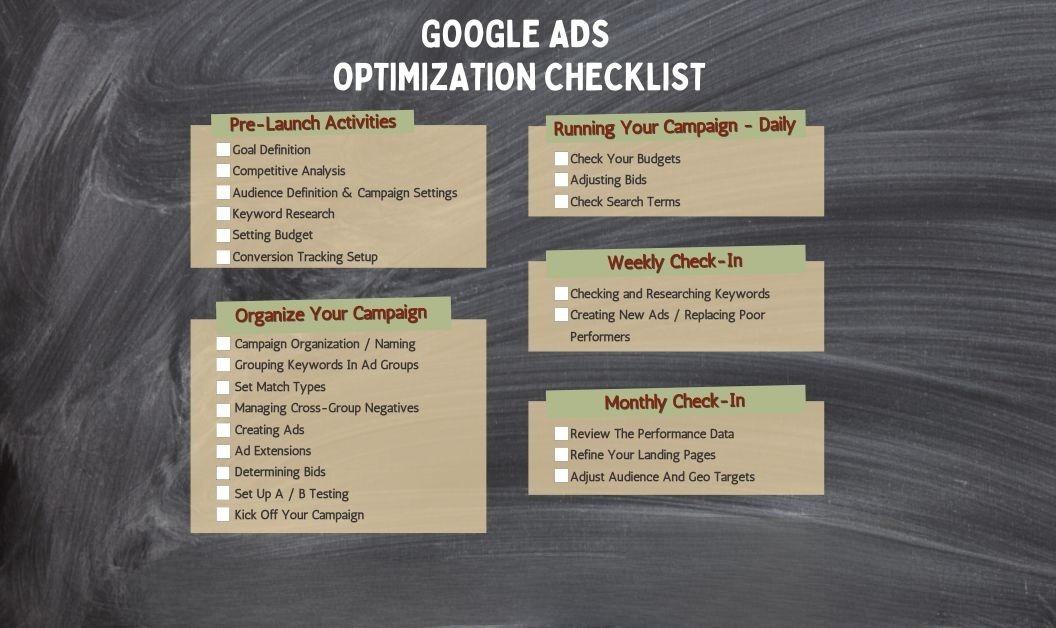
Avoid these common mistakes to improve campaign performance.
Mistake #1: Choosing Performance Max Too Early
Performance Max performs best when Google already has enough conversion data to learn from.
Launching it on a brand-new account without historical data often leads to inconsistent performance.
Better approach: Start with Search campaigns, gather conversion data, and introduce Performance Max once your account has matured.
Mistake #2: Ignoring Negative Keywords
Even the best Search campaigns can waste budget if irrelevant searches trigger your ads.
Examples include:
- Free
- Jobs
- Training
- Course
- Salary
- Internship
Adding appropriate negative keywords keeps your budget focused on users who are more likely to convert.

Mistake #3: Sending Traffic to Your Homepage
Your homepage is designed for multiple audiences, while your ad visitors usually have one specific goal.
Instead of directing paid traffic to your homepage, create dedicated landing pages tailored to the search intent.
A focused landing page often improves:
- Conversion rate
- Quality Score
- User experience
- Cost per conversion
Mistake #4: Using Broad Messaging
Your ad copy should clearly communicate:
- What you offer
- Who it's for
- Why you're different
- What users should do next
Generic headlines rarely outperform ads with clear value propositions and strong calls-to-action.
Mistake #5: Not Testing Different Strategies
Google Ads isn't a "set it and forget it" platform.
Successful advertisers continually test:
- Headlines
- Descriptions
- Landing pages
- Bidding strategies
- Ad extensions
- Audience signals
- Creative assets
Small improvements made consistently can have a significant impact on long-term ROI.
For more optimization ideas, check out 7 Costly Google Ads Mistakes That Are Wasting Your Budget.
Final Verdict: Which Campaign Should You Use?
There isn't a one-size-fits-all answer.
The right campaign depends on your business objectives, industry, budget, and advertising maturity.
Choose Search Campaigns if:
- You generate leads through enquiries or phone calls.
- You want complete keyword control.
- You're working with a smaller budget.
- You need transparent reporting.
- You're new to Google Ads.
- Your customers actively search for your services.
Choose Performance Max if:
- You already have reliable conversion tracking.
- You want to scale successful campaigns.
- You sell products online.
- You have strong creative assets.
- You're comfortable using Google's automation.
- You want to reach customers across multiple Google platforms.
Our Recommendation
For most service-based businesses, the ideal strategy is not Search vs Performance Max—it's Search plus Performance Max.
Start by building a profitable Search campaign. Once you have consistent conversions and accurate tracking, introduce Performance Max to expand your reach and uncover new growth opportunities.
This balanced approach combines the precision of keyword targeting with the scalability of AI-driven automation.
Frequently Asked Questions (FAQs)
1. Is Performance Max better than Search campaigns?
Not necessarily. Performance Max excels at scaling campaigns and reaching broader audiences, while Search campaigns are often better for capturing high-intent users actively looking for your products or services.
2. Can I run Search and Performance Max campaigns at the same time?
Yes. In fact, many advertisers achieve the best results by using both campaign types together. Search captures demand, while Performance Max helps generate additional opportunities across Google's network.
3. Which campaign type is best for local service businesses?
Search campaigns are generally the preferred choice for local businesses because they target users actively searching for services in specific locations.
4. Is Performance Max suitable for small businesses?
It can be, but only if conversion tracking is properly configured and enough historical data is available. Otherwise, Search campaigns are often a safer starting point.
5. How long does Performance Max take to optimize?
Most campaigns require at least 2–6 weeks to complete the learning phase, depending on conversion volume and account history.
6. Can Performance Max replace Search campaigns?
No. While Performance Max is powerful, Search campaigns still provide unmatched keyword control and transparency. For many businesses, the two campaign types work best together rather than replacing one another.
Ready to Improve Your Google Ads Performance?
Whether you're launching your first campaign or looking to scale an existing account, choosing the right strategy can make a significant difference to your advertising results.
At Scale with Clicks, we help businesses build high-performing Google Ads campaigns focused on generating qualified leads, reducing wasted spend, and maximizing return on investment.
👉 Explore our Google Ads Management Services to see how we can help.
👉 Looking to improve your existing campaigns? Contact us for a personalized Google Ads audit and actionable recommendations.