Facebook Ads
Facebook Lead Ads vs Website Conversions - Which Is Better?

Category: Facebook Ads
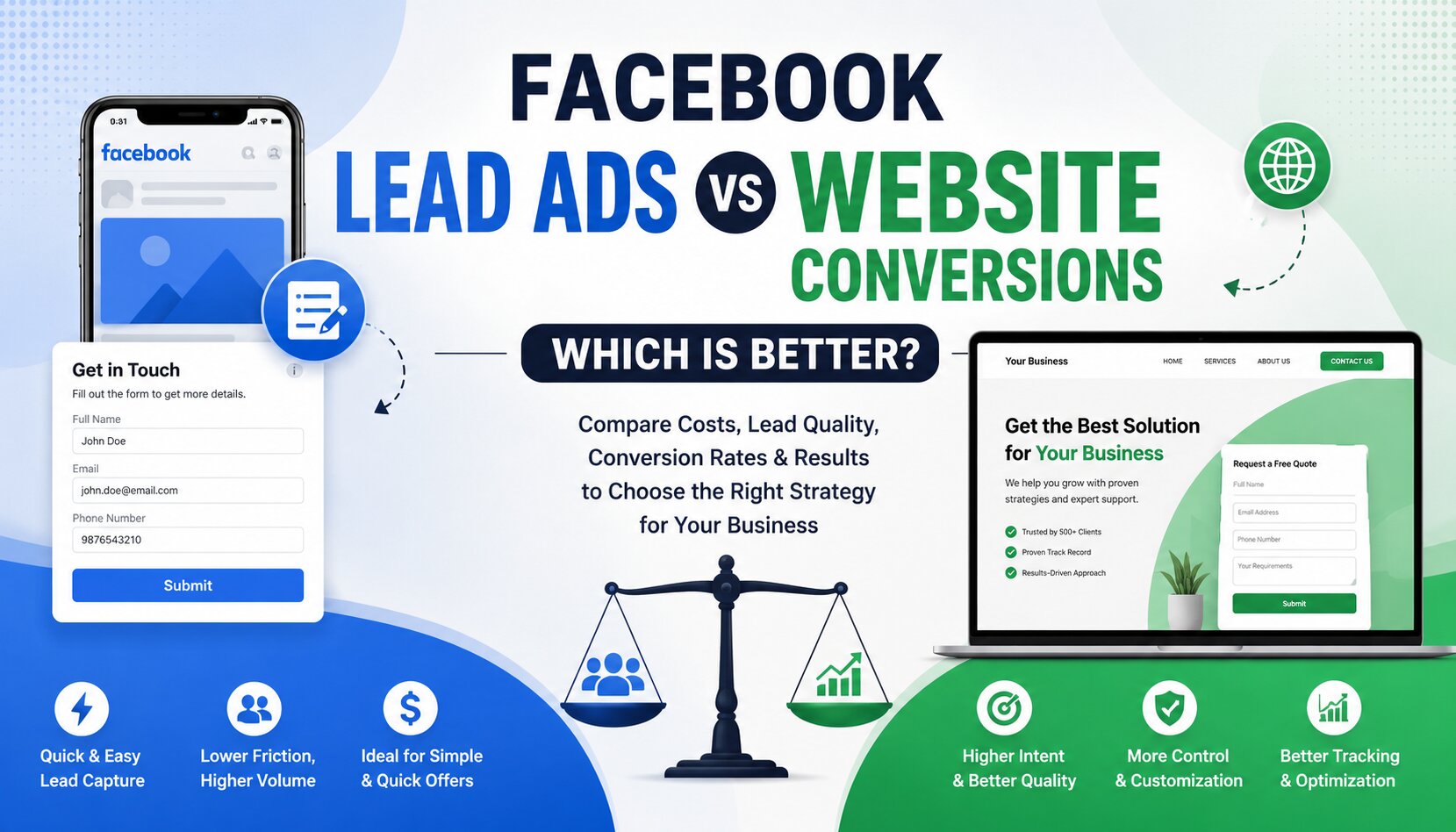
Facebook Lead Ads vs Website Conversions is a common question for businesses running Meta Ads. Should you let people submit their details directly inside Facebook and Instagram, or should you send them to your website and ask them to fill out a form there?
There is no single answer.
Facebook Lead Ads can generate leads quickly and often at a lower cost. Website conversion campaigns, on the other hand, can give users more information before they submit their details and may produce better-quality leads.
The right choice depends on your business, offer, sales process, landing page, budget, tracking setup, and most importantly, the quality of leads you need.
In this guide, we'll compare Facebook Lead Ads vs Website Conversions, explain the advantages and disadvantages of each, and show you when to use one over the other.
What Are Facebook Lead Ads?
Facebook Lead Ads, now commonly referred to as Meta Lead Ads, allow businesses to collect customer information without requiring the user to leave Facebook or Instagram.
When someone clicks the advertisement, a form opens within the Meta platform. Some information can even be pre-filled using information associated with the user's account.
A typical Facebook Lead Ad might ask for:
- Name
- Phone number
- Email address
- Location
- Company name
- Job title
- A few qualifying questions
Once the user submits the form, the information can be sent to the business, CRM, email system, or another lead-management platform.
The biggest advantage is simplicity.
The user doesn't have to:
See Ad → Click → Wait for Website → Read Page → Find Form → Fill Form → Submit
Instead, the process can be closer to:
See Ad → Open Form → Submit
That reduced friction is one of the main reasons Facebook Lead Ads can generate a high volume of leads.
What Are Website Conversion Campaigns?
Website conversion campaigns send people from Facebook or Instagram to your website or landing page.
Instead of submitting their information inside Meta, users complete a conversion action on your website.
For example:
Facebook Ad → Landing Page → Lead Form → Thank You Page
Website conversions can include:
- Contact form submissions
- Quote requests
- Demo bookings
- Consultation requests
- Appointment bookings
- Product purchases
- Registration
- Phone calls
- WhatsApp inquiries
The major difference is that you control the environment where the conversion happens.
You can explain your service, show testimonials, display case studies, answer objections, and provide detailed information before asking the visitor to submit their information.
This can be particularly important for expensive or complicated products and services.
Facebook Lead Ads vs Website Conversions: Key Differences
| Factor | Facebook Lead Ads | Website Conversions |
|---|---|---|
| Conversion location | Facebook/Instagram | Your website |
| User friction | Very low | Higher |
| Setup complexity | Relatively simple | More technical |
| Landing page required | No | Yes |
| Lead volume | Usually higher | Can be lower |
| Lead qualification | Limited to form questions | More control |
| Website experience | Not required | Important |
| Tracking requirements | Moderate | High |
| Lead quality | Can vary | Often stronger with good funnel |
| Best for | Fast lead generation | High-intent conversions |
| Data ownership | More dependent on Meta | More control through your website/CRM |
| Testing flexibility | Limited | Much higher |
Neither option automatically wins.
The important question is: Which one produces more qualified customers at an acceptable acquisition cost?
Advantages of Facebook Lead Ads
1. Lower Friction
The biggest benefit of Facebook Lead Ads is convenience.
People don't need to leave the platform and wait for a website to load.
This is particularly useful for mobile users, where every additional step can cause potential customers to drop out.
For example, someone sees an advertisement offering a free consultation.
With a Lead Ad, they can click the CTA, review the form and submit their details almost immediately.
2. Potentially Lower Cost Per Lead
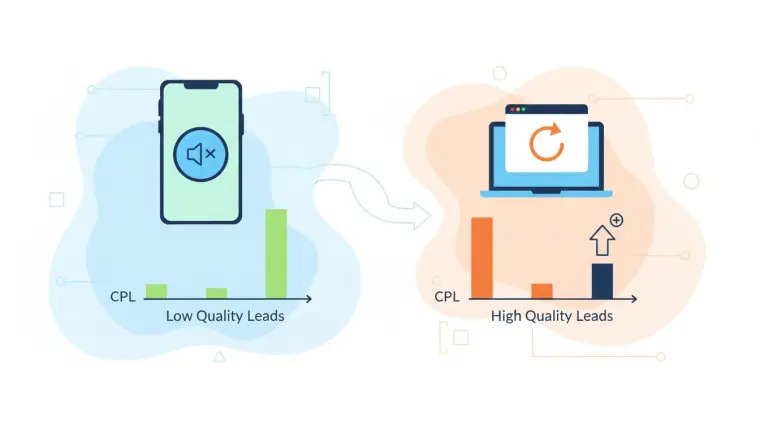
Because there are fewer steps between the advertisement and conversion, Lead Ads can often generate a lower cost per lead (CPL).
However, cheaper leads don't automatically mean better performance.
Consider this example:
Campaign A
- CPL: ₹150
- 100 leads
- 10 qualified leads
- 2 customers
Campaign B
- CPL: ₹350
- 50 leads
- 25 qualified leads
- 8 customers
Campaign B has a higher CPL but produces significantly more customers.
This is why you should avoid optimizing your Meta campaigns solely around CPL.
If you want to improve lead generation efficiency, also look at the strategies covered in our guide on How to lower Meta Ads cost per lead.
3. Faster Lead Generation
Lead Ads are useful when your primary objective is to generate a large number of enquiries quickly.
They can work particularly well for:
- Local businesses
- Education
- Real estate
- Insurance
- Automotive
- Coaching
- Events
- Beauty services
- Home services
- Certain B2B offers
The shorter conversion journey can make them attractive for businesses that need a steady flow of enquiries.
4. Easy Mobile Experience
A large percentage of Meta traffic comes from mobile devices.
If your website is slow or difficult to navigate on mobile, sending users directly to it can create unnecessary friction.
Lead Ads remove that particular problem because the conversion takes place inside the Meta environment.
Disadvantages of Facebook Lead Ads
1. Lead Quality Can Be Inconsistent
This is probably the biggest concern with Facebook Lead Ads.
Because submitting the form is relatively easy, some people may submit their information without having serious buying intent.
You may receive:
- Fake numbers
- Incorrect information
- Duplicate leads
- People who don't remember submitting the form
- Low-intent enquiries
- People outside your target market
This doesn't mean Lead Ads produce bad leads.
It means the form needs to be designed properly.
2. Too Many Leads Can Become a Problem
Getting 500 leads sounds great.
But what if your sales team cannot contact them quickly?
Or what if only 20 are actually qualified?
Lead volume without an effective follow-up process can become a distraction rather than an advantage.
Your CRM and sales process should therefore be part of the advertising strategy.
3. Limited Space to Build Trust
A Facebook Lead Ad form isn't the same as a dedicated landing page.
On your website, you can show:
- Customer testimonials
- Case studies
- Reviews
- Product information
- Pricing
- FAQs
- Videos
- Certifications
- Guarantees
- Detailed service information
This can make a major difference when customers need more information before making a decision.
Advantages of Website Conversion Campaigns
1. Better Control Over the Customer Journey
A website gives you much more control.
You can structure the journey around the user's questions:
Ad → Problem → Solution → Benefits → Proof → Offer → CTA
For example, if you're selling a high-ticket service, users may want to understand your process before contacting you.
A landing page gives you enough space to answer those questions.
2. Better Lead Qualification
Website forms can include more detailed qualification questions.
You can ask about:
- Budget
- Company size
- Location
- Current solution
- Project requirements
- Timeline
- Monthly advertising spend
- Business goals
This helps your sales team prioritize serious prospects.
For B2B and high-ticket services, this can be more valuable than simply generating the cheapest possible lead.
3. Stronger Tracking Opportunities
Website campaigns allow you to build a more detailed tracking system.
You can track events such as:
- PageView
- ViewContent
- Lead
- CompleteRegistration
- Contact
- Schedule
- Purchase
Using Meta Pixel together with Conversion API can improve the quality of conversion signals available to Meta.
For a deeper explanation, see our Meta Pixel Setup Guide and Meta Conversion API guide.
If your tracking needs improvement, our Conversion Tracking Services can also help create a more reliable measurement setup.
4. More Opportunities for Retargeting
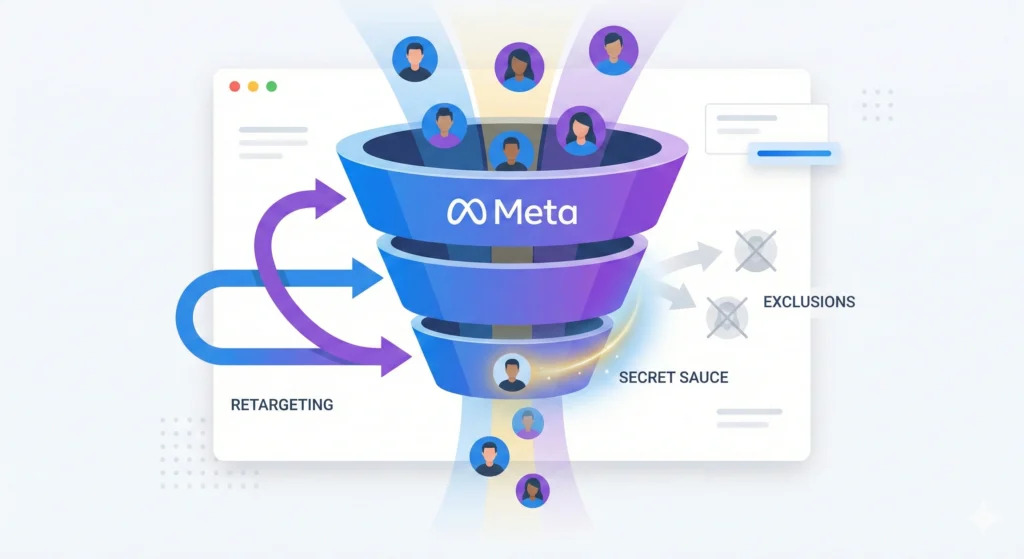
Website visitors can become valuable retargeting audiences.
For example, you can create audiences for people who:
- Visited your website
- Viewed a specific service
- Visited a landing page
- Started but didn't complete a form
- Viewed multiple pages
- Engaged with your content
You can then show them a different advertisement designed to move them closer to conversion.
Our guide on Facebook and Instagram retargeting covers this strategy in more detail.
Disadvantages of Website Conversions
1. More Friction
The biggest disadvantage is the additional step.
Users have to leave Facebook or Instagram, wait for the page to load, understand the offer and complete the conversion.
Every step creates another opportunity for the user to leave.
2. Landing Page Quality Matters
A great Facebook advertisement cannot compensate for a terrible landing page.
Common problems include:
- Slow loading speed
- Poor mobile design
- Too much text
- Weak headline
- Confusing CTA
- Long forms
- Missing trust signals
- Poor offer
- Too many distractions
If your website conversion campaign is getting plenty of clicks but few leads, don't immediately blame the audience.
The landing page could be the problem.
Our article on why Facebook Ads are not converting covers several of these issues.
So, Which Is Better?
The answer depends on your business.
Facebook Lead Ads may be better when:
- You need leads quickly
- Your offer is easy to understand
- Your audience doesn't need much education
- You have a strong sales follow-up process
- Your website isn't optimized yet
- You want to reduce conversion friction
- You need a higher volume of enquiries
Website conversions may be better when:
- You're selling a high-ticket product or service
- Customers need detailed information
- Trust is important
- You need to qualify leads
- You have a strong landing page
- Your website converts well
- You need detailed conversion tracking
- You want more control over the customer journey
What About Lead Quality?
This is where many businesses make the wrong decision.
They run a Lead Ads campaign and see:
₹200 CPL
Then they run a website campaign and see:
₹500 CPL
They immediately conclude that Lead Ads are better.
But that's not enough information.
You should track:
Cost Per Lead → Qualified Lead Rate → Appointment Rate → Sales Rate → Customer Acquisition Cost → Revenue
For example:
| Metric | Lead Ads | Website |
|---|---|---|
| Leads | 100 | 50 |
| CPL | ₹200 | ₹500 |
| Qualified Leads | 15 | 25 |
| Customers | 3 | 8 |
| Revenue | ₹60,000 | ₹160,000 |
The website campaign appears expensive when looking only at CPL.
But it may actually be the more profitable campaign.
This is one of the most important lessons in Facebook Ads lead generation: don't optimize for cheap leads if those leads don't become customers.
Should You Run Both?
In many cases, yes.
Instead of treating Facebook Lead Ads and website conversions as competing strategies, you can test both.
For example:
Campaign A — Facebook Lead Ads
Use an Instant Form with:
- Name
- Phone
- Location
- One or two qualifying questions
Campaign B — Website Conversions
Send users to a dedicated landing page with:
- Strong headline
- Benefits
- Social proof
- Testimonials
- FAQs
- Clear CTA
- Short lead form
Keep the audience, offer and creative as similar as possible.
This makes the comparison more meaningful.
Don't compare a completely different audience, offer and creative and then conclude that one conversion method is better.
How to Compare the Two Campaigns
Run the test long enough to collect meaningful data.
Then compare:
1. Cost Per Lead
How much are you paying for each enquiry?
2. Qualified Lead Rate
What percentage of leads actually meet your requirements?
3. Appointment Rate
How many leads book a call, demo or appointment?
4. Sales Conversion Rate
How many leads become customers?
5. Cost Per Customer
This is more useful than CPL alone.
6. Revenue
How much revenue did each campaign generate?
7. Customer Acquisition Cost
Ultimately, this tells you how much it costs to acquire a paying customer.
Don't Ignore Conversion Tracking
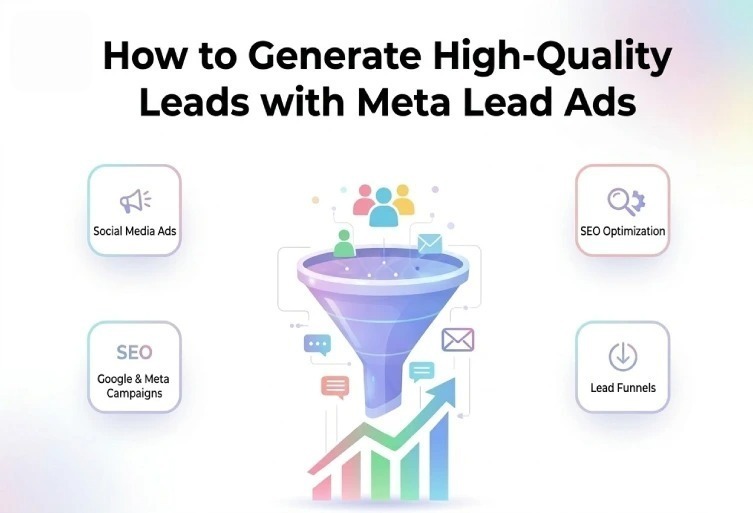
Whichever strategy you choose, accurate tracking is essential.
For website campaigns, make sure your Meta Pixel is correctly configured and important events are being recorded.
Where appropriate, consider using Conversion API alongside Pixel.
For Lead Ads, connect your leads to your CRM and track what happens after the lead is generated.
Ideally, your reporting shouldn't stop at:
Facebook Lead → Done
Instead, your funnel should look more like:
Facebook Lead → Contacted → Qualified → Appointment → Proposal → Customer → Revenue
This allows you to understand which campaigns are actually producing business results.
Our Meta Ads Management Services focus on campaign strategy, tracking, optimization and lead quality rather than simply chasing low CPL.
Facebook Lead Ads vs Website Conversions: Final Verdict
There isn't a universal winner in the Facebook Lead Ads vs Website Conversions debate.
Facebook Lead Ads are excellent when reducing friction and generating lead volume is the priority.
Website conversion campaigns can be stronger when lead quality, education, qualification and control over the customer journey matter more.
For simple offers and fast lead generation, start by testing Lead Ads.
For high-ticket services, B2B businesses and products that require more consideration, website conversions deserve serious attention.
And if your budget allows it, test both.
The most important thing is not asking:
"Which campaign has the cheapest lead?"
Ask:
"Which campaign generates the most qualified customers at a profitable acquisition cost?"
That is the metric that ultimately matters.
Meta Ads are only one part of the equation. Your audience, creative, offer, landing page, tracking and sales follow-up all influence the final result.
If you want to build a complete paid acquisition strategy, visit Scale With Clicks to explore our performance marketing, Meta Ads, Google Ads, SEO and conversion tracking services.
Frequently Asked Questions
Are Facebook Lead Ads cheaper than website conversions?
Facebook Lead Ads can often produce a lower cost per lead because users don't have to leave Facebook or Instagram. However, a lower CPL doesn't necessarily mean lower customer acquisition cost. Always compare lead quality and sales results.
Are Facebook Lead Ads good for B2B?
They can be, but lead quality needs to be controlled carefully. Use qualifying questions, clear offers and a strong follow-up process. For high-ticket B2B services, website conversion campaigns can also be very effective.
Do website conversion campaigns generate better leads?
They can. Sending users to a website creates additional friction, which may filter out some low-intent users. A strong landing page can also provide more information and build trust before the conversion.
Should I use Facebook Lead Ads or a landing page?
Test both when possible. Use the same audience, offer and creative and compare qualified leads, appointments, customers and revenue—not just CPL.
Can Facebook Lead Ads be connected to a CRM?
Yes. Leads can be connected to CRM and automation systems so sales teams can receive and follow up with enquiries more quickly.
What should I optimize for: CPL or lead quality?
Lead quality should be the priority. A cheap lead that never becomes a customer can be more expensive for the business than a higher-cost lead that produces revenue.
Do I need Meta Pixel for Facebook Lead Ads?
Website conversion campaigns generally rely heavily on website tracking. Lead Ads use Meta's own lead-generation environment, but connecting lead data to your CRM and measuring downstream outcomes is still important.
Can I use Lead Ads and website conversions together?
Yes. In fact, testing both can be one of the best ways to determine which conversion path works for your particular audience and offer.